Bayesian deep learning for cosmology and gravitational waves
Tom Charnock
Institut d'Astrophysique de Paris
Slides available at presentations.charnock.fr/2020/03/15/Paris/PCCP/BayesianDeepLearning



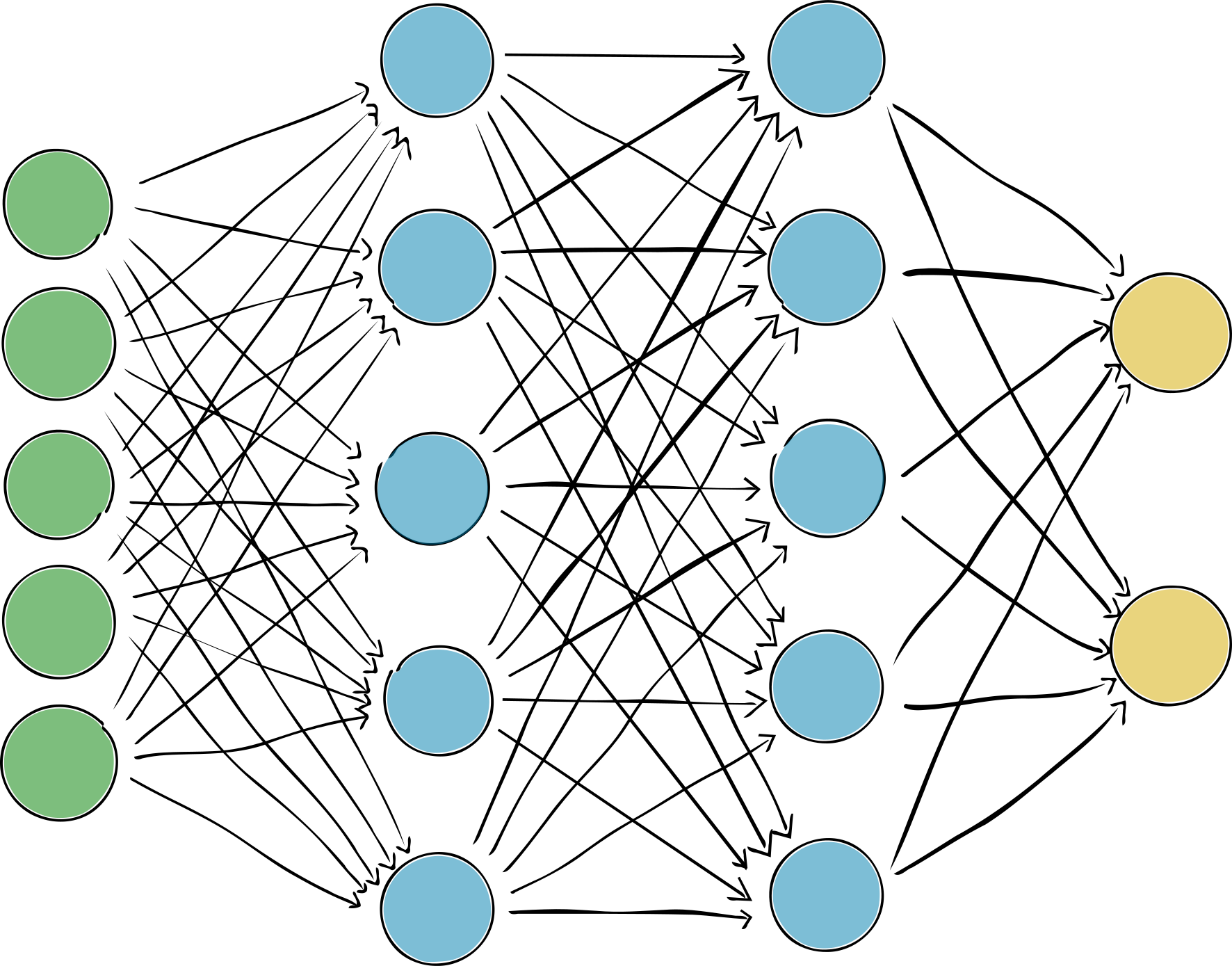
What is a neural network?
Fully connected
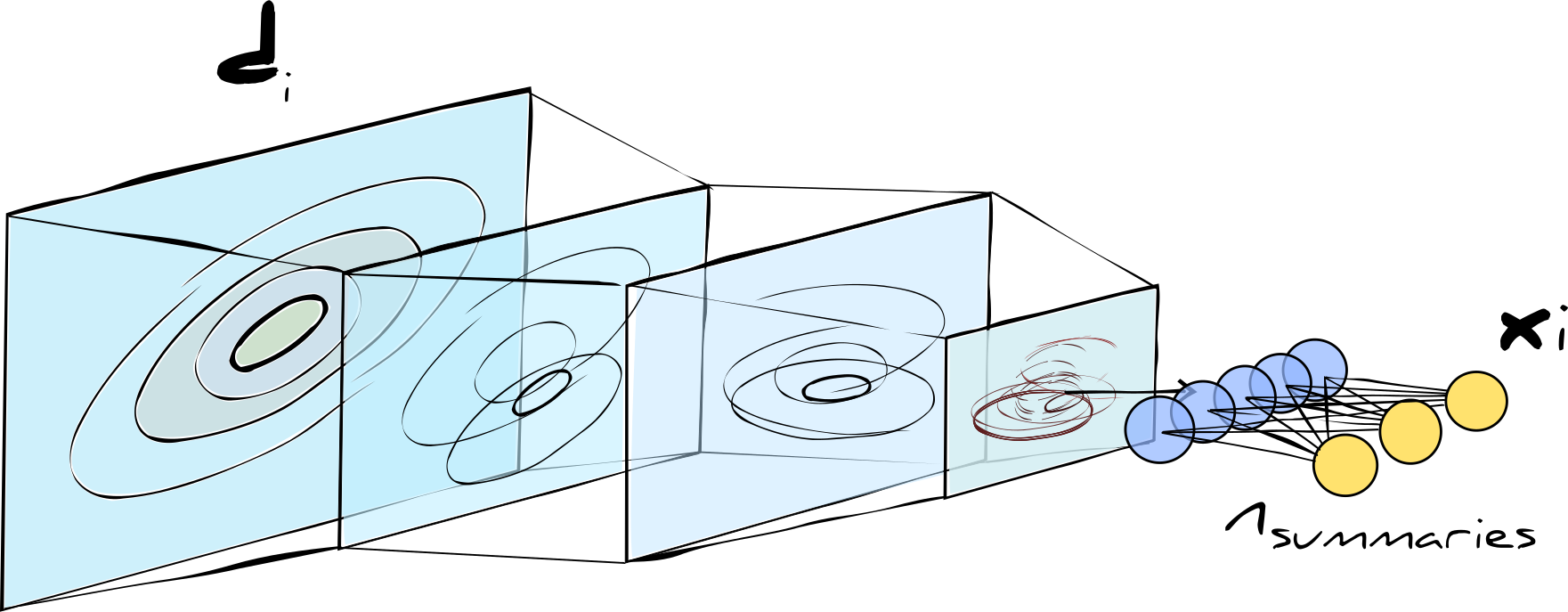
Convolutional
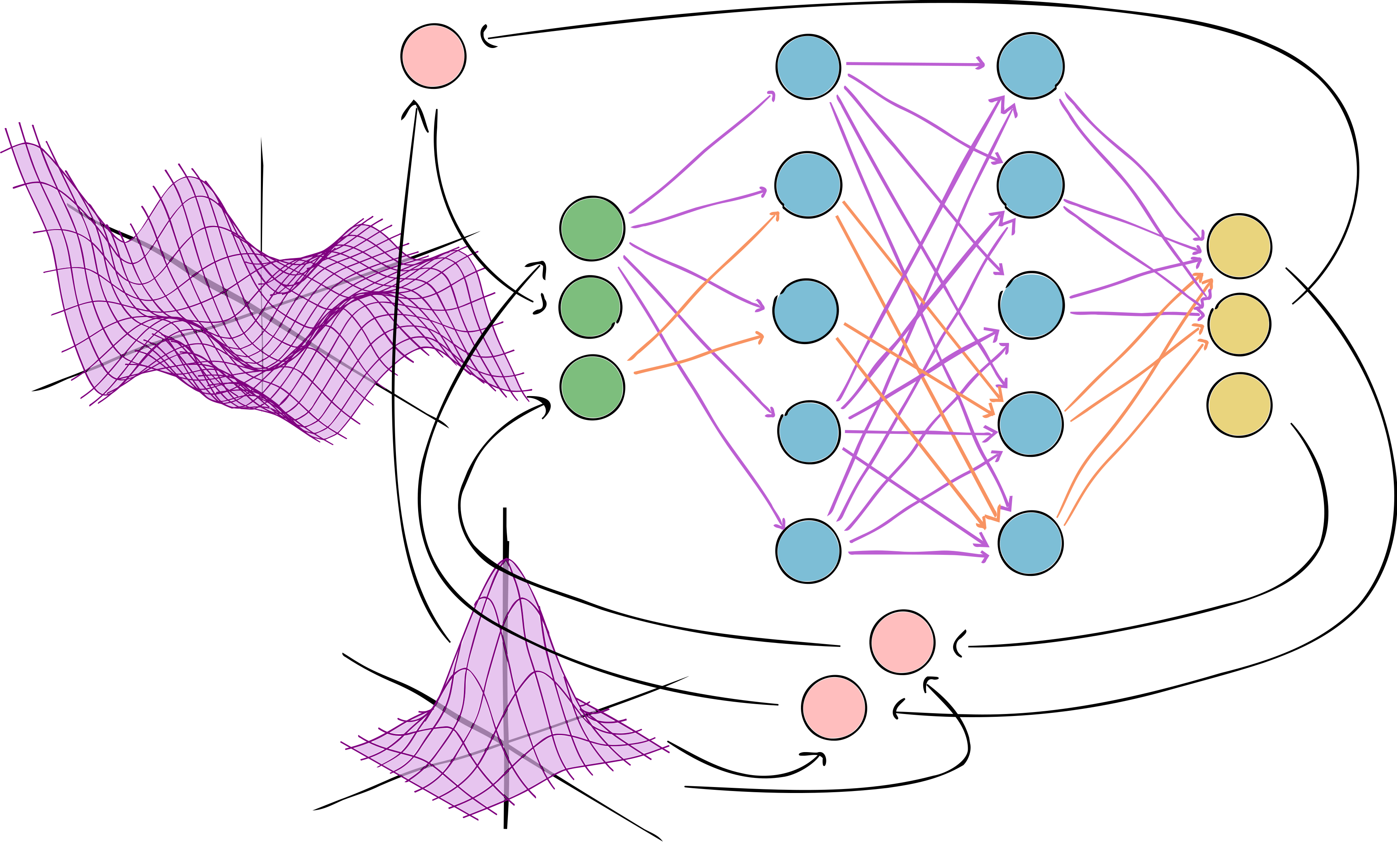
Autoregressive flows
Recurrent
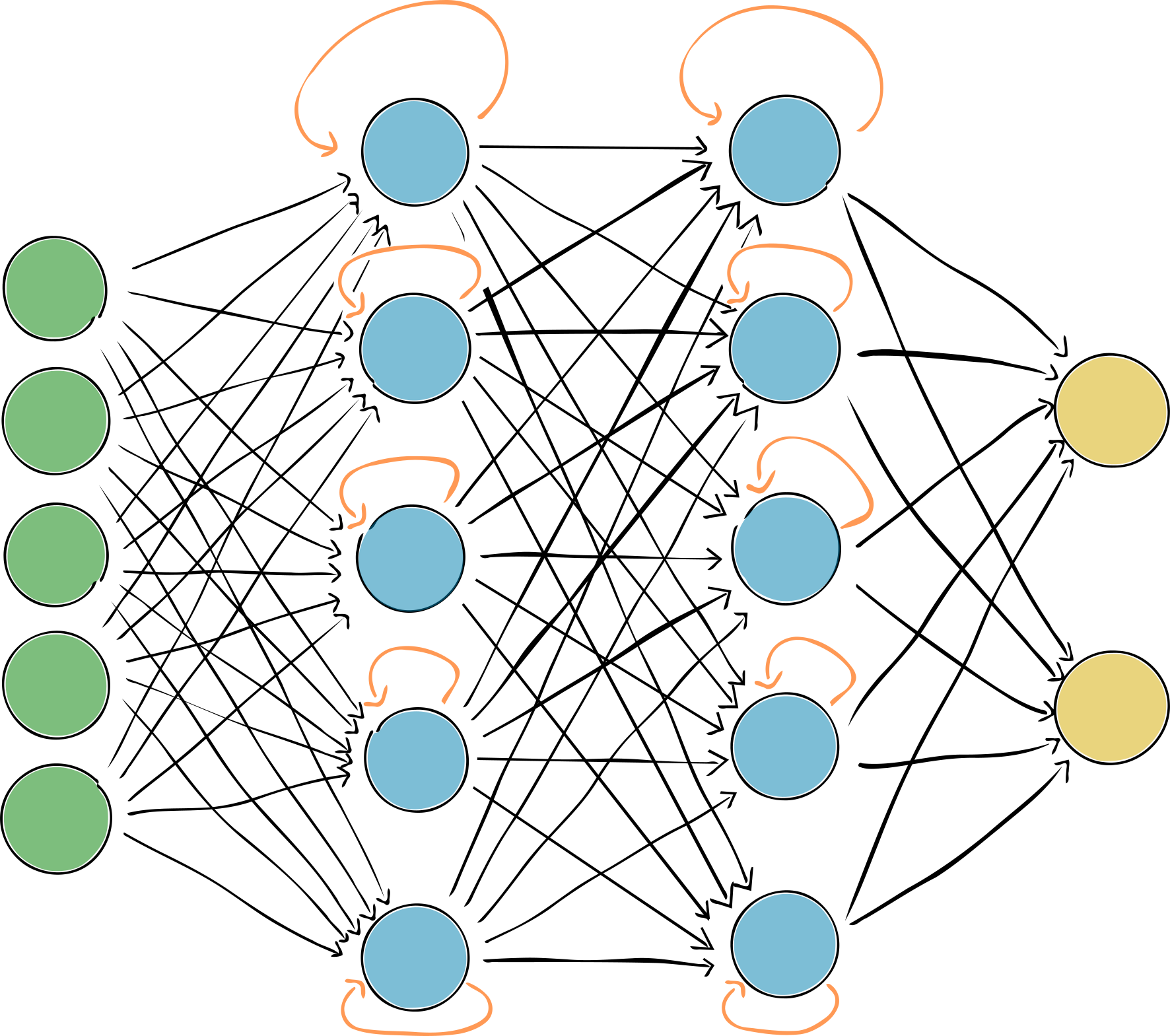
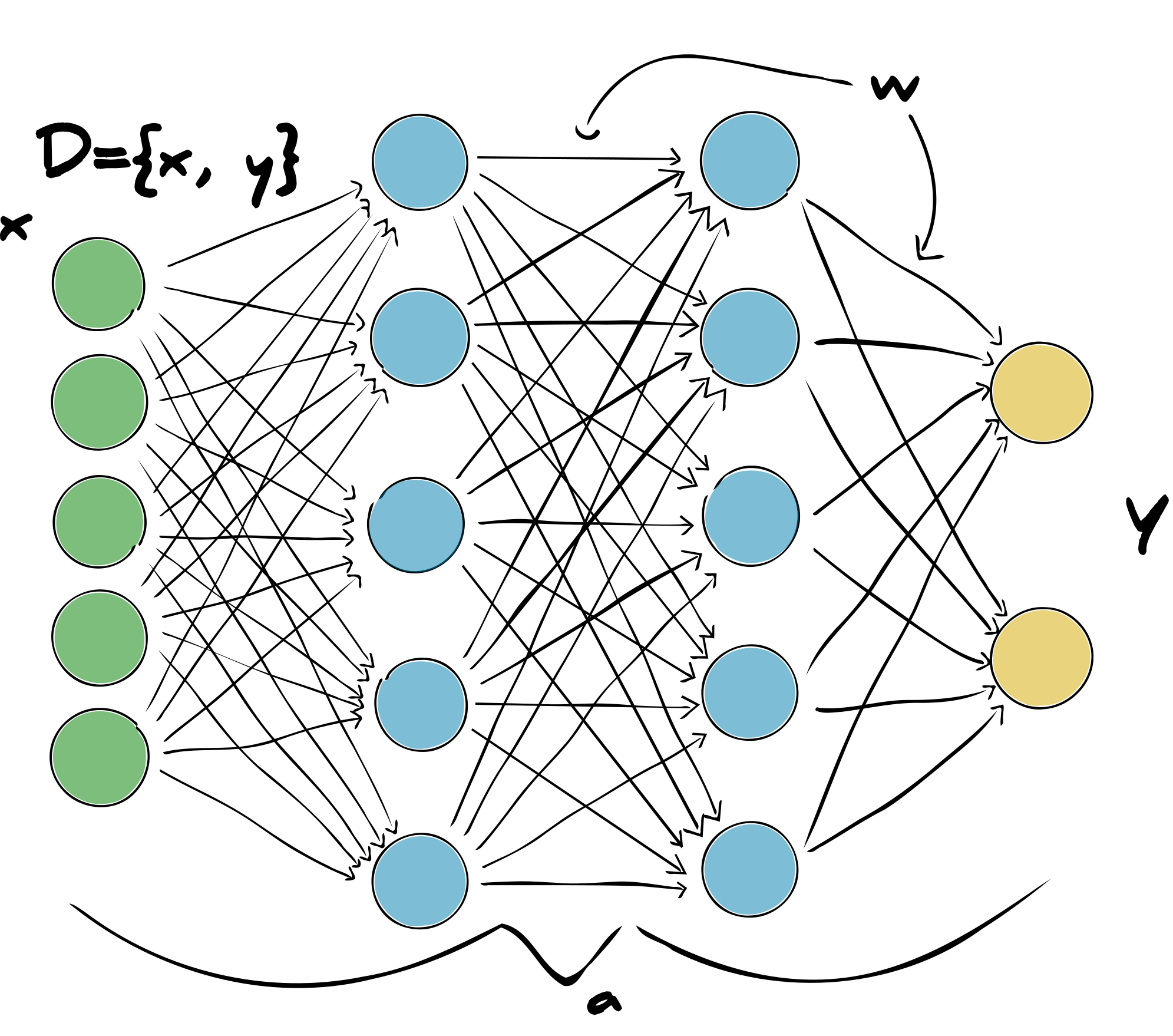
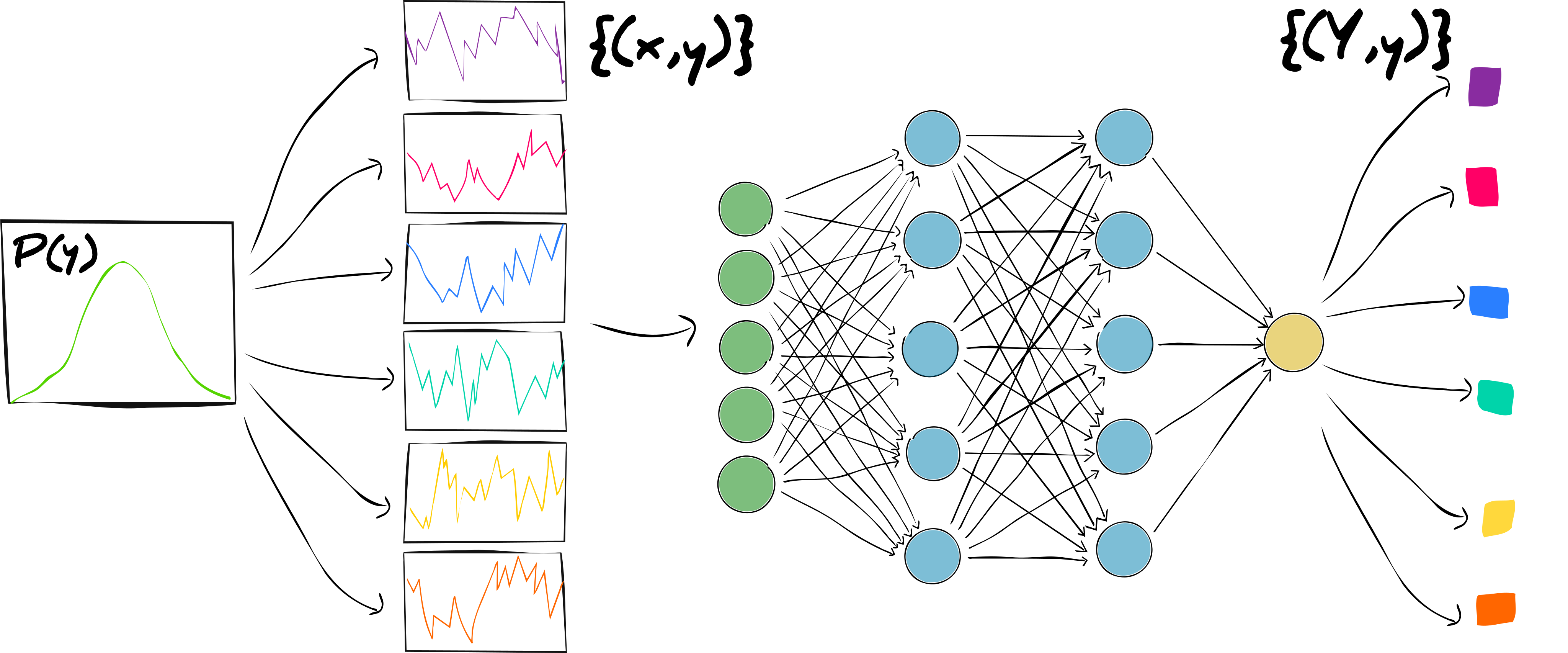
A neural network is just a parameterised function
$$\Large\mathbb{NN}(\boldsymbol{\omega},\boldsymbol{\alpha}) : {\bf x} \to {\bf y}$$
We can fit the neural network to a desired function using data
$$\Large\mathcal{D} = \{{\bf x},{\bf y}\}$$
Some examples of possible ${\bf x}$ and ${\bf y}$
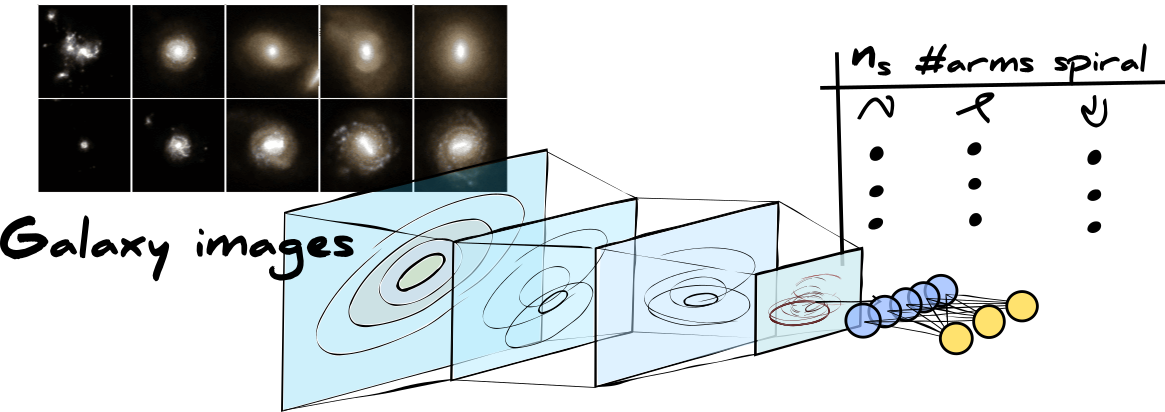
Learning latent representations
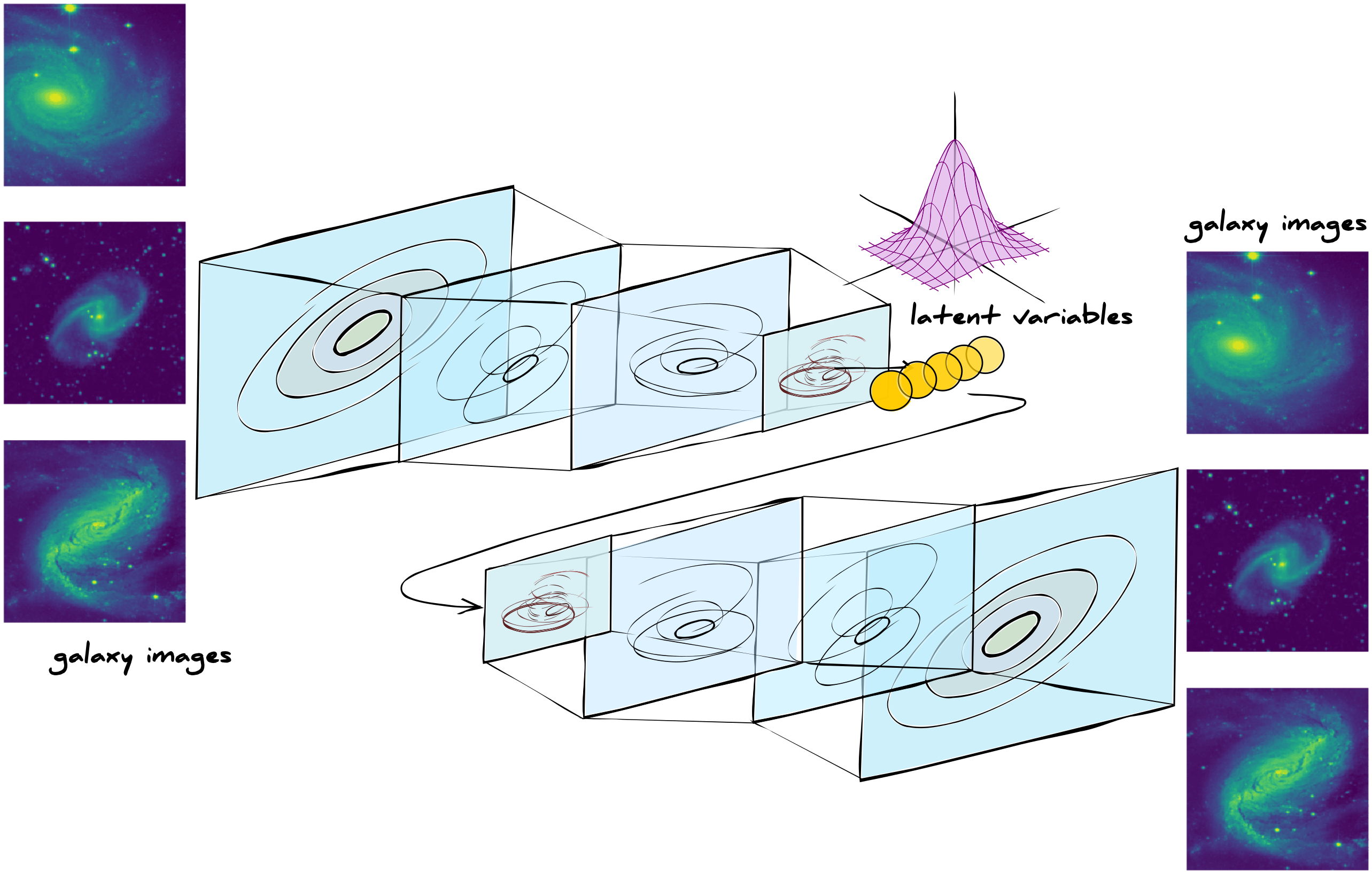
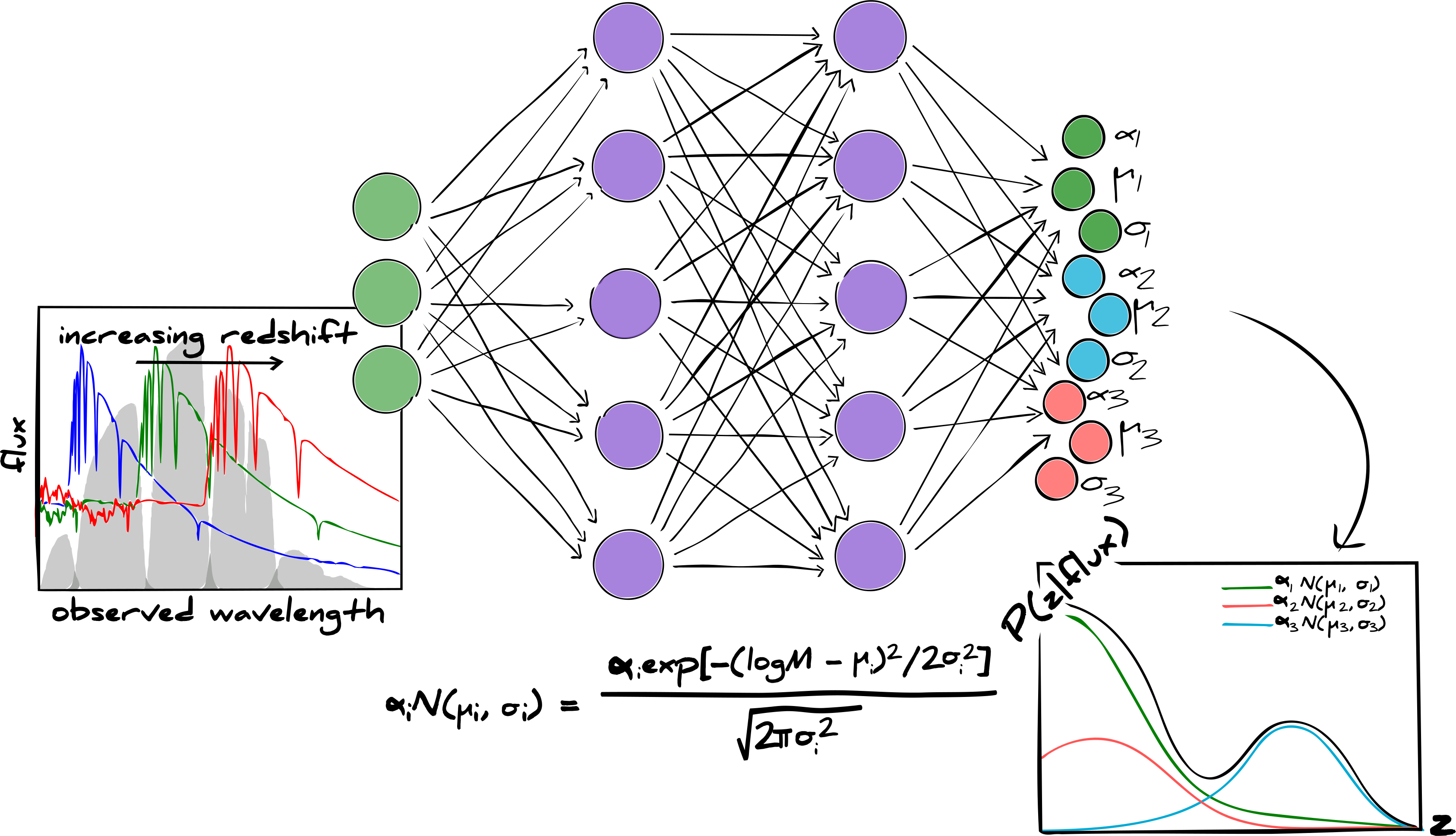
Predicting posterior distribution of targets
Bayesian statistics
Statistical models
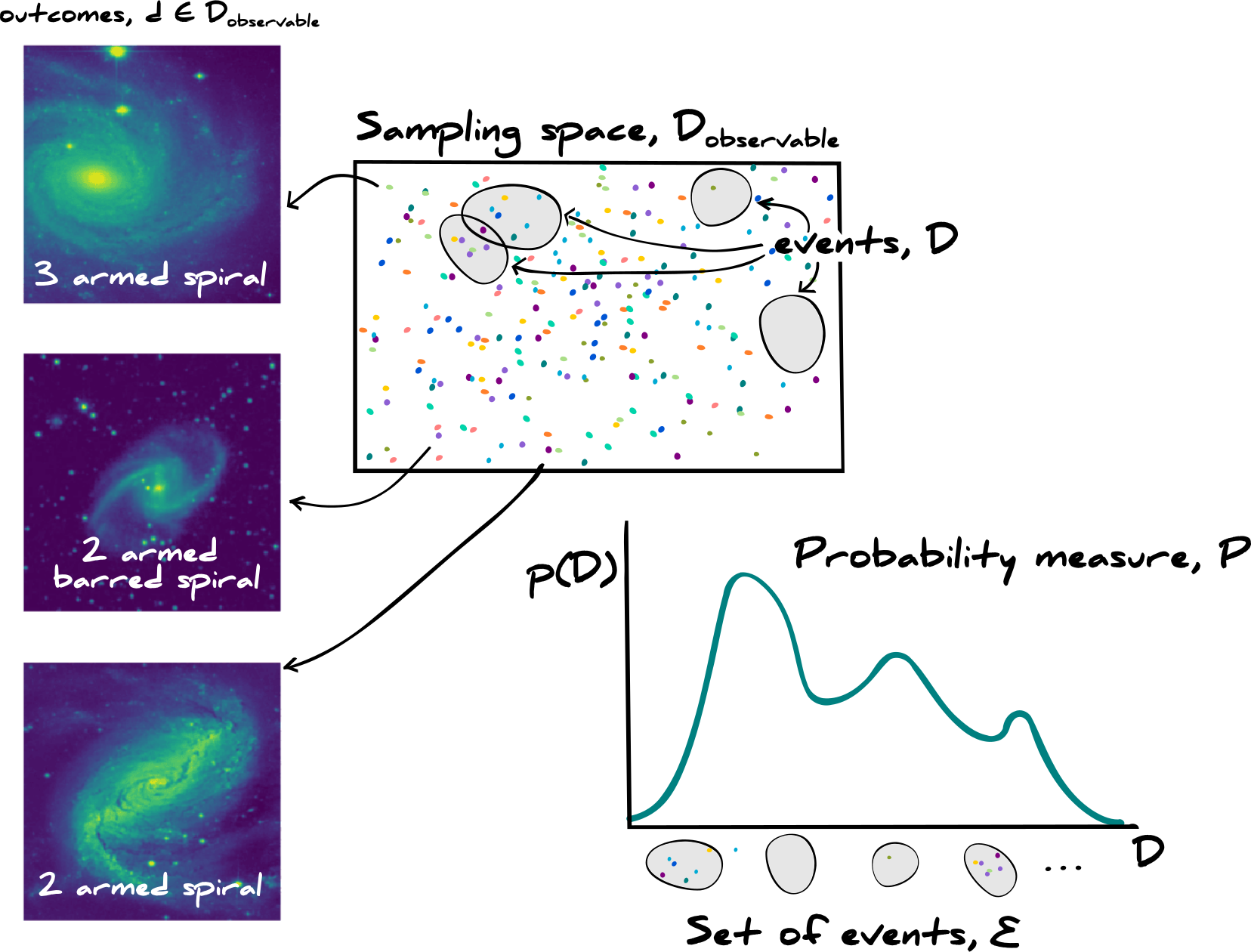
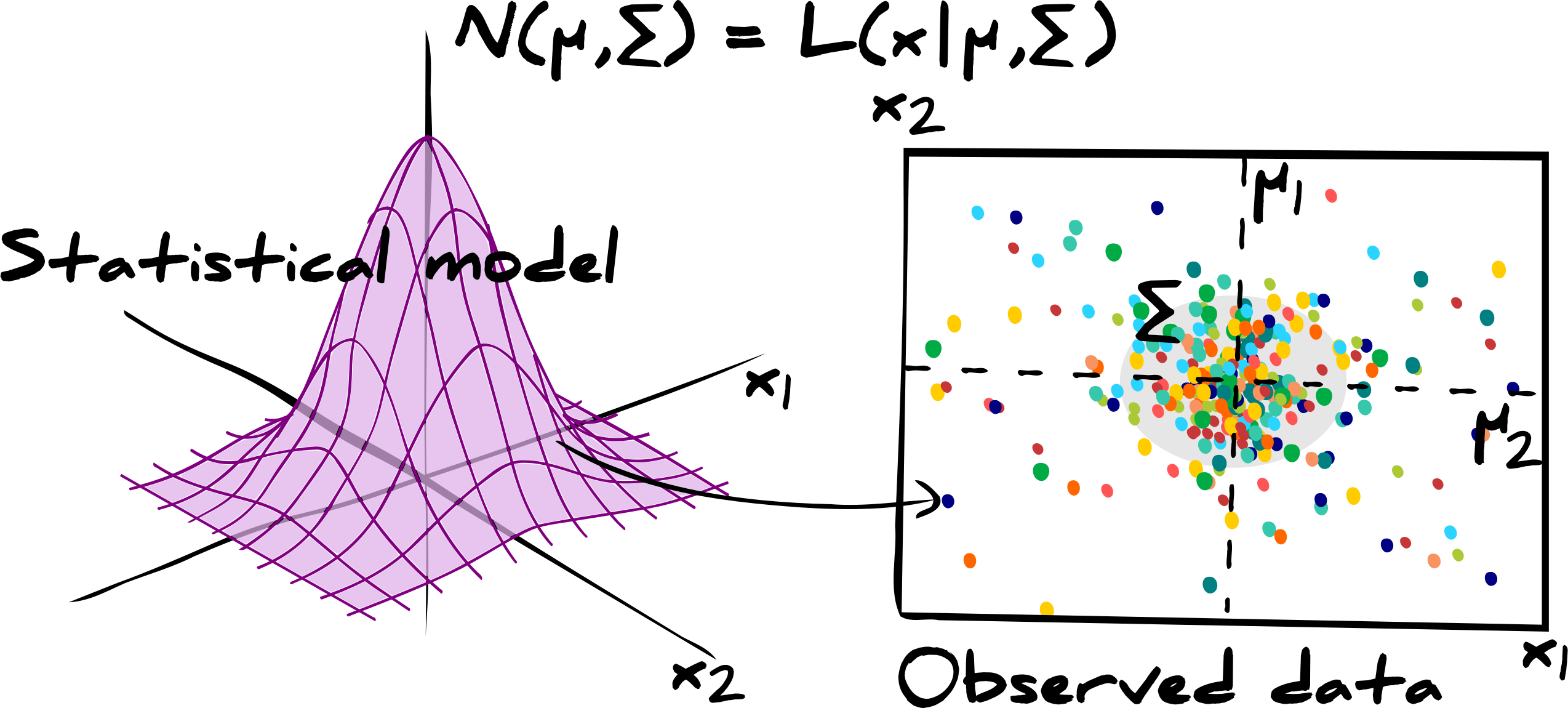
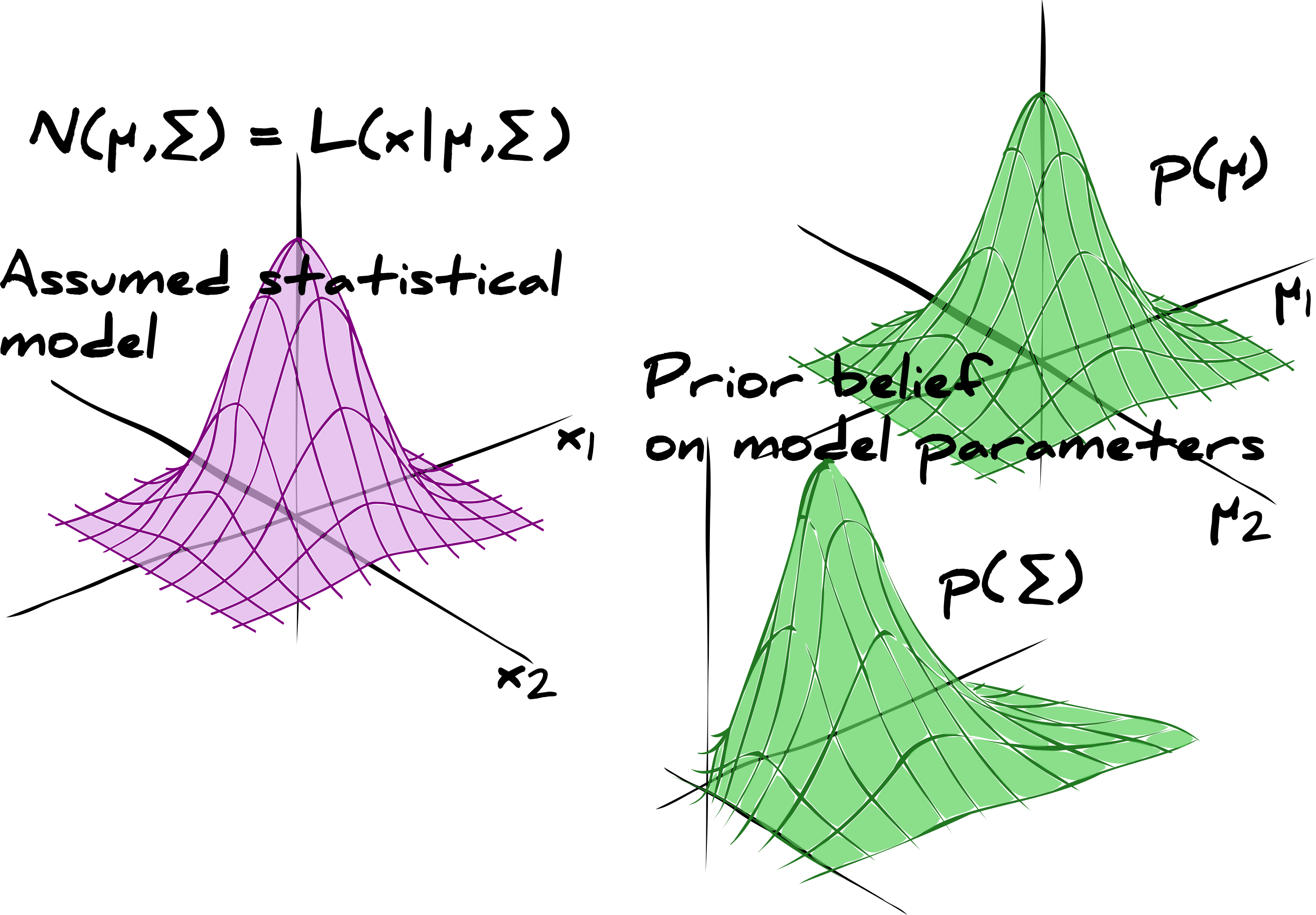
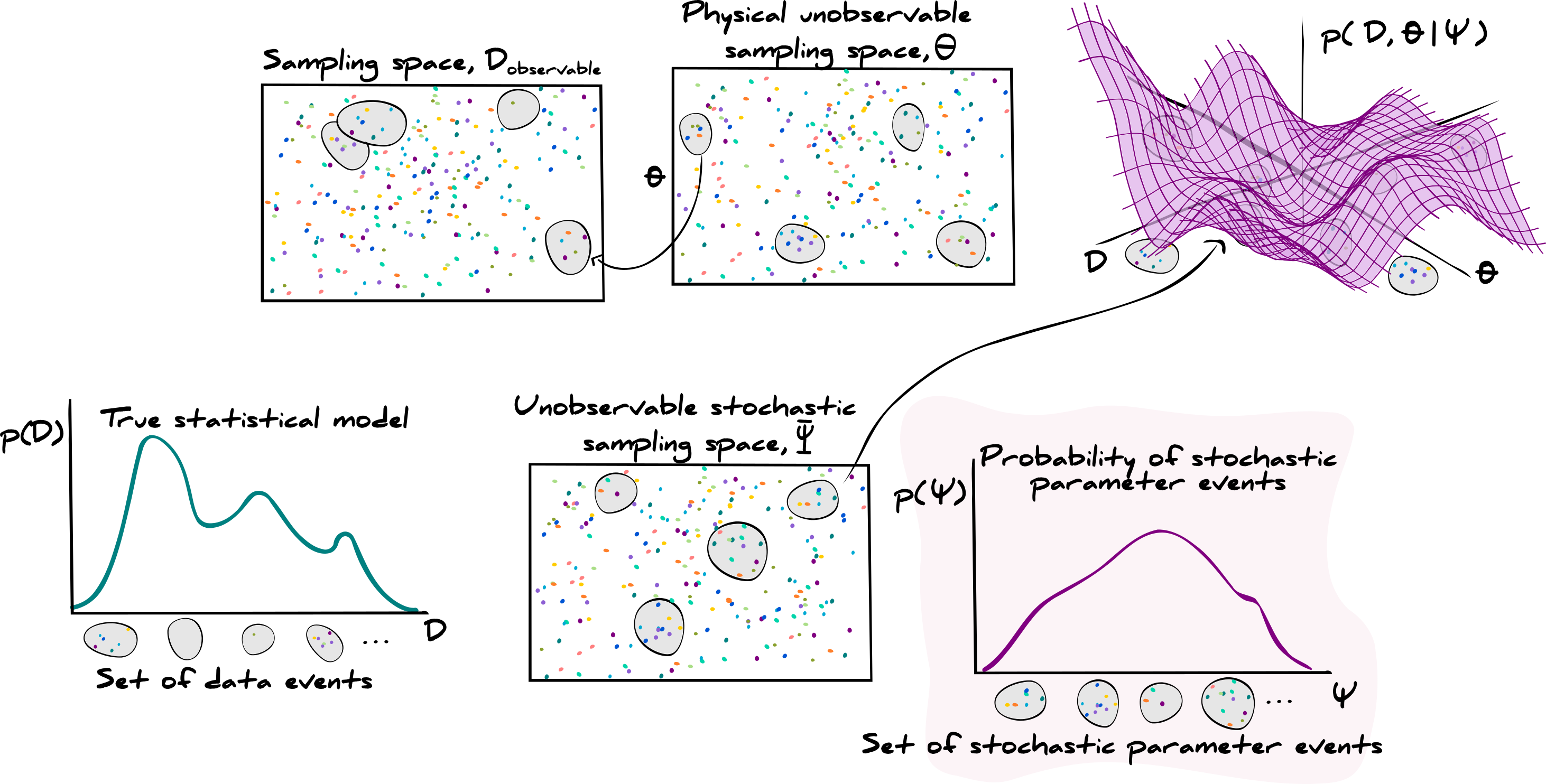
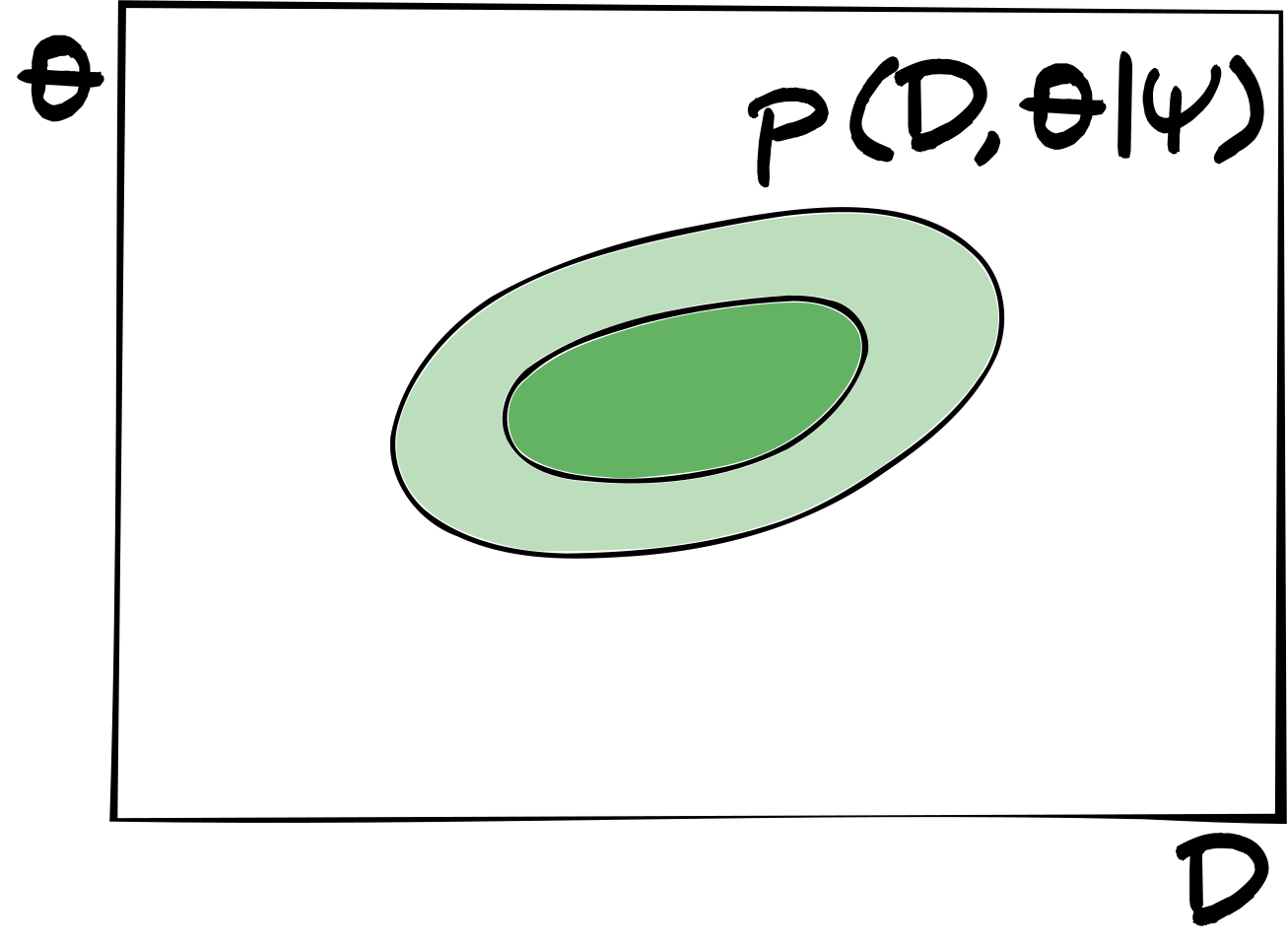
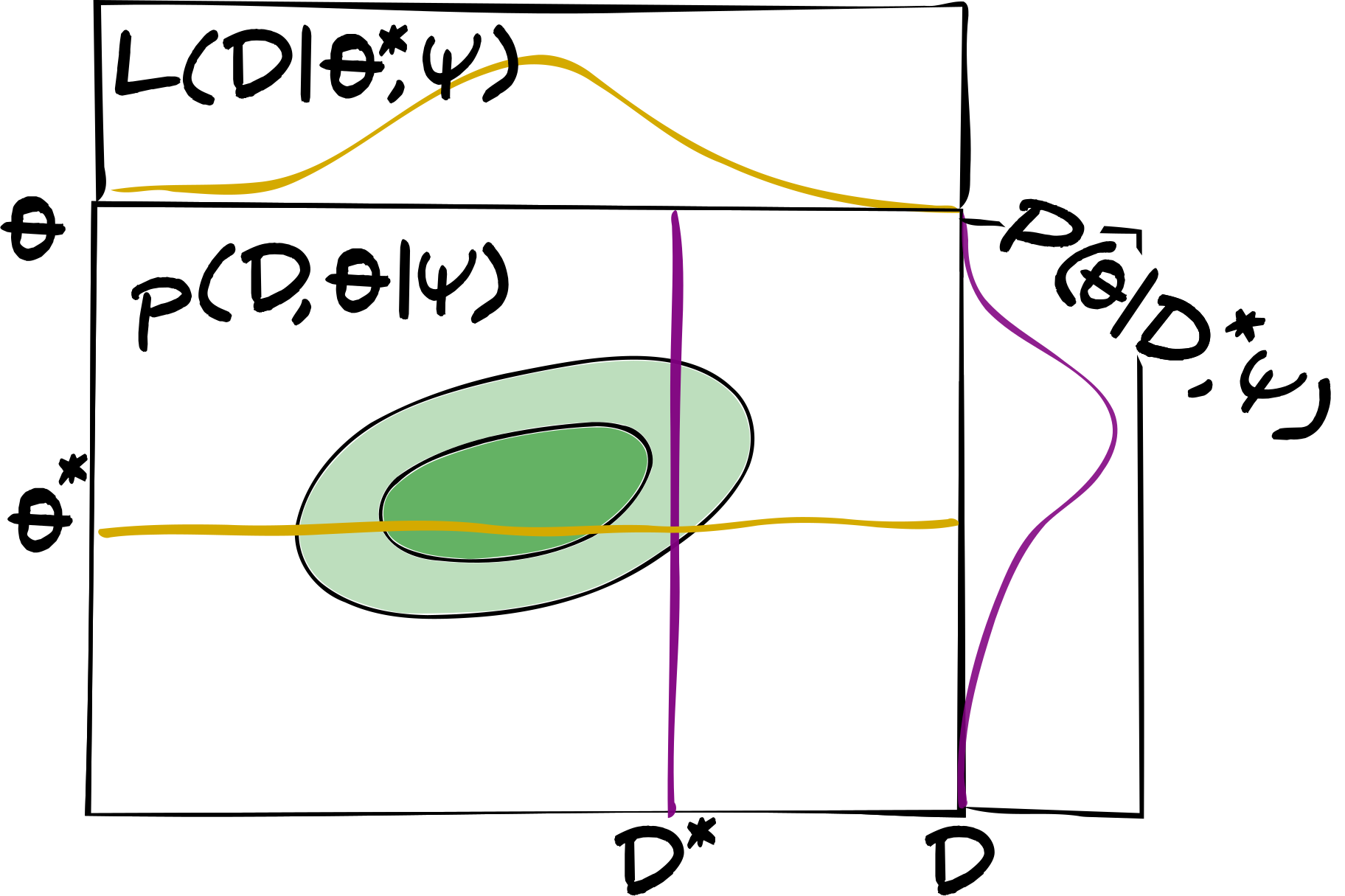
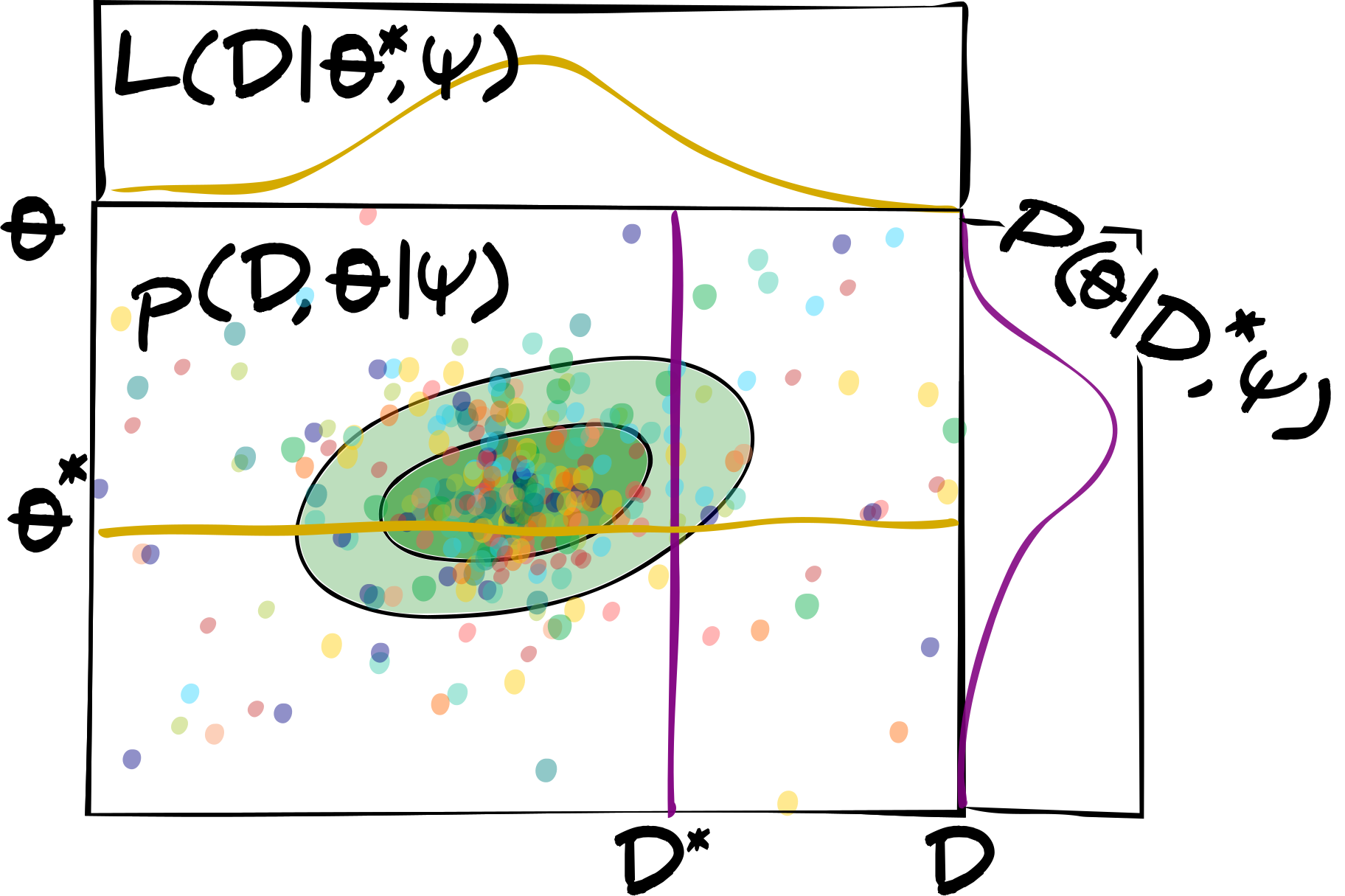
Neural networks formulated as Bayesian models
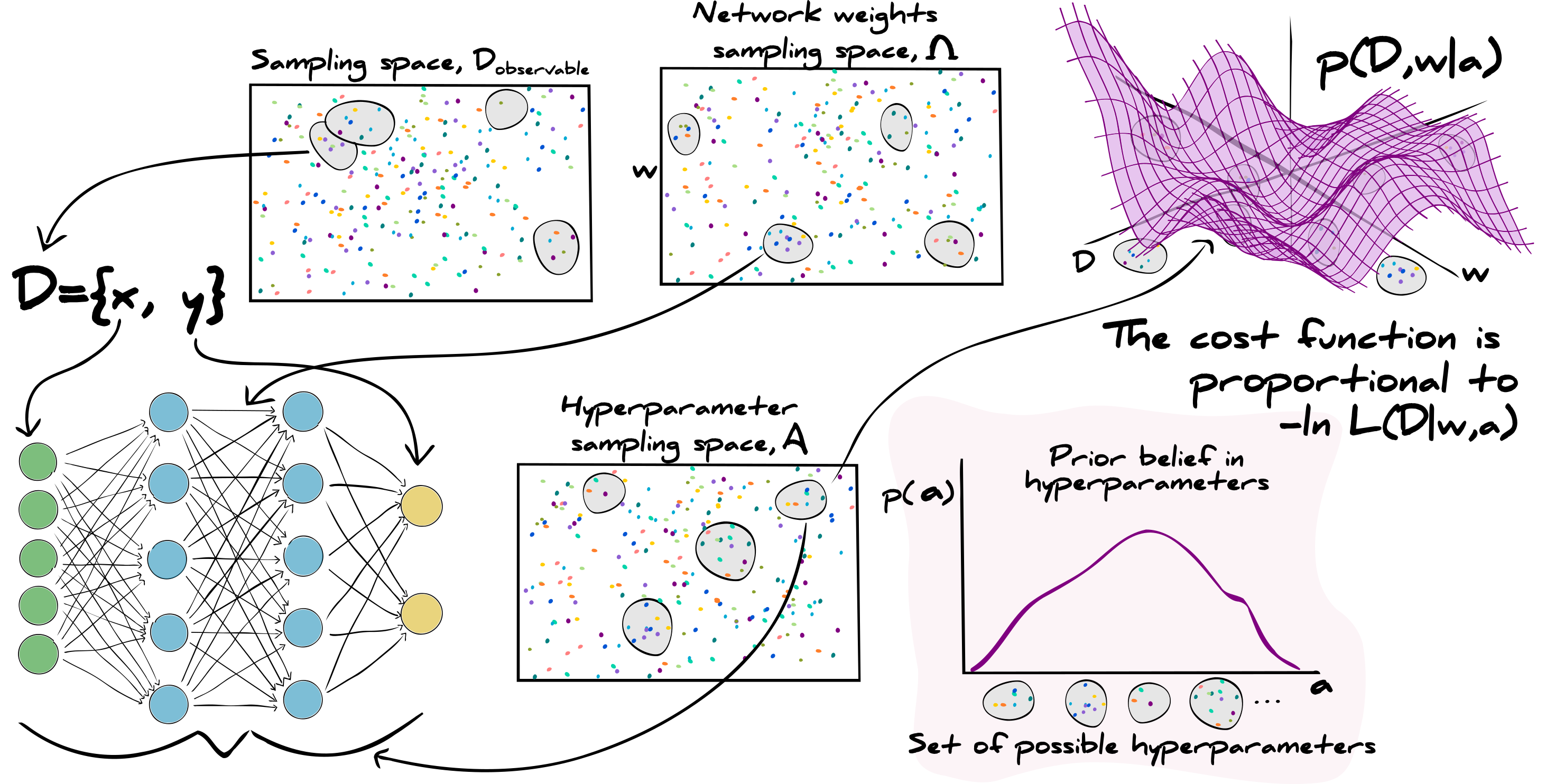
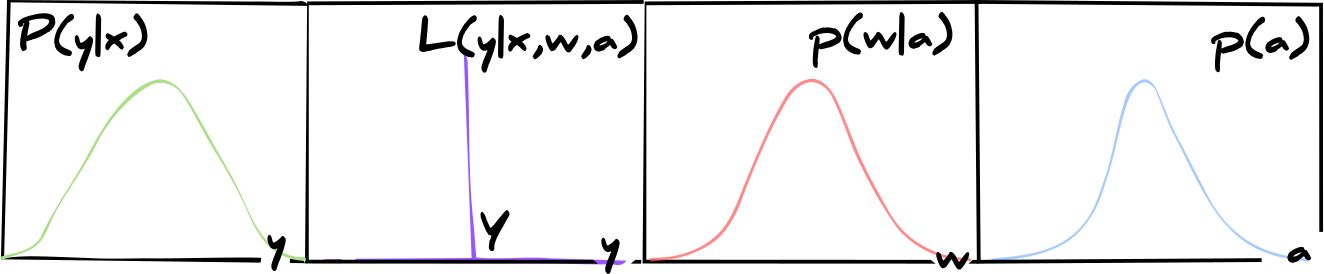
How likely is any predicted output?
$$\mathcal{P}(\mathscr{y}|{\bf x})=\int_\Omega\int_\mathcal{A}d\omega d\alpha\,\mathcal{L}(\mathscr{y}|{\bf x},\omega,\alpha)\mathscr{p}(\omega|\alpha)\mathscr{p}(\alpha)$$
A neural network is deterministic
How likely is any predicted output?
$$\mathcal{P}(\mathscr{y}|{\bf x})=\int_\Omega\int_\mathcal{A}d\omega d\alpha\,\mathcal{L}(\mathscr{y}|{\bf x},\omega,\alpha)\mathscr{p}(\omega|\alpha)\mathscr{p}(\alpha)$$
Why neural networks do not work...
Choose a neural network
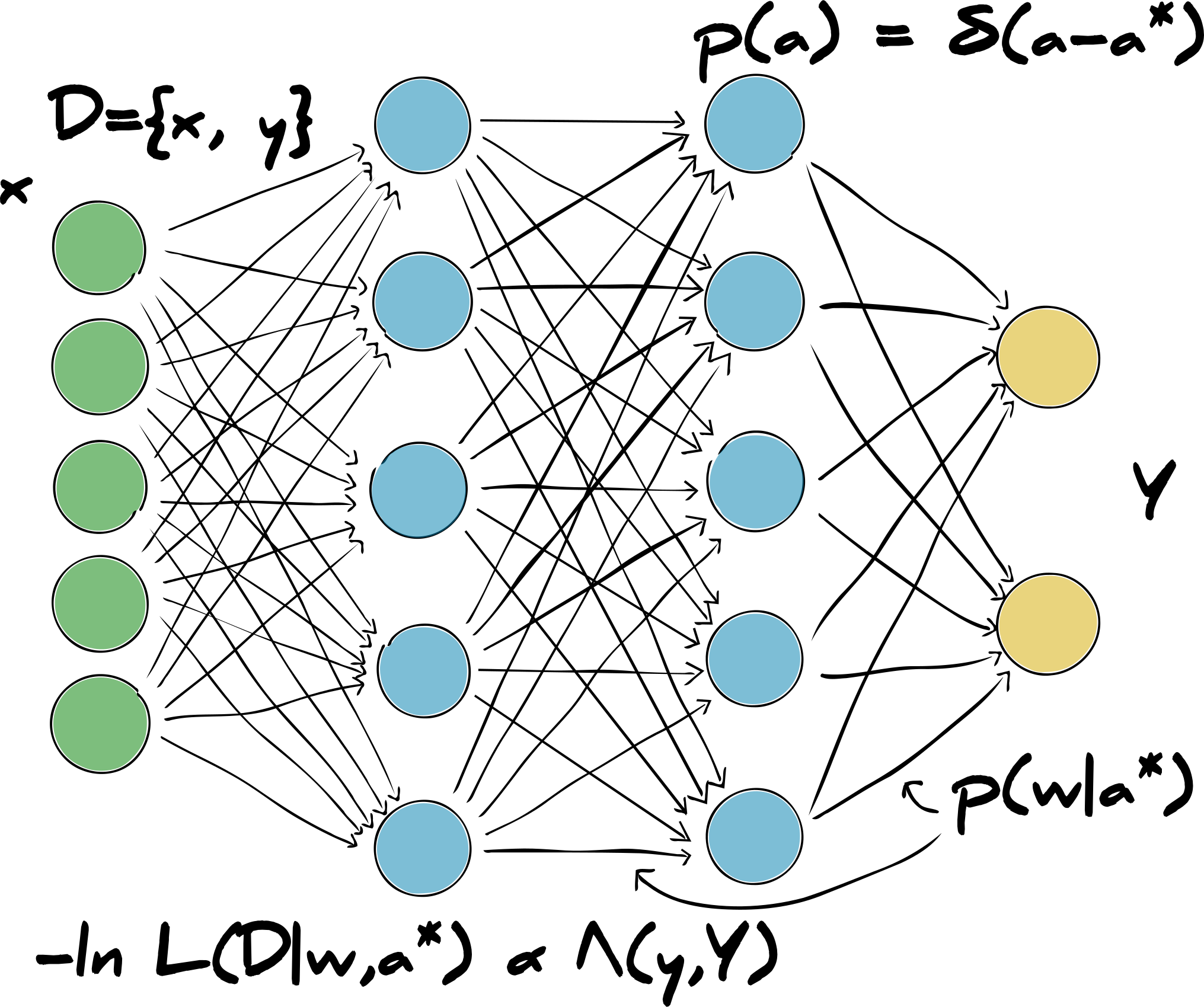
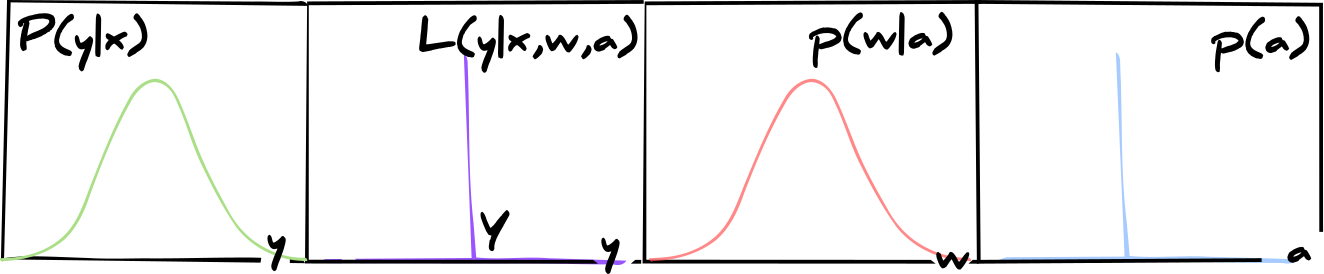
Maximum likelihood estimates of the weights
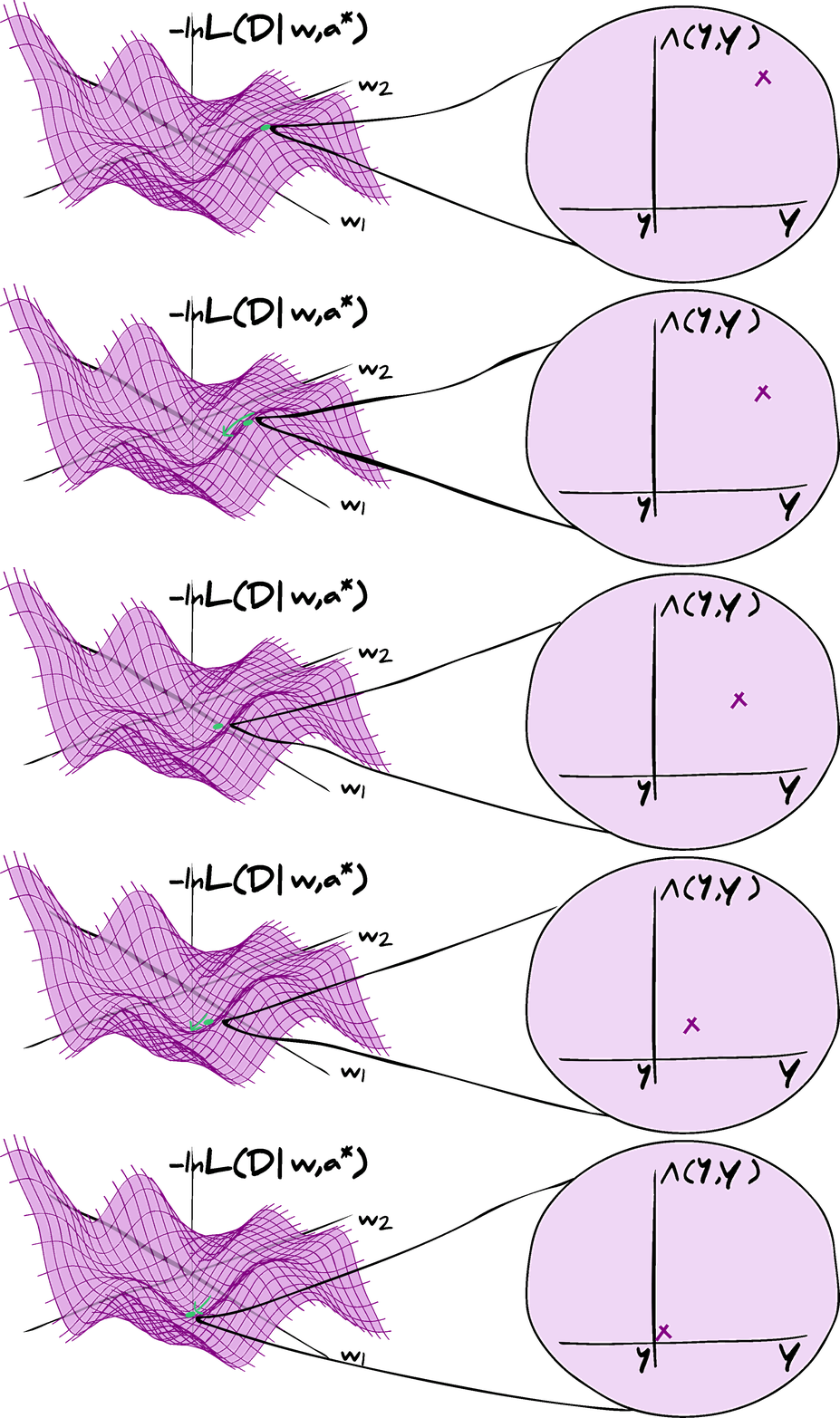
Deterministic neural network
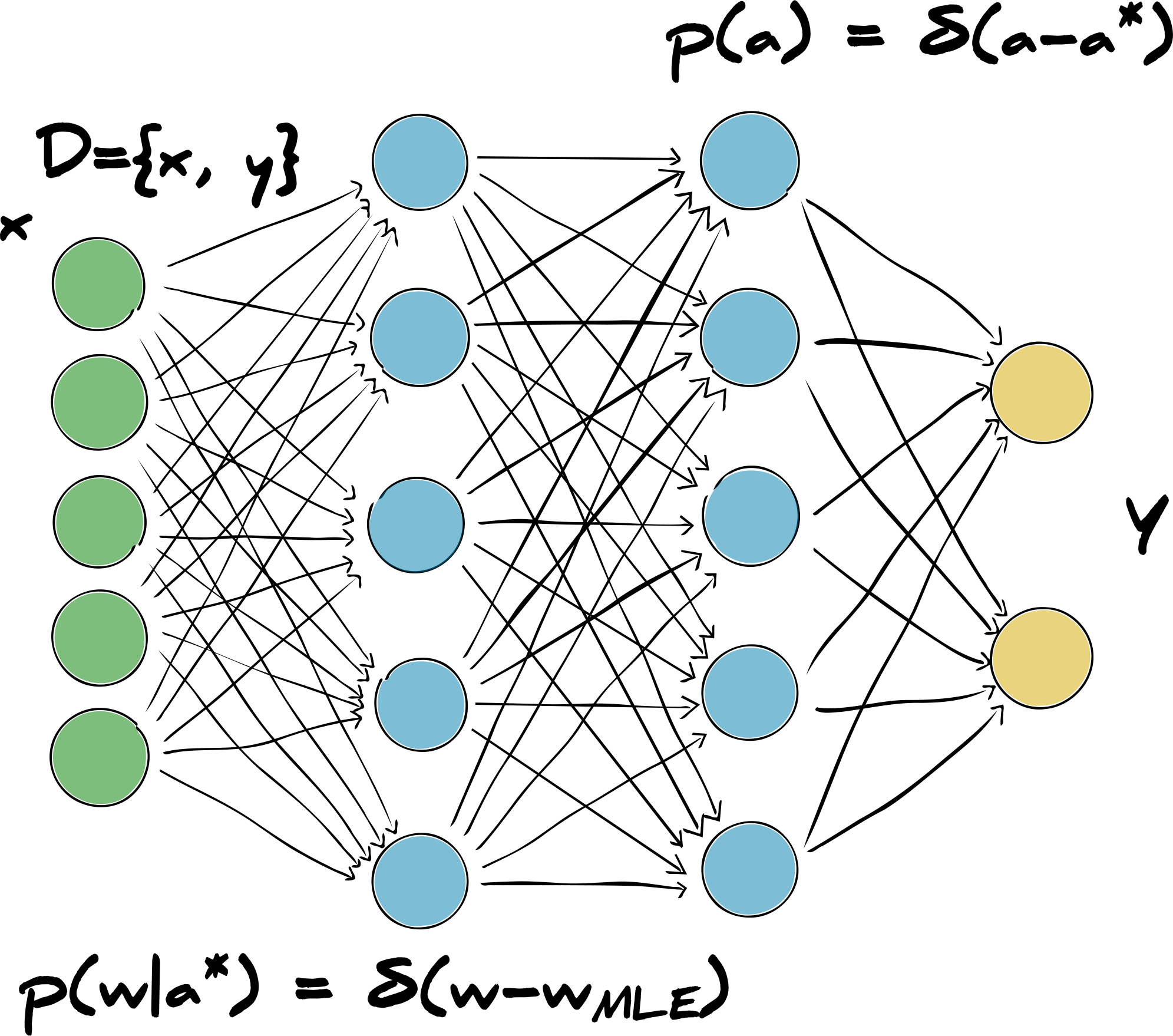
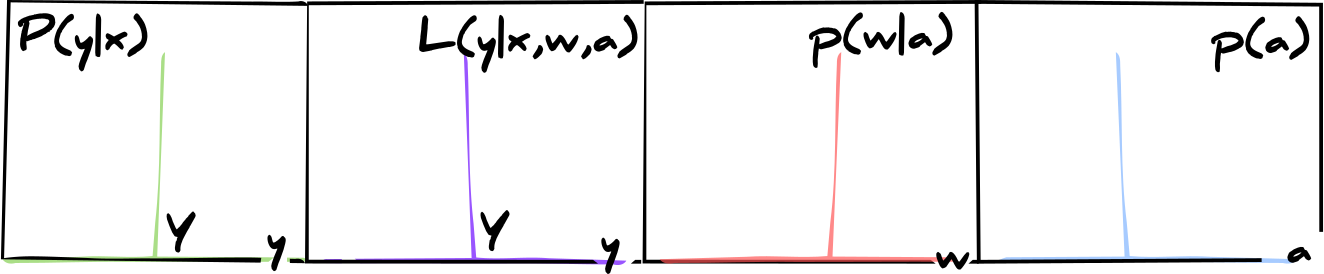
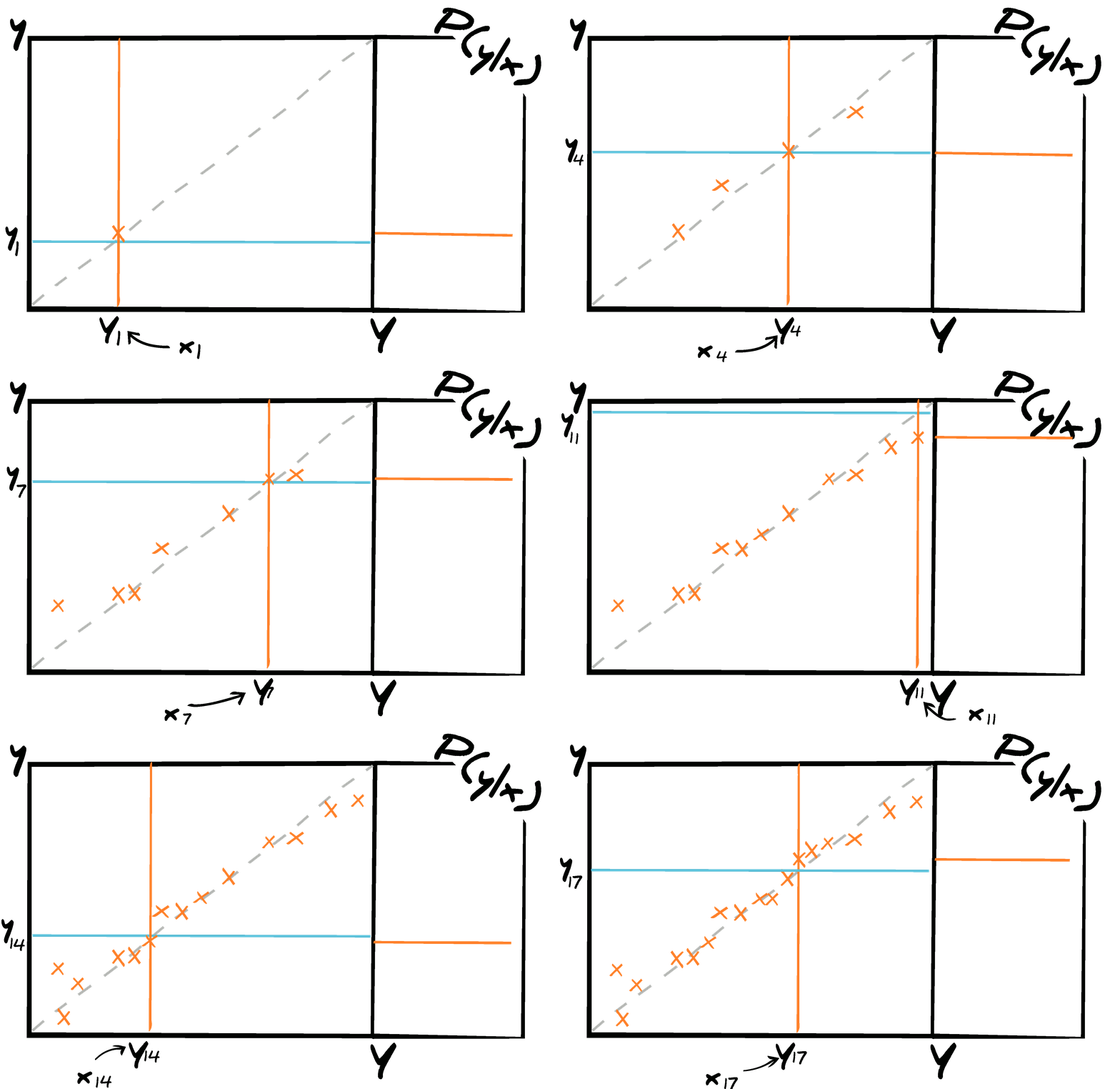
No characterisation of the epistemic uncertainty
Neural density estimators
Mixture density networks
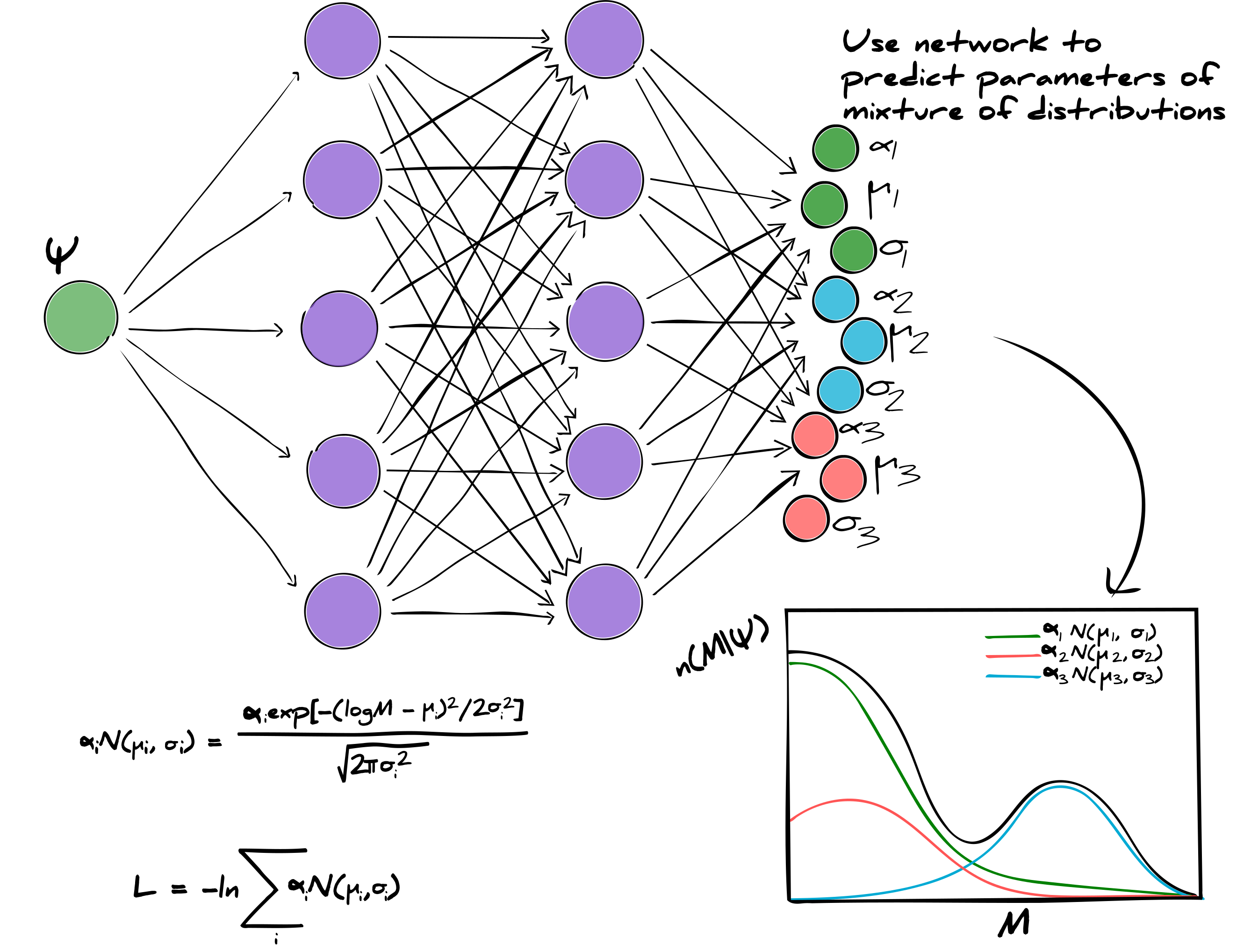
Normalising flows
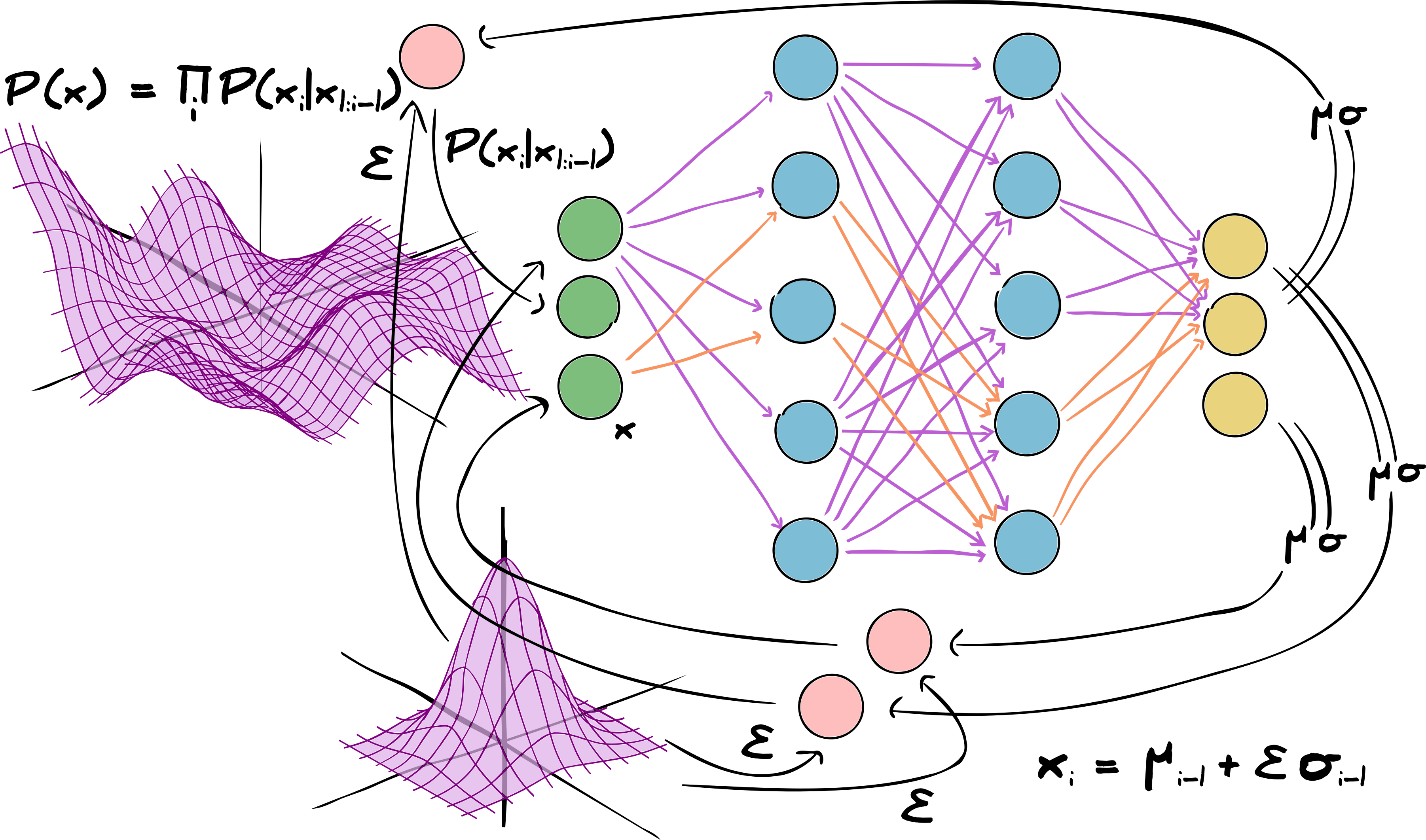
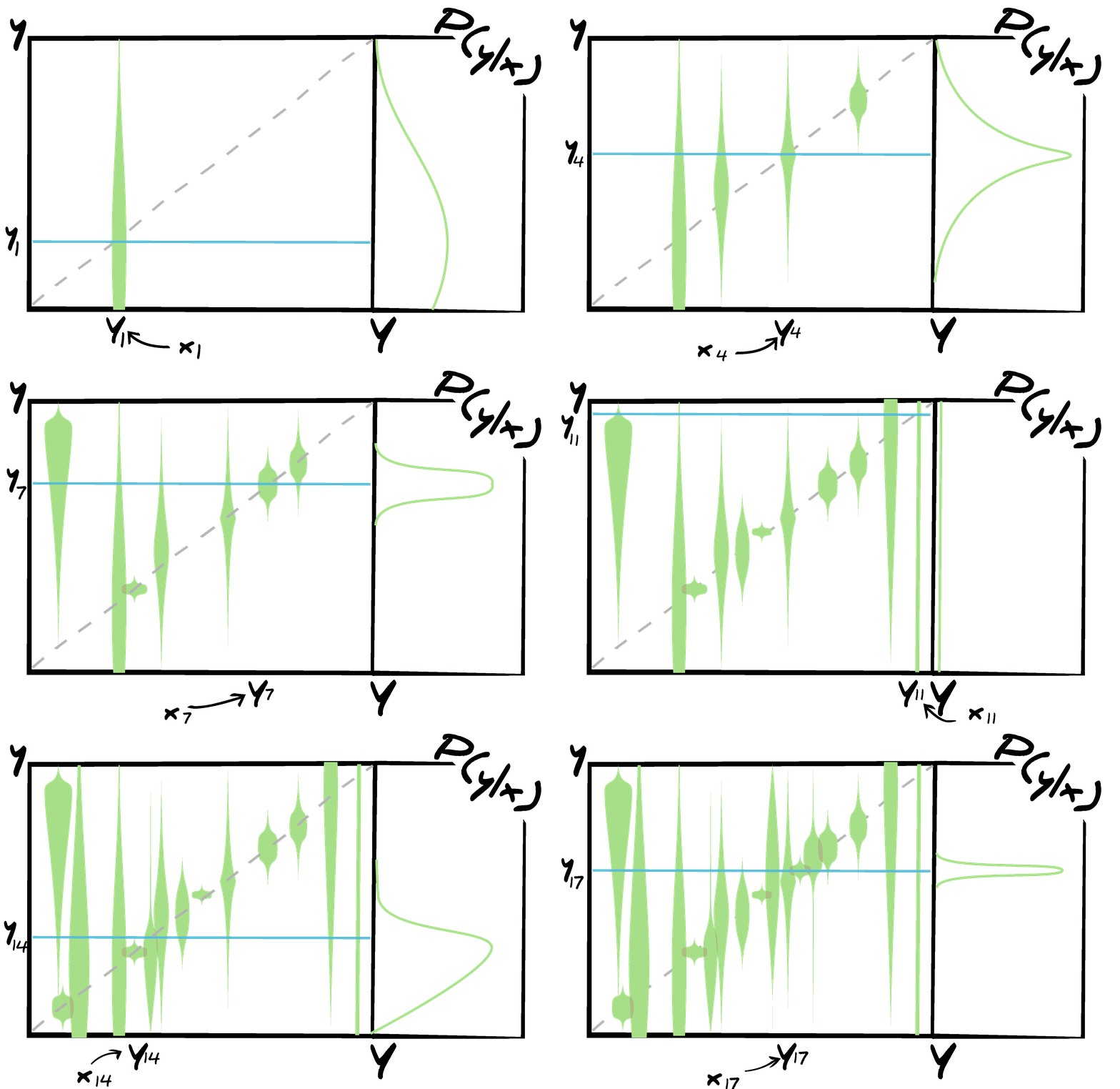
But...
$$\begin{align*} \mathcal{P}(\mathcal{P}(\mathscr{y}|{\bf x})|{\bf x})&=\int_\Omega d\omega\,\mathcal{L}(\mathcal{P}(\mathscr{y}|{\bf x})|{\bf x},\omega,\alpha^*)\mathscr{p}(\omega|\alpha^*)\\ &=\int_\Omega d\omega\,\mathcal{L}(\mathcal{P}(\mathscr{y}|{\bf x})|{\bf x},\omega,\alpha^*)\delta(\omega-\omega_\textrm{MLE})\\ &=\mathcal{L}(\mathcal{P}(\mathscr{y}|{\bf x})|{\bf x},\omega_\textrm{MLE},\alpha^*)\\ &=1 \end{align*}$$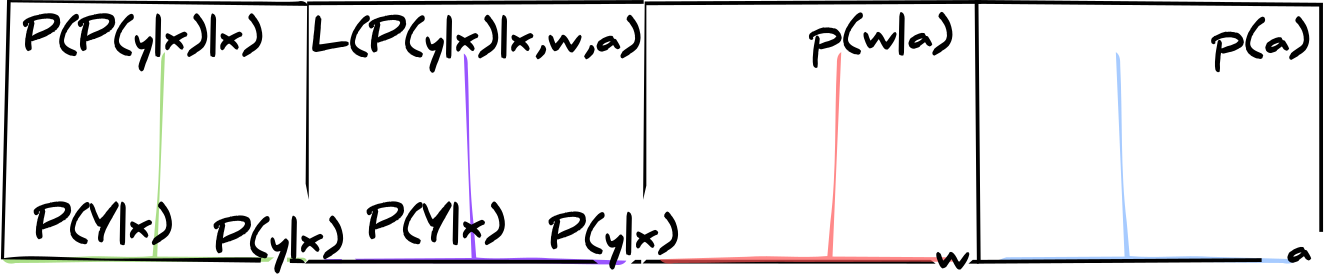
Bayesian neural networks
Networks used in a Bayesian context
Practical implementations
Numerically approximate methods using the exact distribution
Markov chain Monte Carlo methods
Markov chains

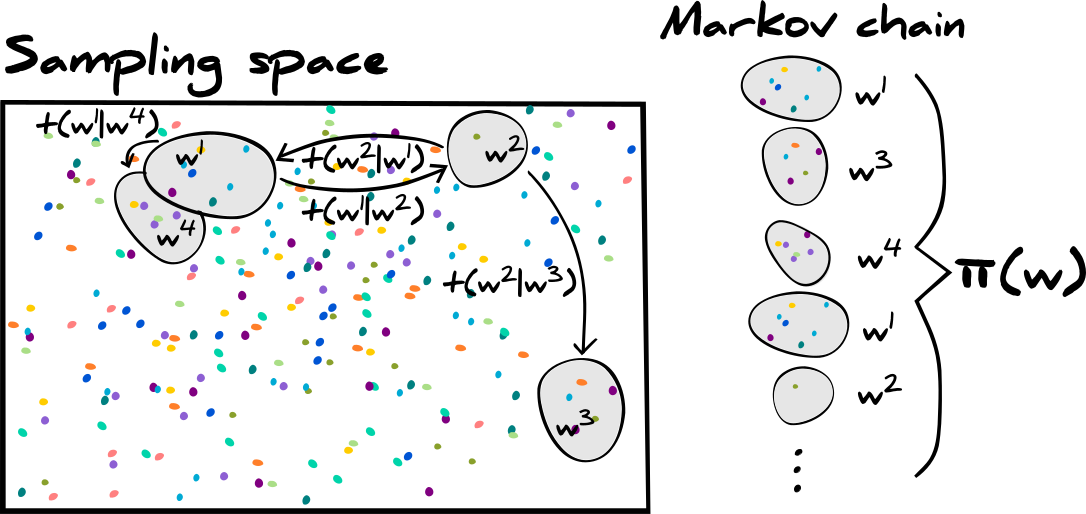
Stationary distribution, $\pi(\omega)\approx\mathcal{P}(\omega|\mathcal{D},\alpha^*)$,
ensured by detailed balance
$$\pi(\omega^i)t(\omega^{i+1}|\omega^i)=\pi(\omega^{i+1})t(\omega^i|\omega^{i+1})$$
Dropping the evidence
$$\begin{align*} \frac{t(\omega^{i+1}|\omega^i)}{t(\omega^i|\omega^{i+1})}&=\frac{\mathcal{P}(\omega^{i+1}|\mathcal{D},\alpha^*)}{\mathcal{P}(\omega^i|\mathcal{D},\alpha^*)}\\\\ &=\frac{\mathcal{L}(\mathcal{D}|\omega^{i+1},\alpha^*)\mathscr{p}(\omega^{i+1}|\alpha^*)/\mathscr{p}(\mathcal{D}|\alpha^*)}{\mathcal{L}(\mathcal{D}|\omega^i,\alpha^*)\mathscr{p}(\omega^i|\alpha^*)/\mathscr{p}(\mathcal{D}|\alpha^*)}\\\\ &=\frac{\mathcal{L}(\mathcal{D}|\omega^{i+1},\alpha^*)\mathscr{p}(\omega^{i+1}|\alpha^*)}{\mathcal{L}(\mathcal{D}|\omega^i,\alpha^*)\mathscr{p}(\omega^i|\alpha^*)}\\\\ &=\frac{\varrho(\omega^{i+1})}{\varrho(\omega^i)} \end{align*}$$Metropolis Rosenbluth-Hastings
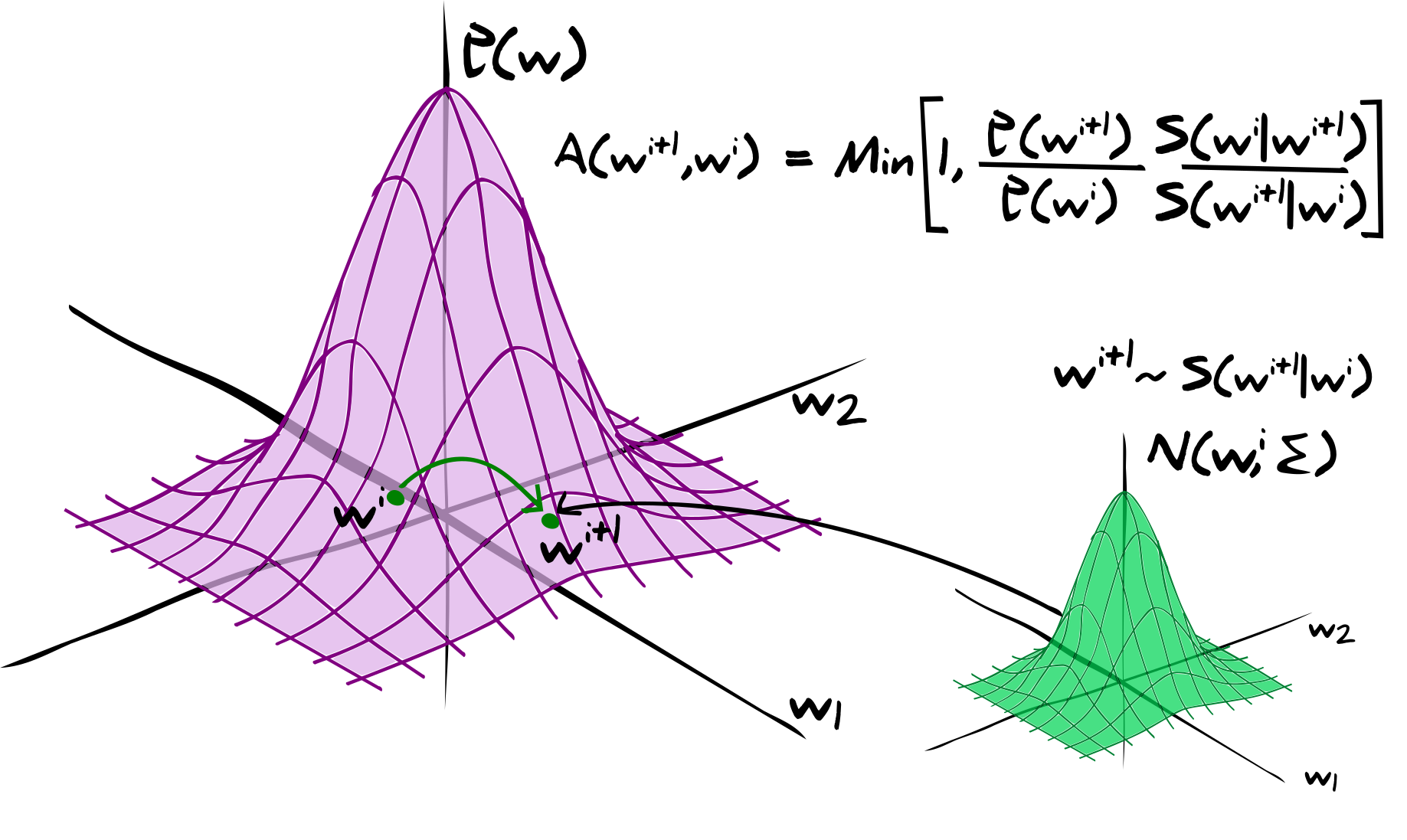
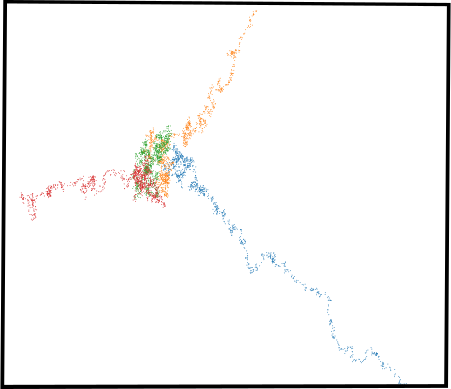
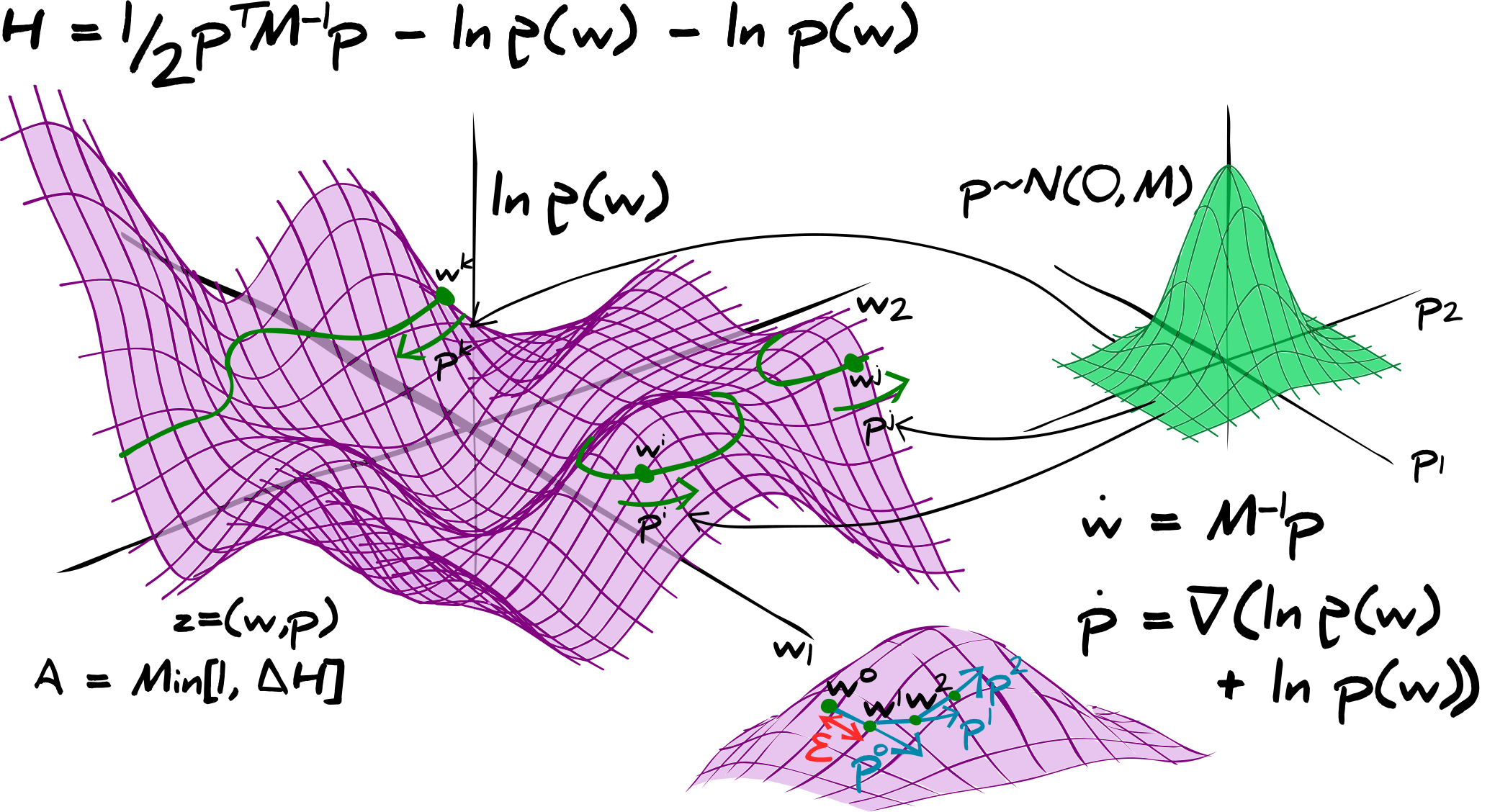
Mass matrix describes correlations - these are not known a priori
Quasi-Newonian HMC
Use the approximate Hessian, ${\bf B}$, for additional geometric information
$$\begin{align*}
\dot{\boldsymbol{\omega}} &={\bf B}{\bf M}^{-1}\boldsymbol{p} \\
\dot{\boldsymbol{p}} &={\bf B}\nabla\ln\varrho(\boldsymbol{\omega})
\end{align*}$$
Rescales the mass matrix so that steps are taken in a useful direction
Sampling the exact posterior of neural network parameters is possible...
But it is hyper-expensive and hyper-high-dimensional
There are only a small handfull of actual applications (bit.ly/NeuralBiasModel)
and most others are proof of concept
Exact treatment of approximate distributions
Variational inference
Approximate the posterior distribution of weights with analytic approximations
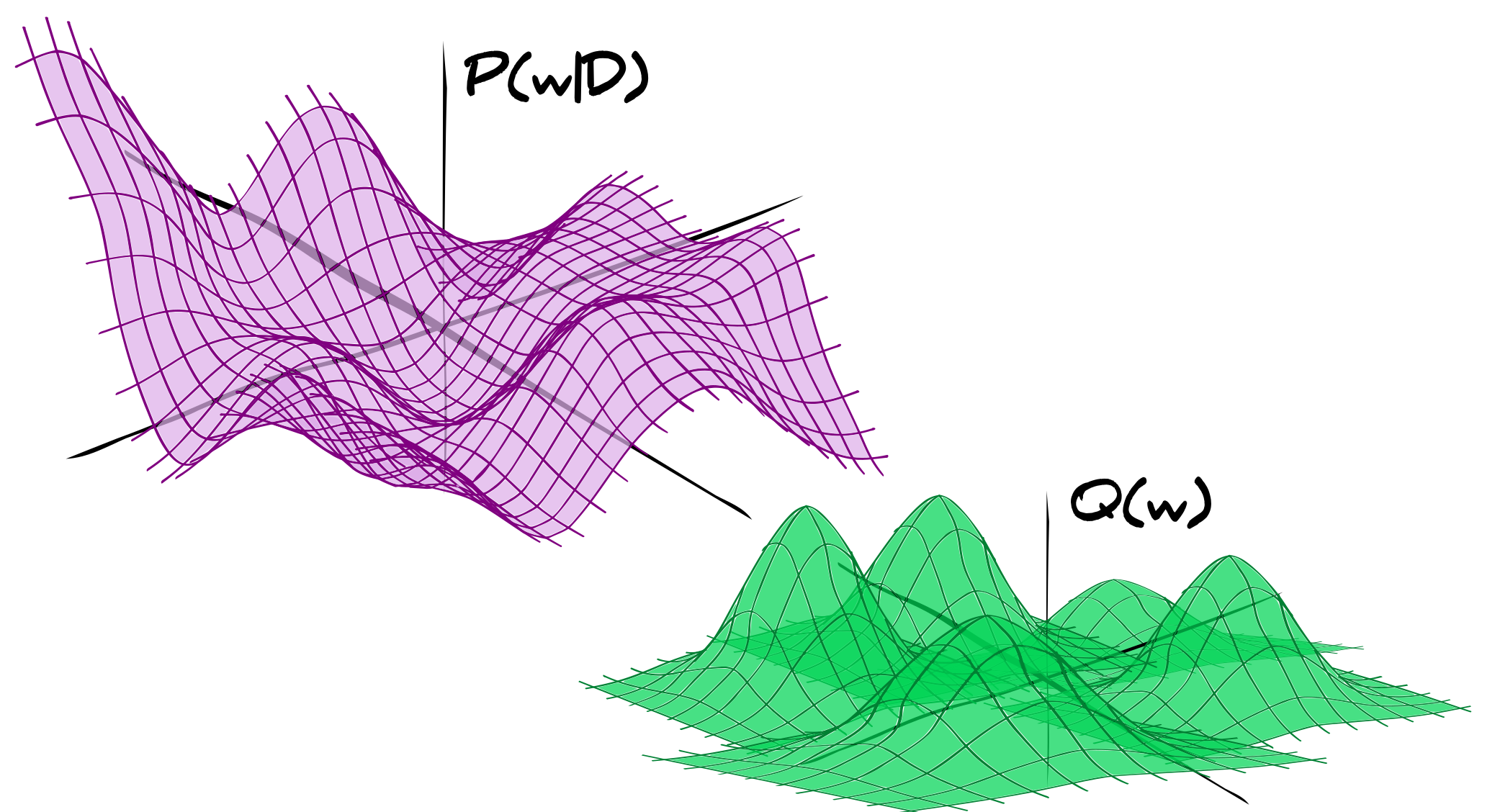
Analytic (or automatic) parameterised distributions
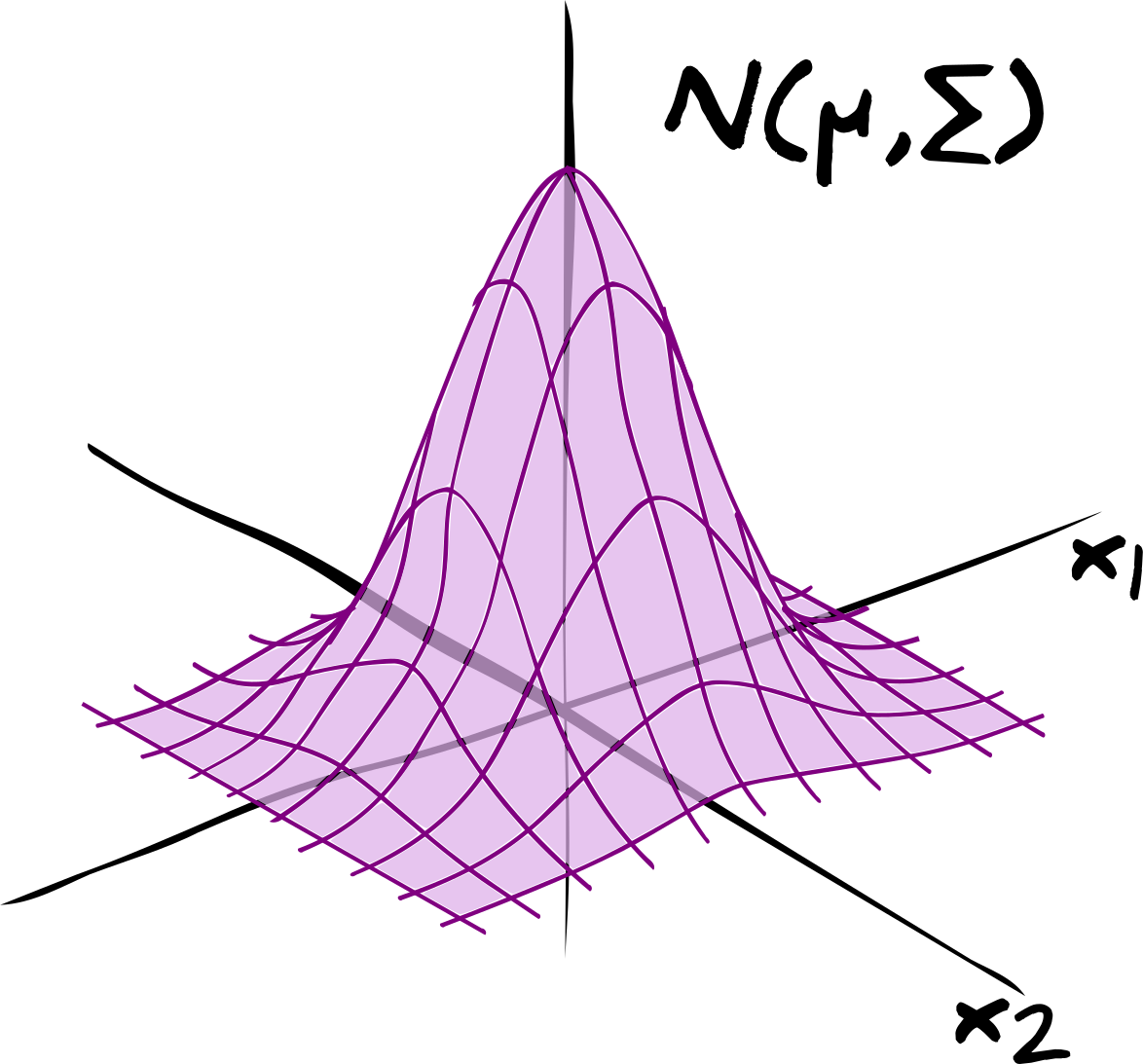
- Gaussian
- Beta
- Gamma
- Bernoulli
- Mixture of Gaussians
Normalising flows
How variational inference works
For variational inference we normally consider
$$\mathbb{KL}(\mathcal{Q}||\mathcal{P})=\int_\Omega d\omega\,\mathcal{Q}(\omega)\ln\frac{\mathcal{Q}(\omega)}{\mathcal{P}(\omega|\mathcal{D})}$$
since the expectation value of $\mathcal{P}(\omega|\mathcal{D})$ is intractable.
Minimising the reverse KL divergence is equivalent to expectation-maximisation.
Evidence Lower BOund (ELBO)
How do we deal with the intractable posterior $\mathcal{P}(\omega|\mathcal{D})$?
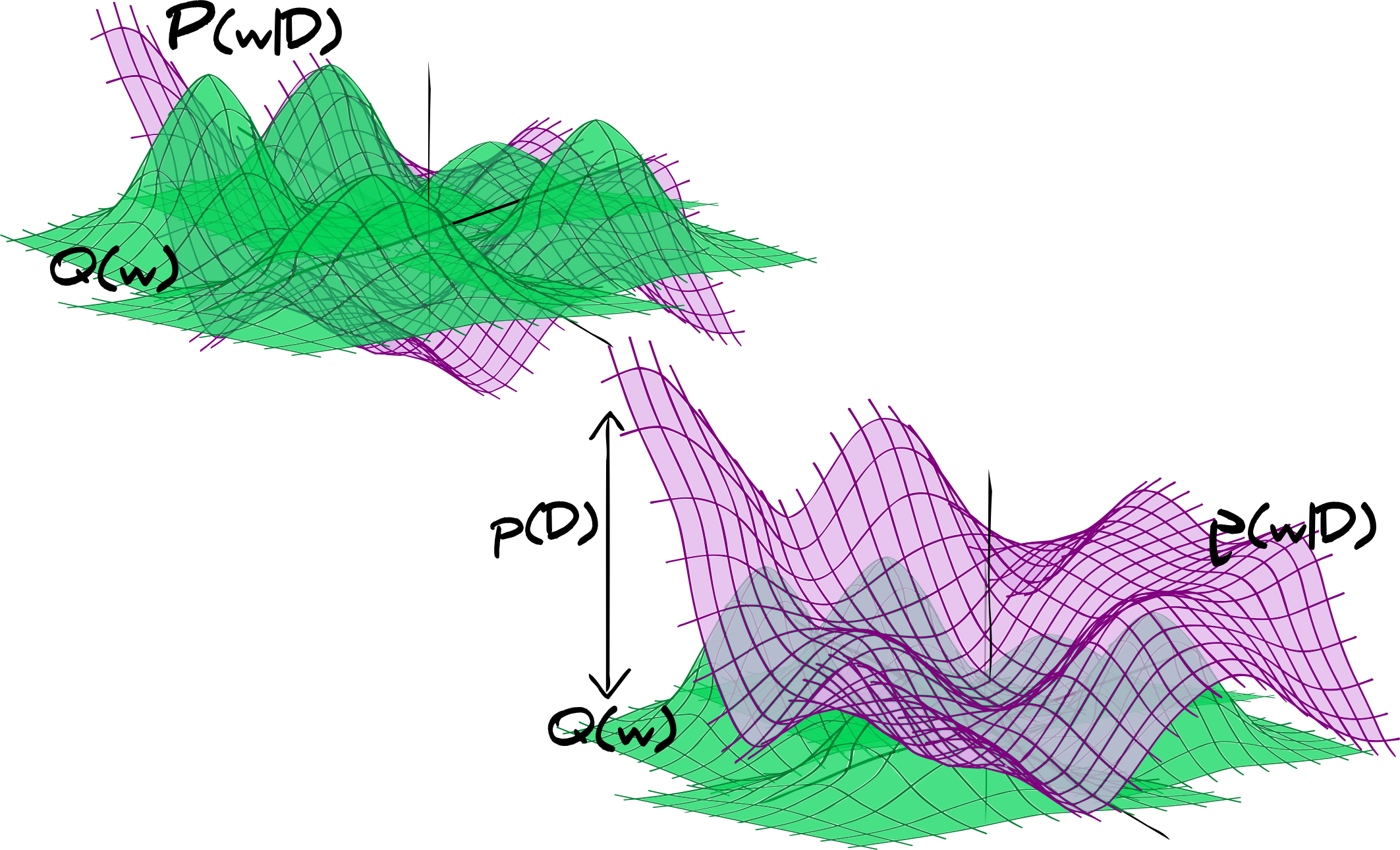
$$\begin{align*} \small\mathbb{KL}(\mathcal{Q}||\mathcal{P}) &\small= \int_\Omega d\omega\,\mathcal{Q}(\omega)\ln\frac{\mathcal{Q}(\omega)}{\mathcal{P}(\omega|\mathcal{D})}\\ &\small=\mathbb{KL}(\mathcal{Q}||\varrho)+\ln\mathscr{p}(\mathcal{D})\\ \end{align*}$$
Minimising $\mathbb{KL}(\mathcal{Q}||\varrho)$ (maximising the ELBO) also minimises $\mathbb{KL}(\mathcal{Q}||\mathcal{P})$
Note, this is NOT Bayesian
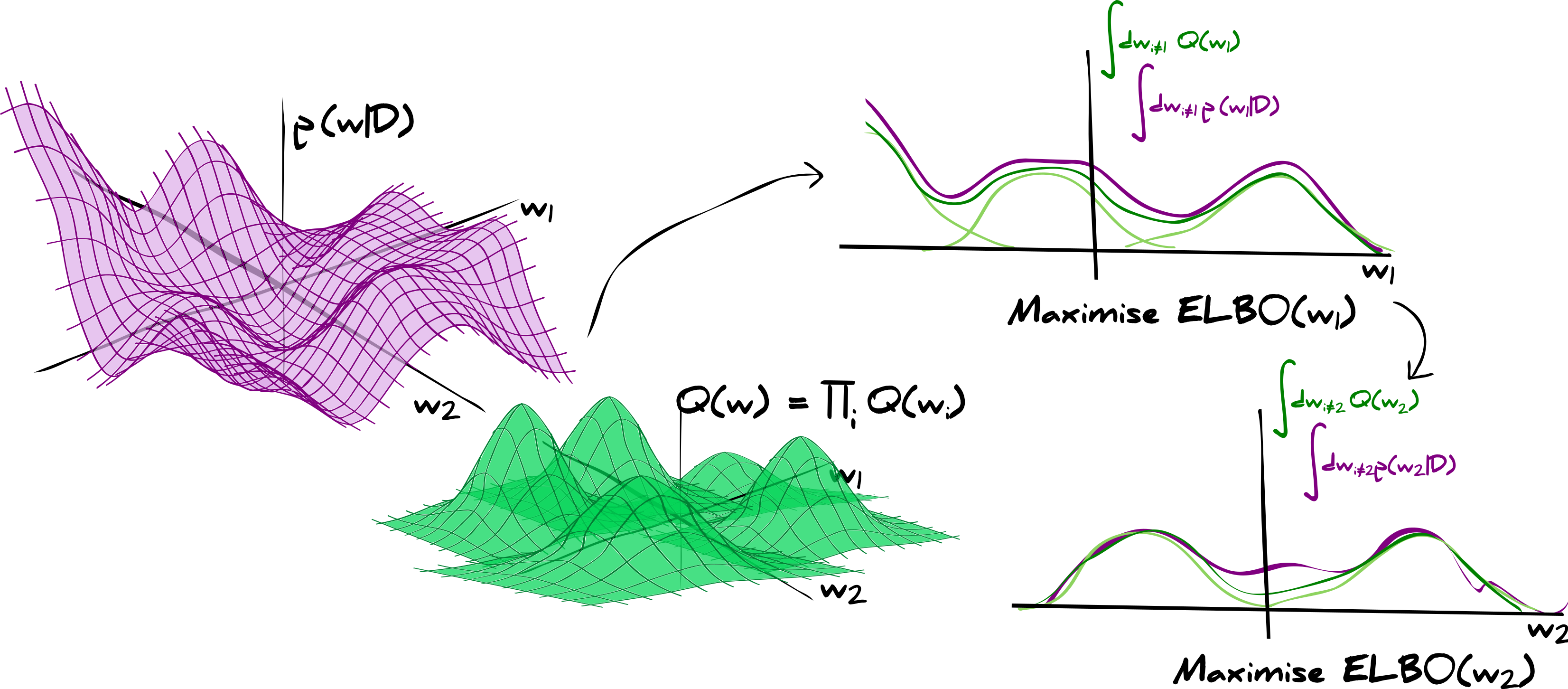
Which distributions?
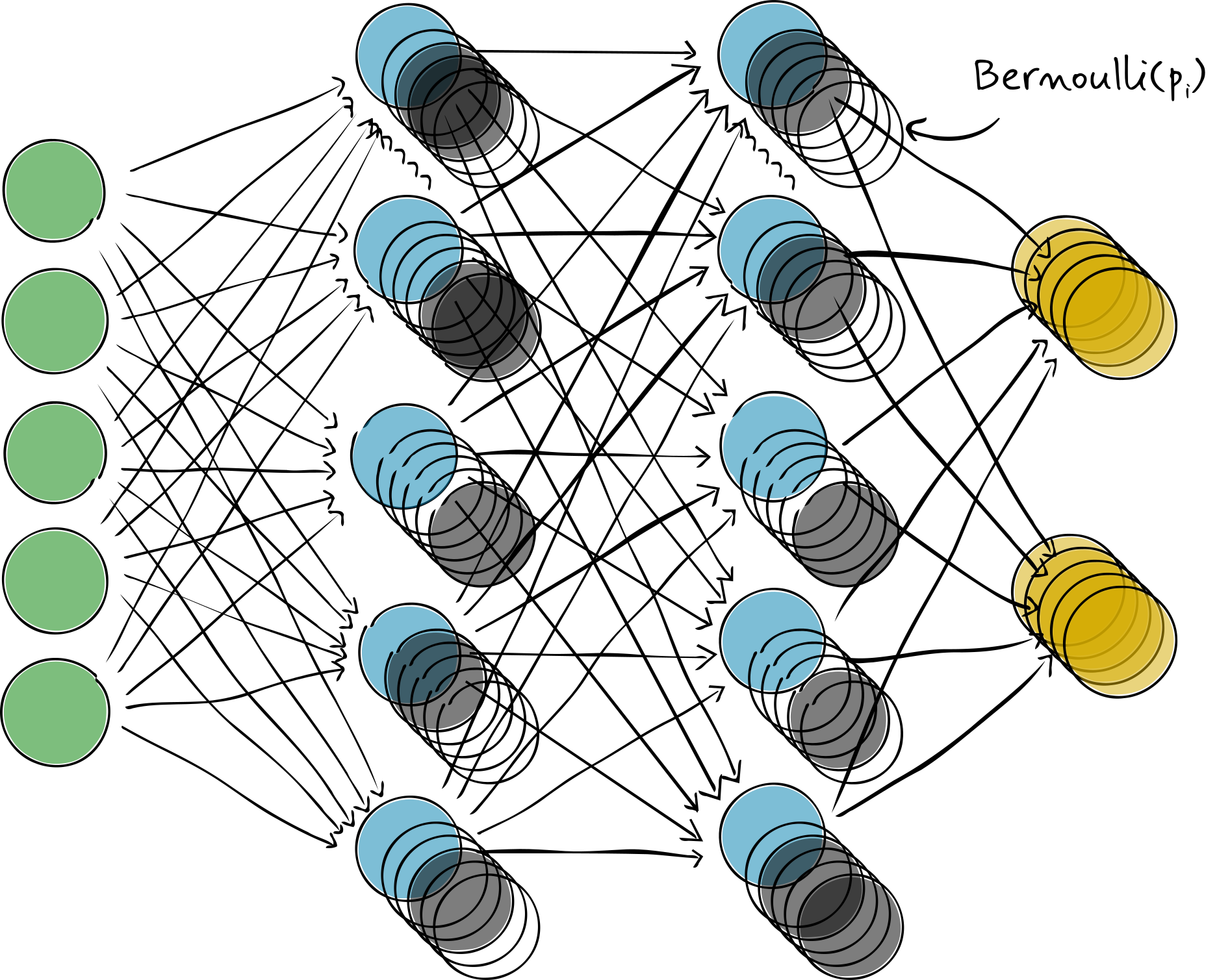
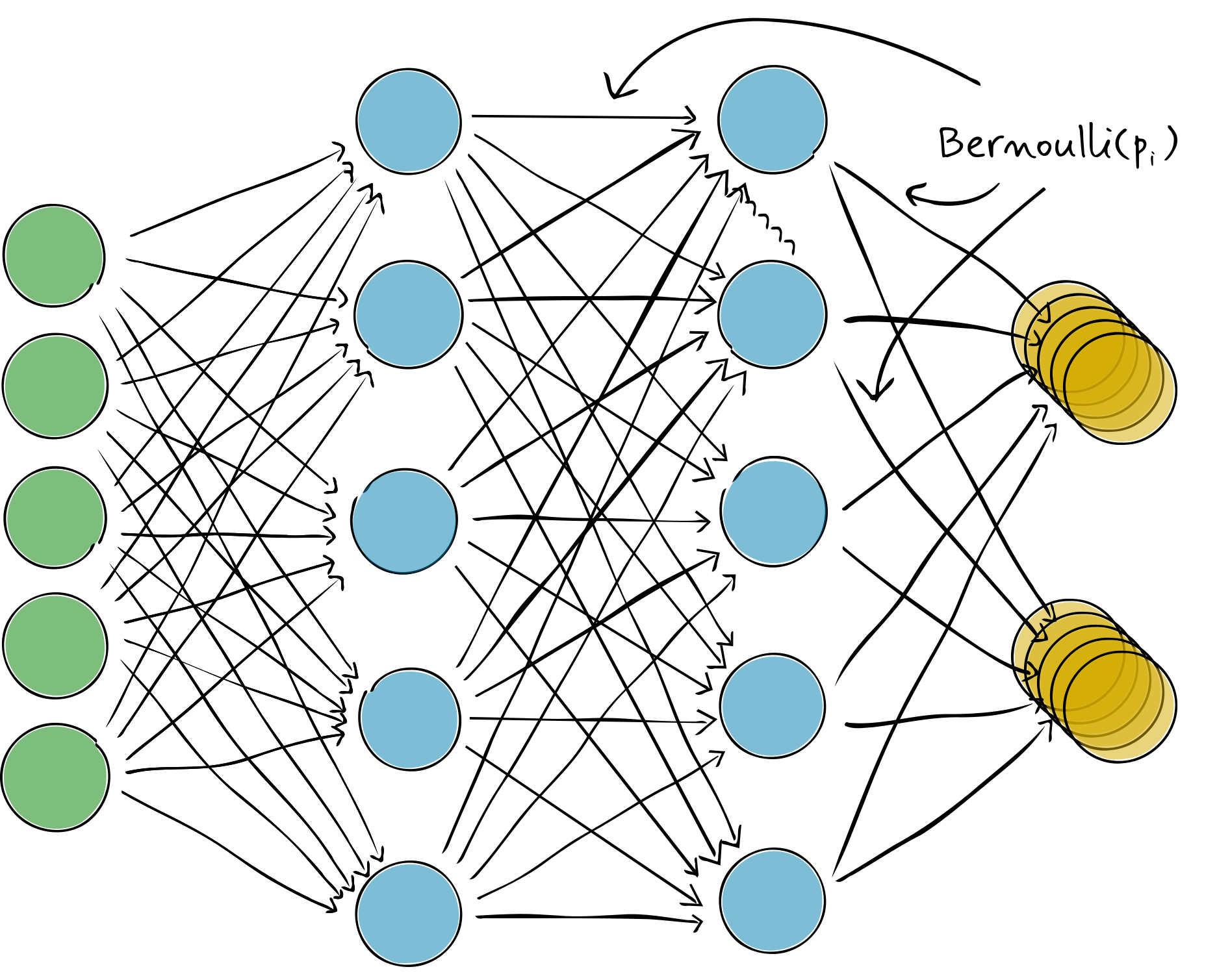
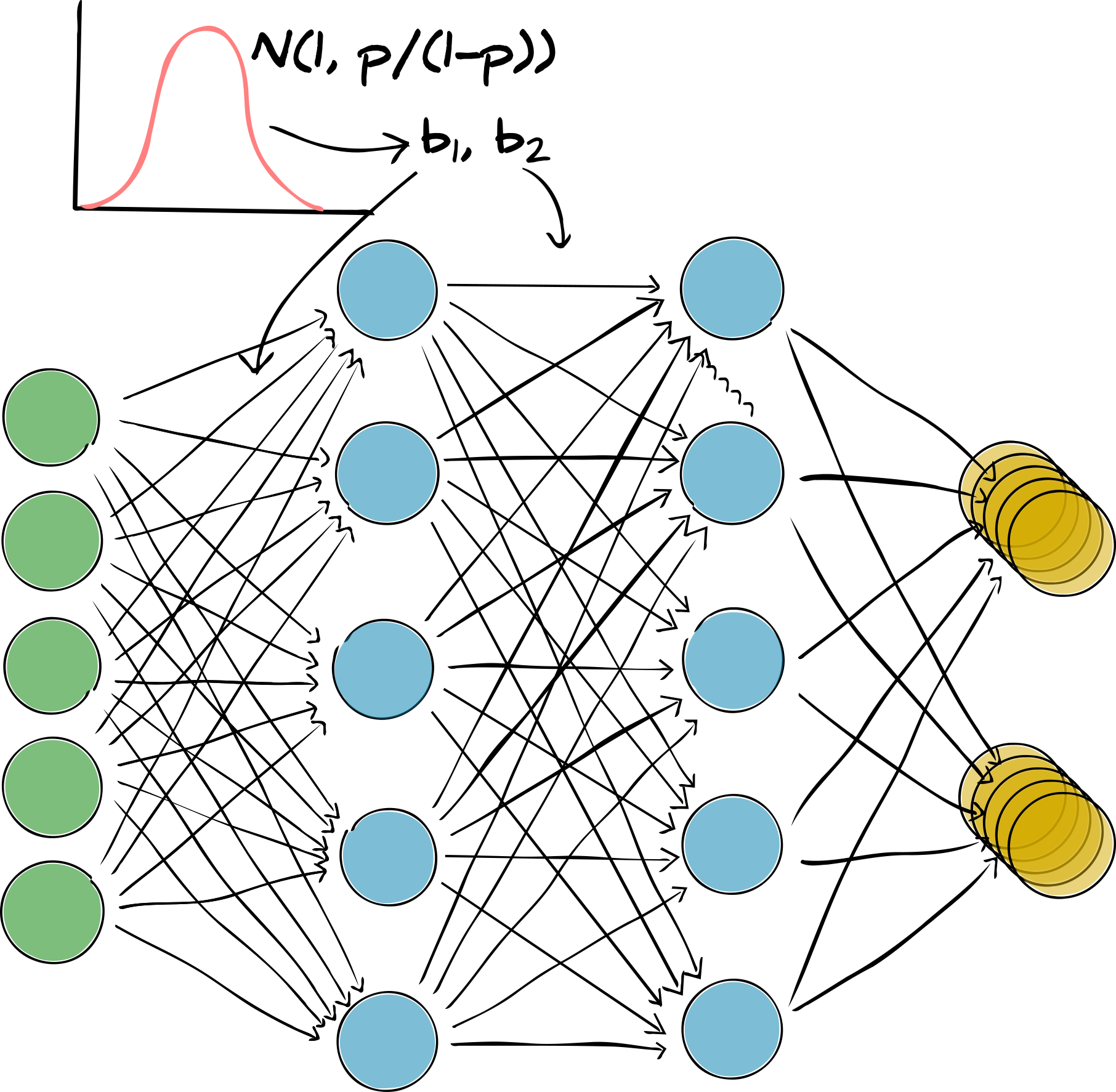
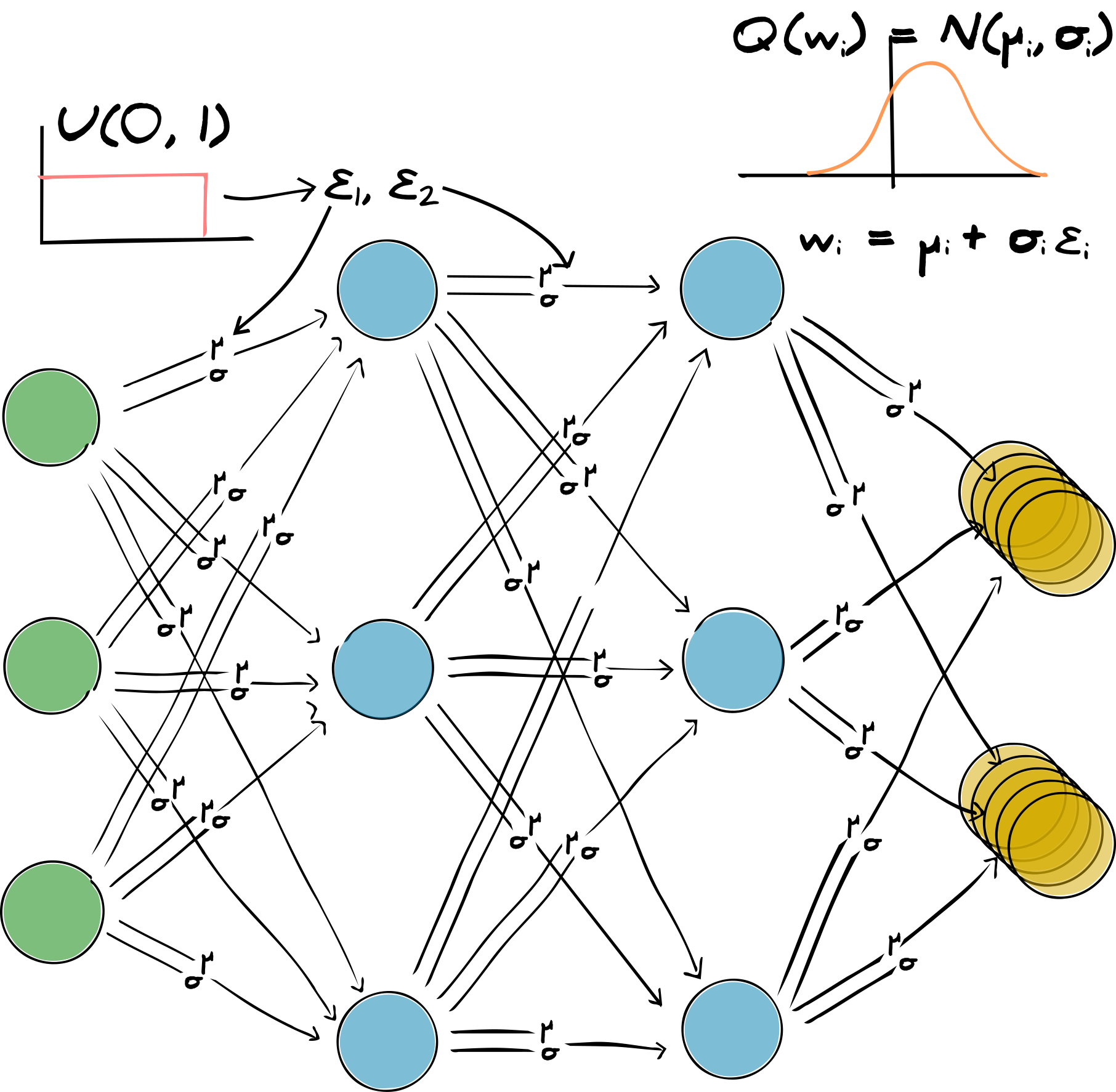
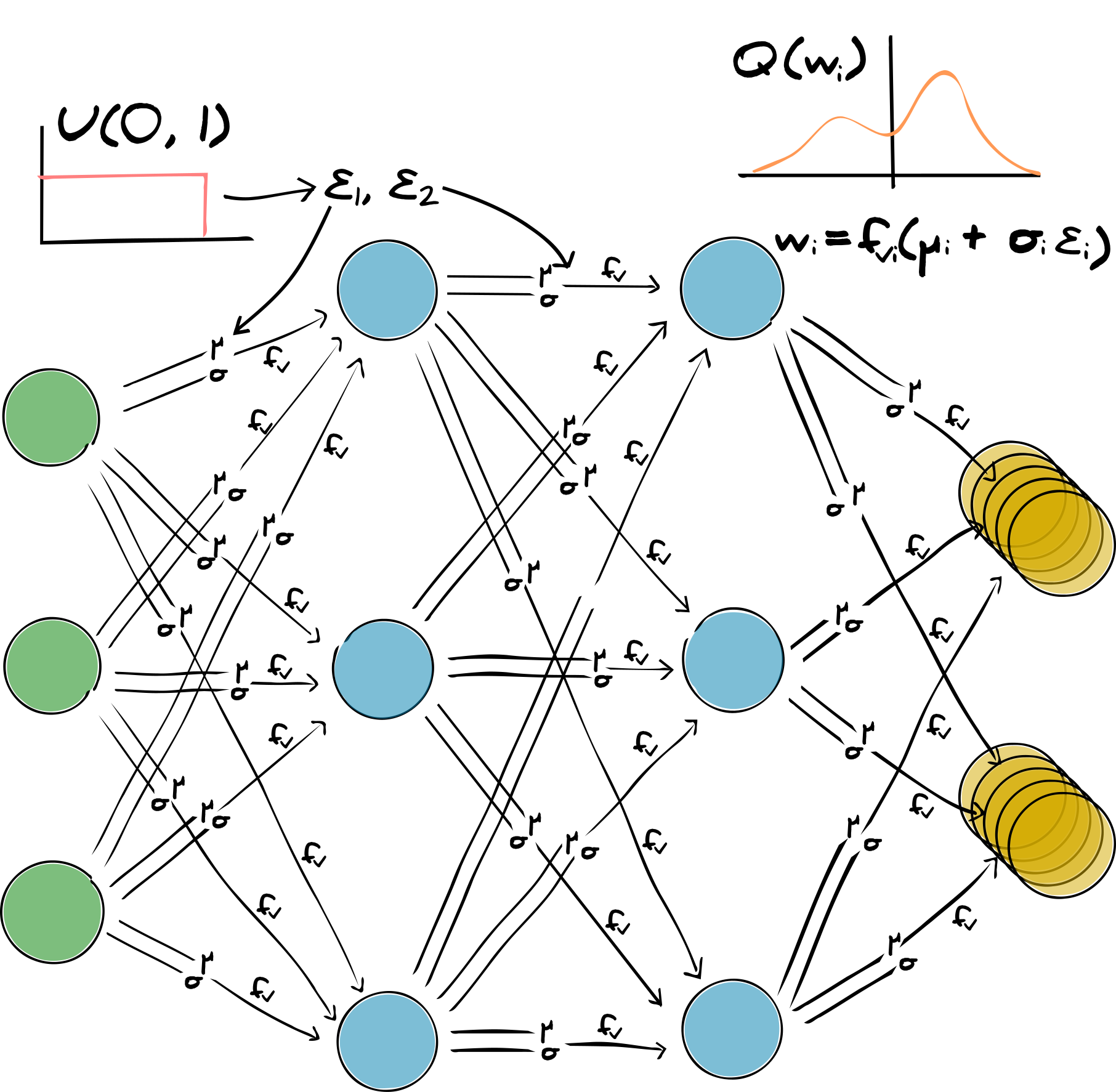
Variational Bayes isn't yet very Bayesian...
People get confused between Bayesian and neural networks using distributions
We should use the posterior distribution of weights and the form of the distribution
Instead we choose a (poor) choice of representation of the distribution and fit that
Epistemic uncertainty is not reduced (and may be increased or biased)
What do we actually want?
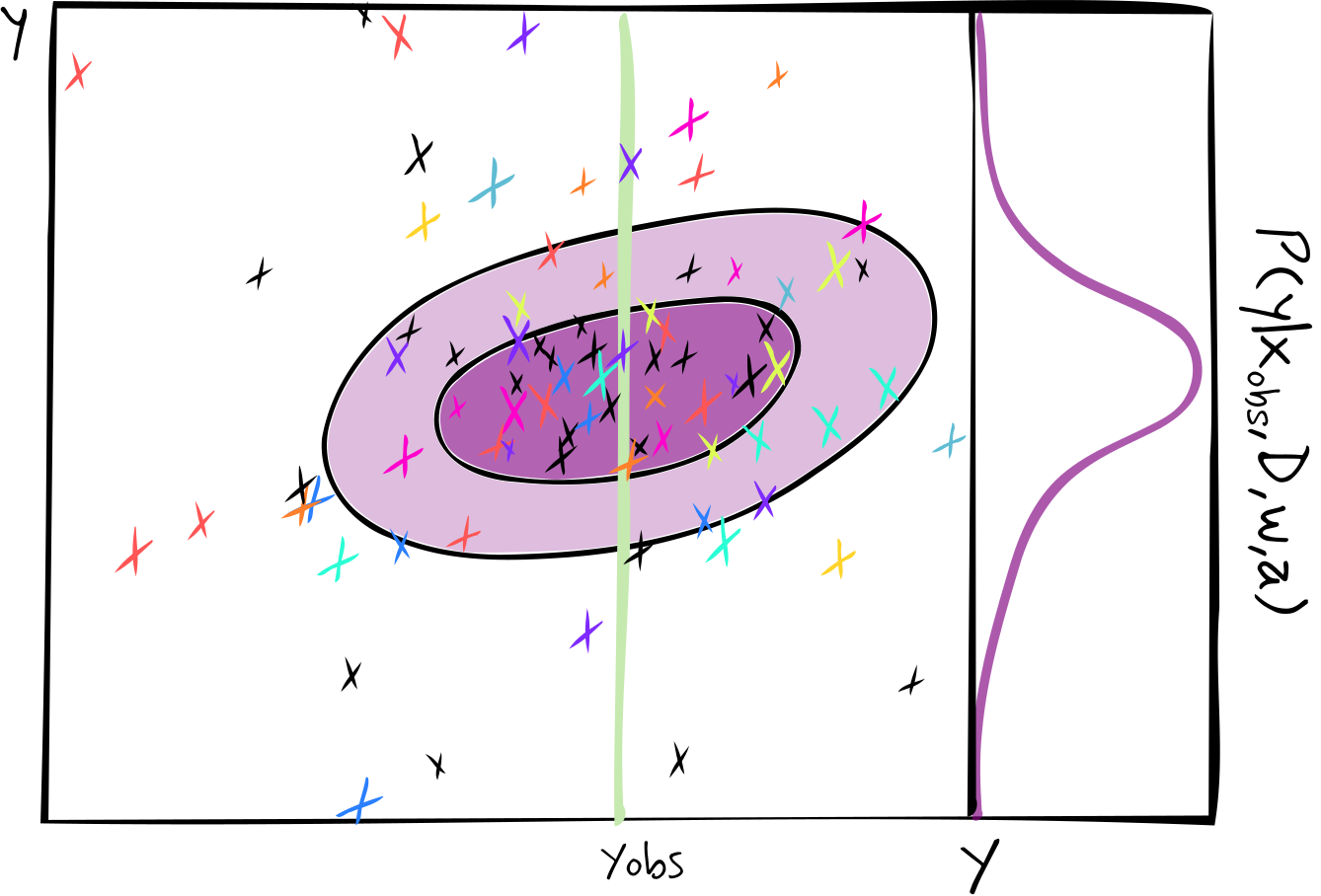
The posterior predictive distribution, $\mathcal{P}(\mathscr{y}|{\bf x})$?
Likelihood-free inference
Use a (well) trained network to find summaries
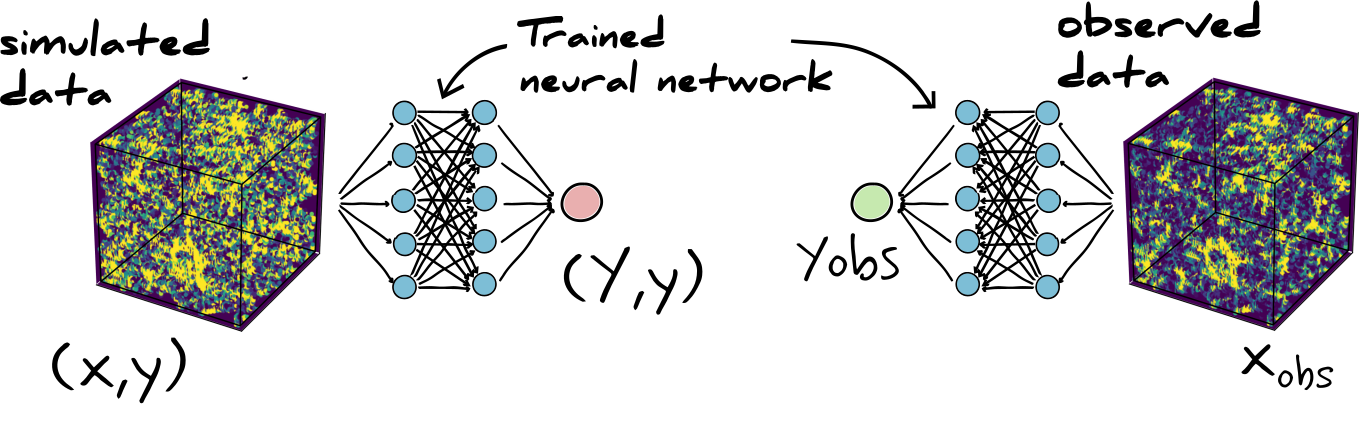
Generate simulations drawn from prior and summarise
Make a kernel (or neural) density estimate (or use ABC) of the summary-parameter pairs