For a bit of early morning compression fun why not go to
tinyurl.com/IMNN-AICosmoor even better...
pip install IMNN jupyter matplotlib
git clone https://github.com/tomcharnock/IMNN-LFI_Taskforce.git (branch AICosmo)
cd IMNN-LFI_Taskforce
jupyter notebook
... then you'll have the IMNN on your own machine - you lucky people
Lossless data compression for cosmological surveys (and everything else!)
Tom Charnock
Institut d'Astrophysique de Paris
Guilhem Lavaux, Benjamin D. Wandelt
Notebook: presentations.charnock.fr/IMNN/AICosmo19

|

|
|

|
|
YES! 
Information maximising neural networks
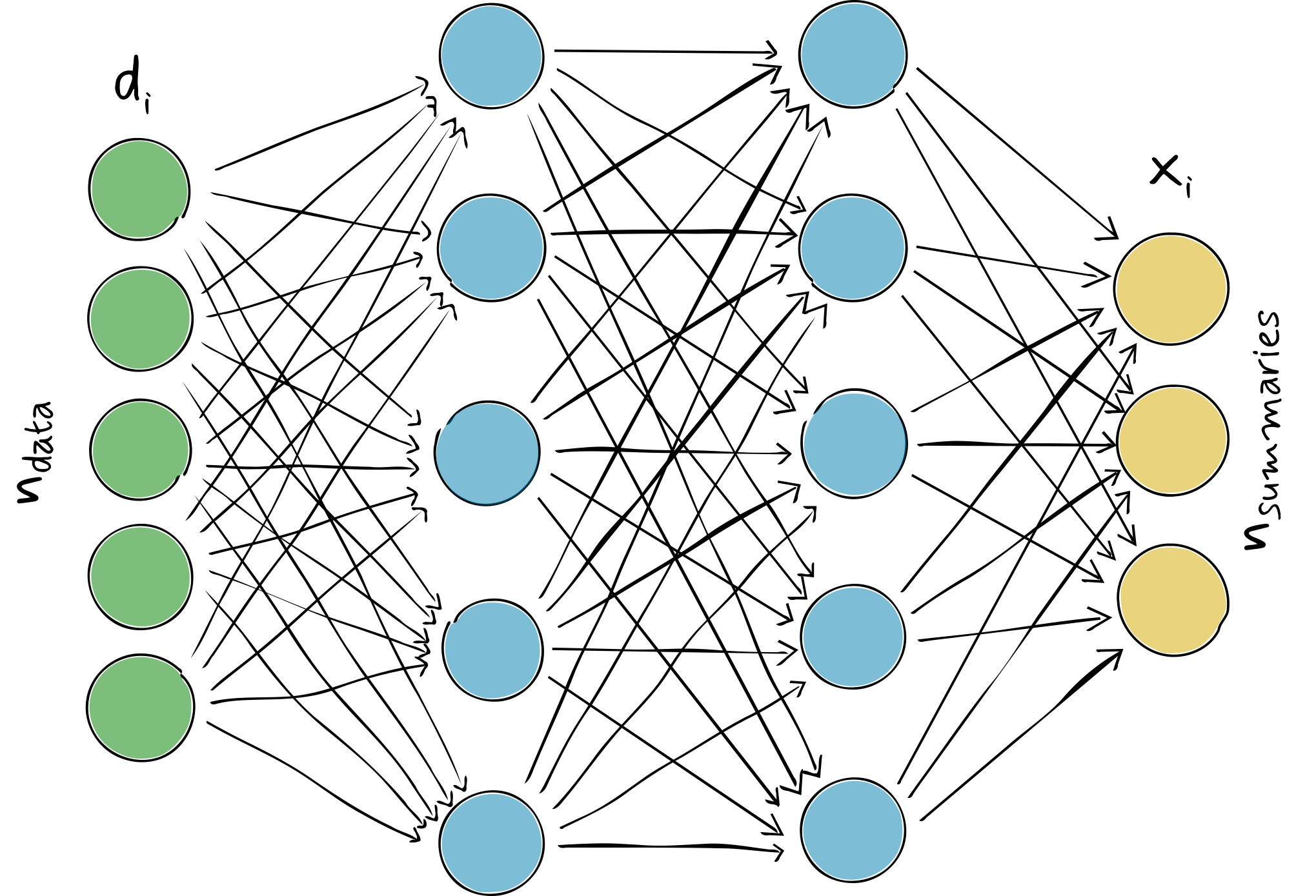
Find the function which gives summaries which are Gaussianly distributed
Optimise to maximise the
Fisher information!
Fisher information!
What do we need?
A neural network (obvs.)
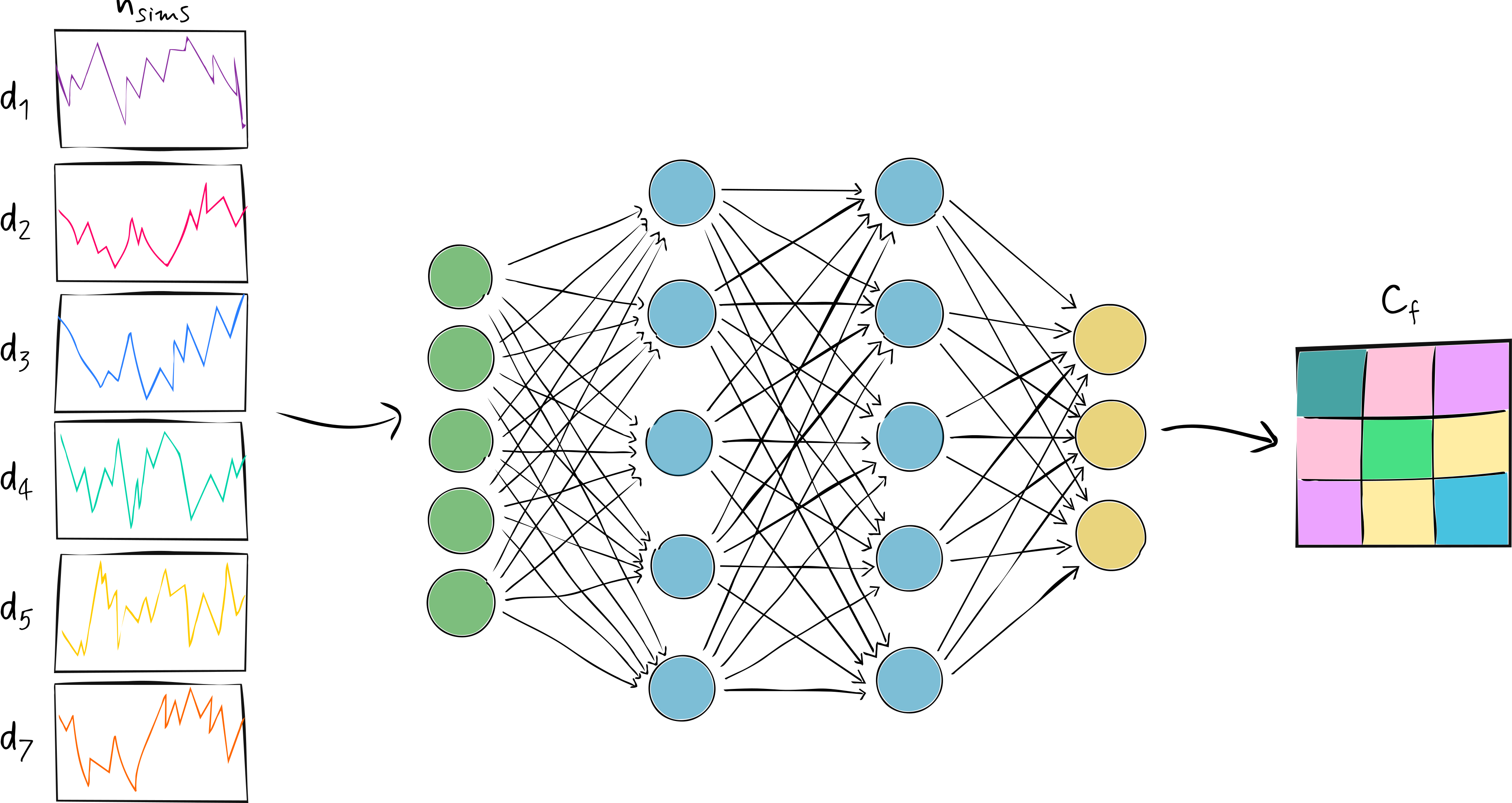
Some simulations ${\bf d}^i$
- a single fiducial parameter value!
- $N$ enough for ${\bf C}_\mathscr{f}$ - (1000 simulations)
Some derivatives of the simulations ${\bf d},_{\alpha}^i$
|
|
Train it!
Pass all simulations through network and calculate covariance of outputs, ${\bf C}_\mathscr{f}$
Calculate derivative of outputs with respect to parameters and find their mean
$$\frac{\partial\mu_\mathscr{f}}{\partial\theta_\alpha} = \frac{1}{n_\textrm{p}}\sum_{i=1}^{n_\textrm{p}}\frac{\partial{\bf x}_i}{\partial{\bf d}_i}\frac{\partial{\bf d}_i}{\partial\theta_\alpha}$$Calculate the Fisher information and backpropagate
So what do we actually end up with?
Outputs that are sufficient statistics
and unbiased parameter estimates
$$\hat{\boldsymbol{\theta}}_\alpha = \boldsymbol{\theta}^\textrm{fid}_\alpha + {\bf F}^{-1}_{\alpha\beta}{\bf C}_\mathscr{f}^{-1}\boldsymbol{\mu}_{\mathscr{f},\beta}({\bf x} - \boldsymbol{\mu}_\mathscr{f})$$And how should we use the summaries?
Within a likelihood-free inference framework
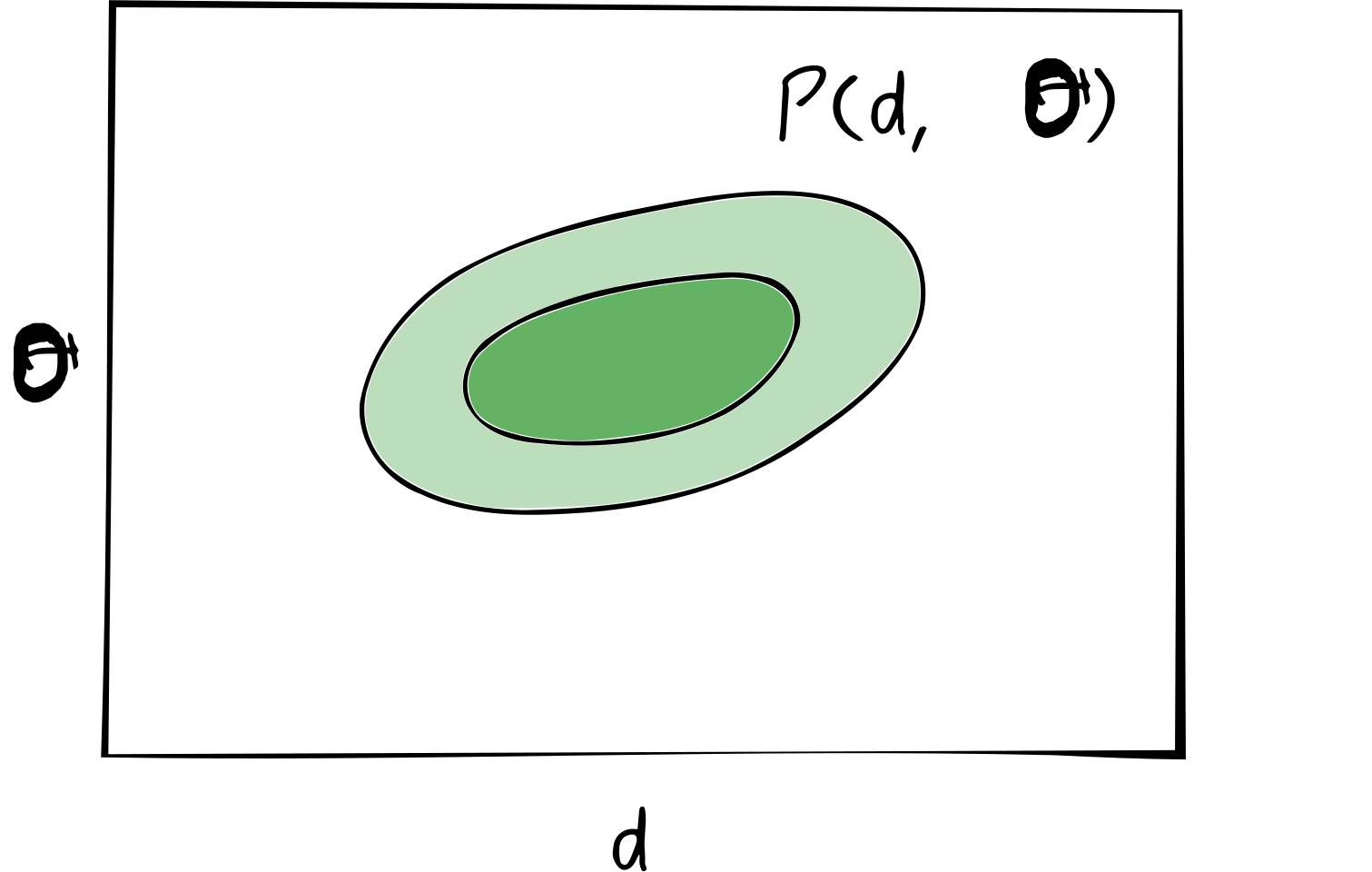
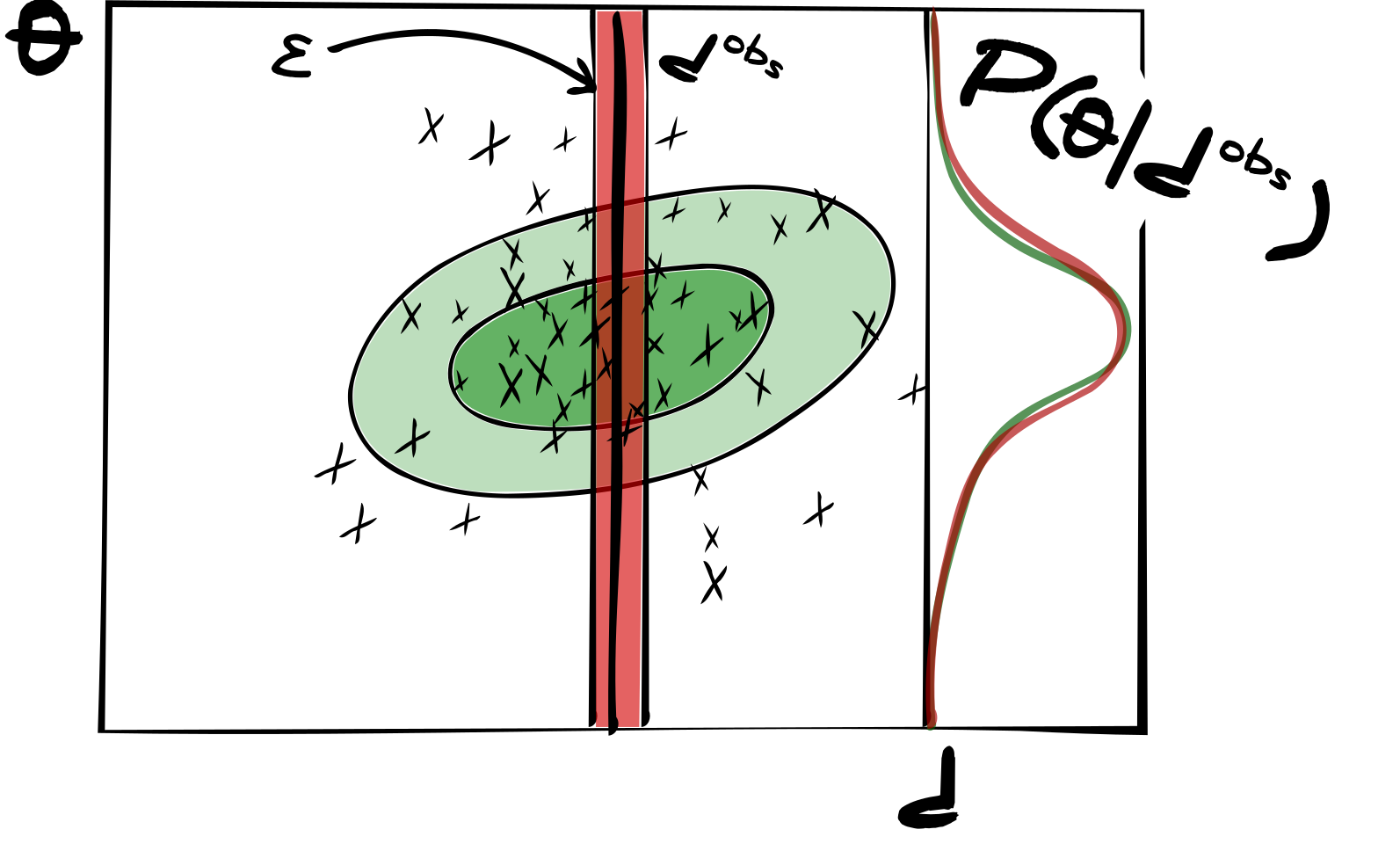
We work in the space of data ${\bf d}$ and model parameters $\boldsymbol{\theta}$
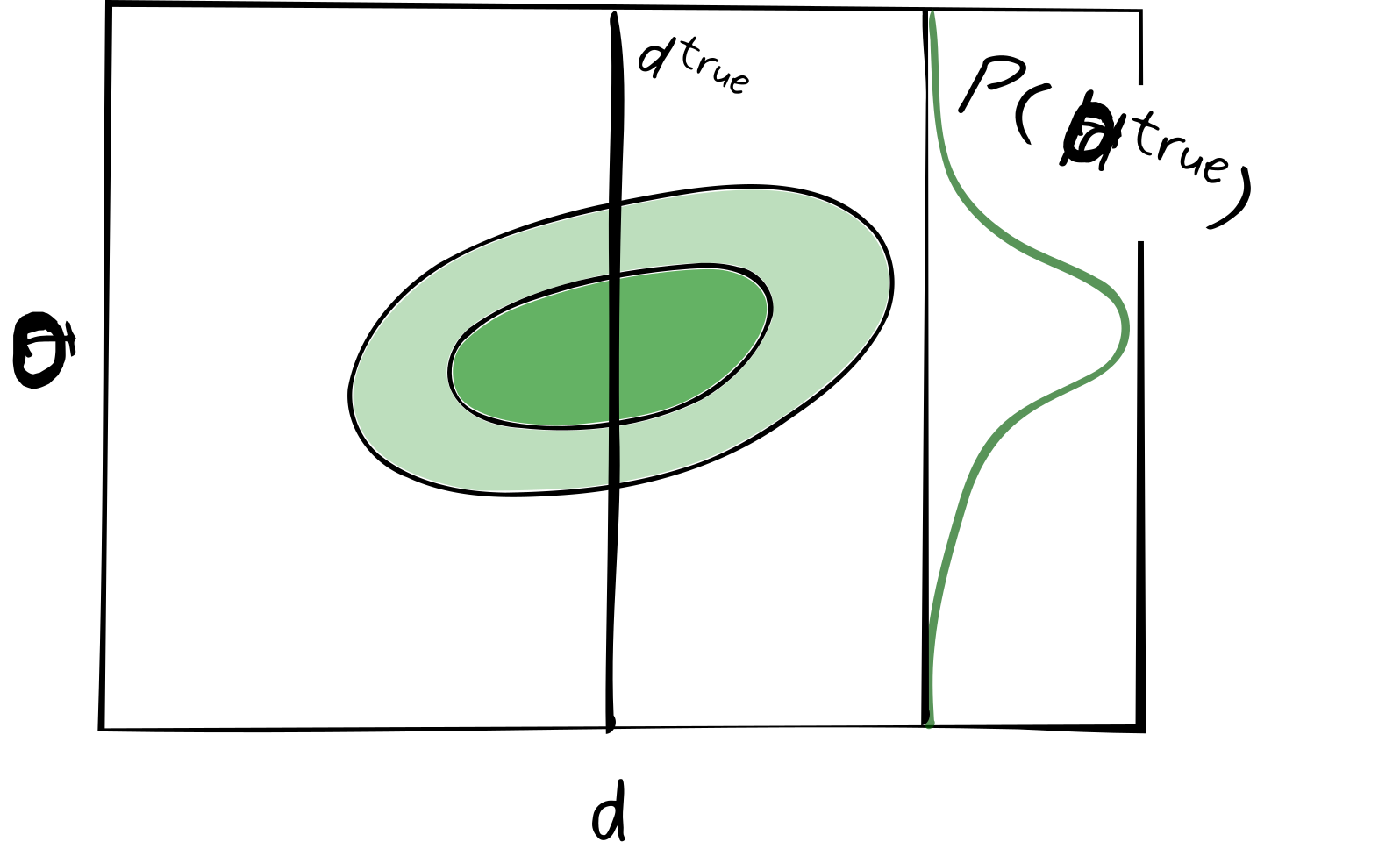
Posterior is a slice through this space at some given data
ABC posterior
Simulate the data and accept simulations close to the true data
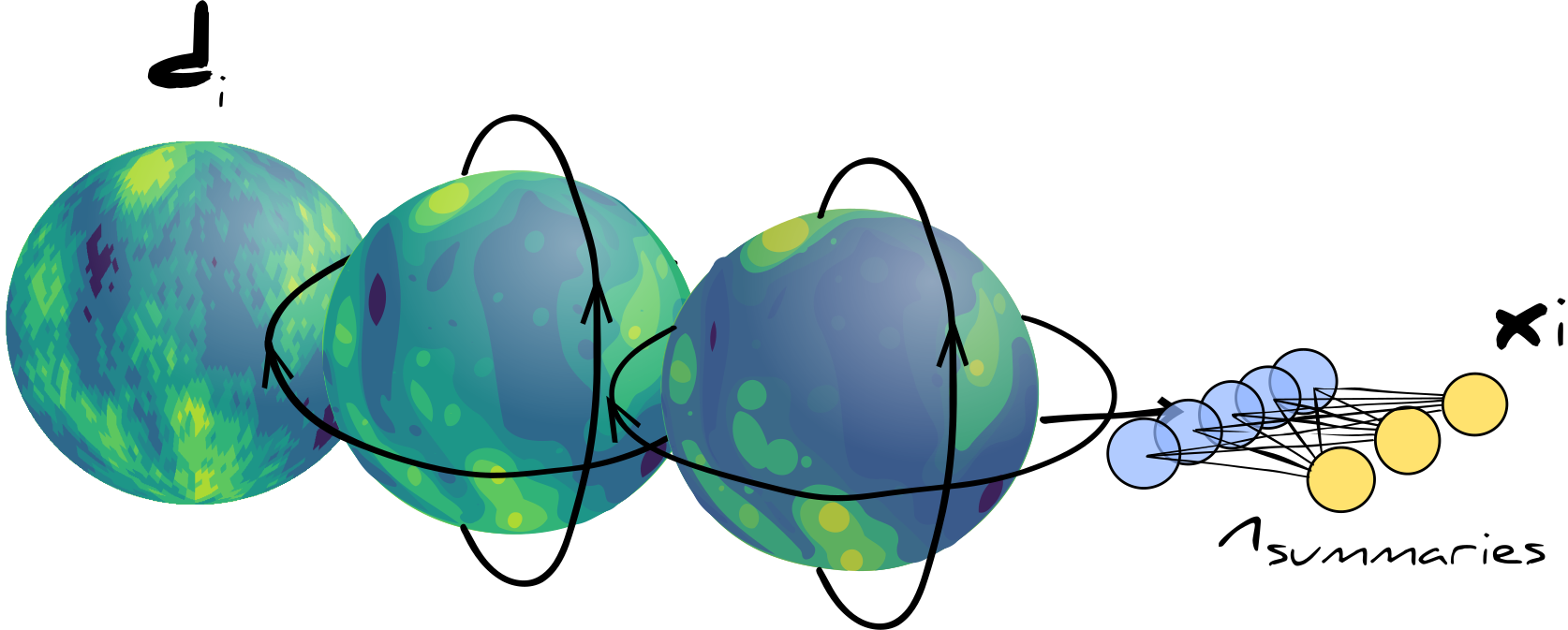
Reduce the dimensionality with our summaries
We pass all simulations through the network to get summaries.
We pass the real data through the network to get its summary.
Measure how far the summaries of the simulations are from the summary of the real data
The simulations can be bad!
Network becomes part of the data aquisition
the data products are now the summaries 
If simulations are bad, the summaries are less informative
BUT NOT BIASED! 
Finish the example
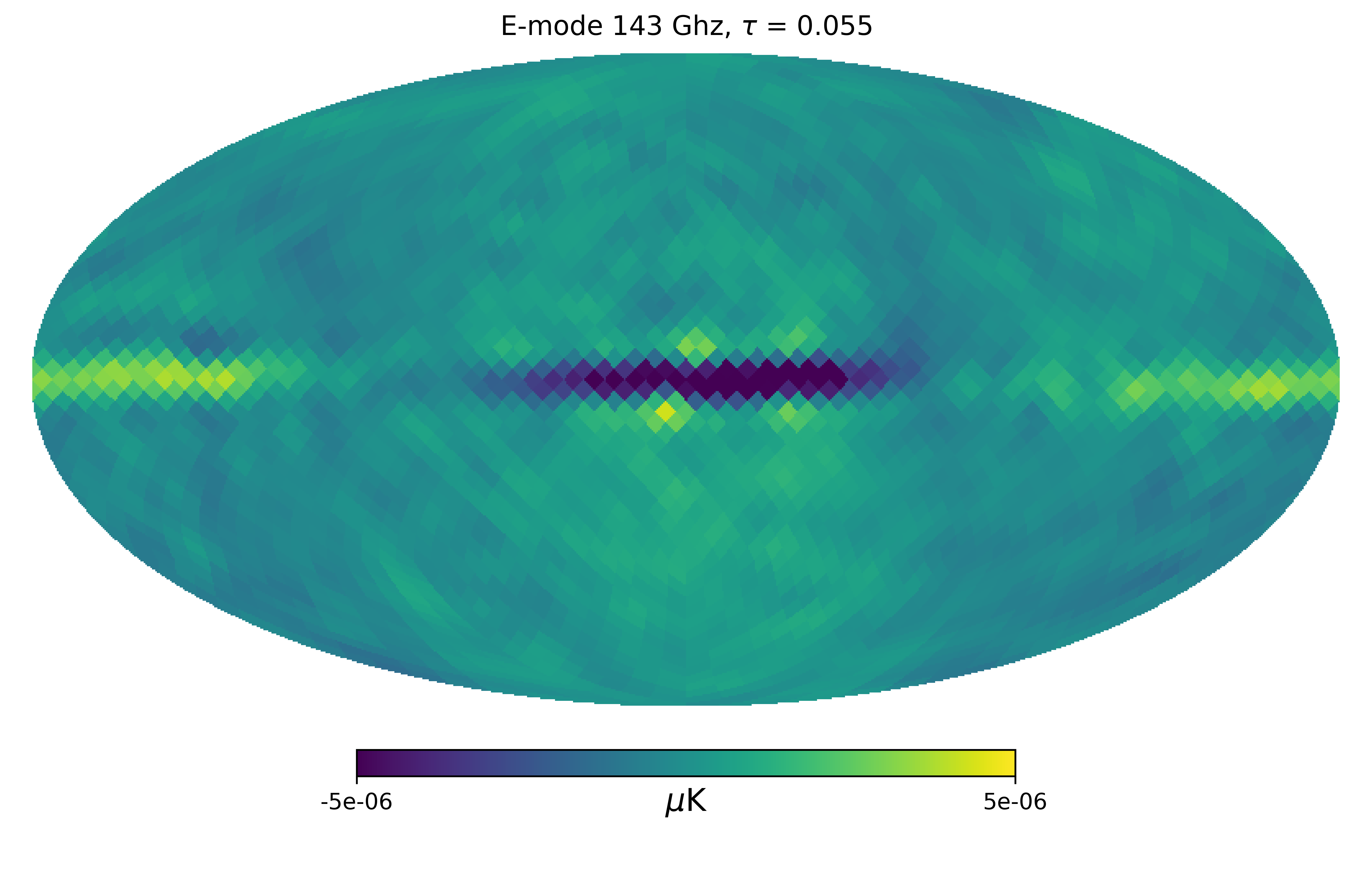
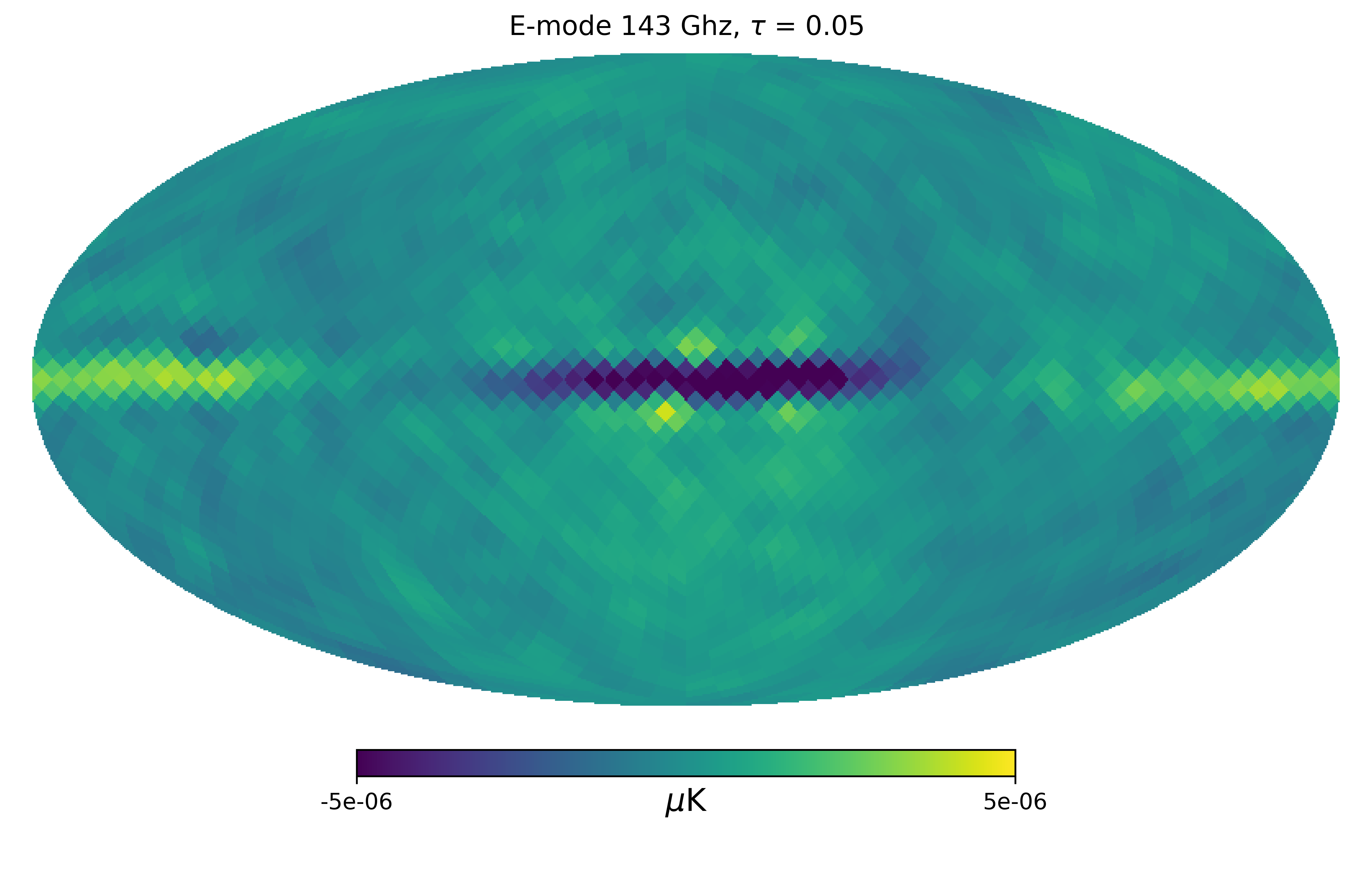
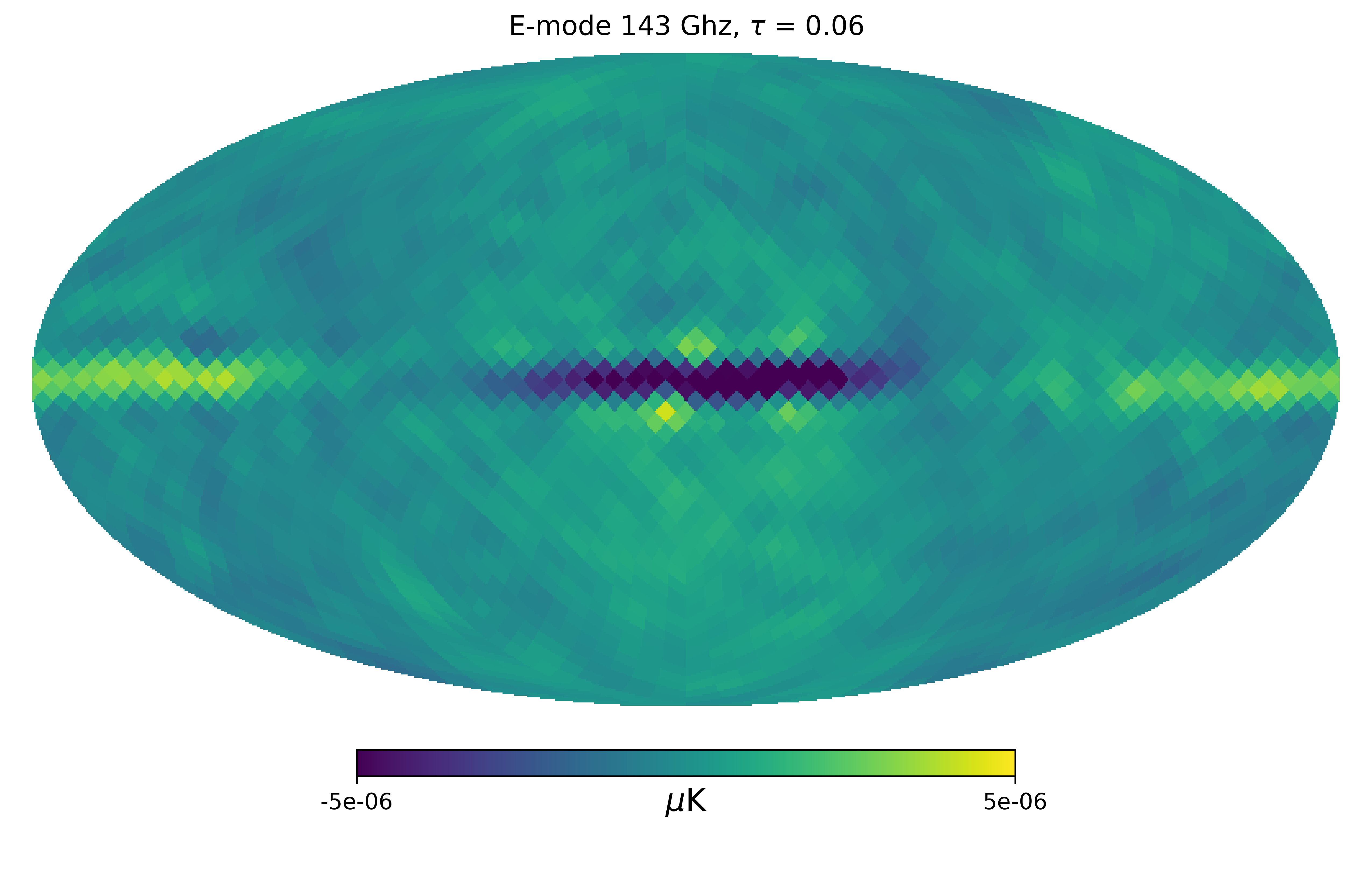
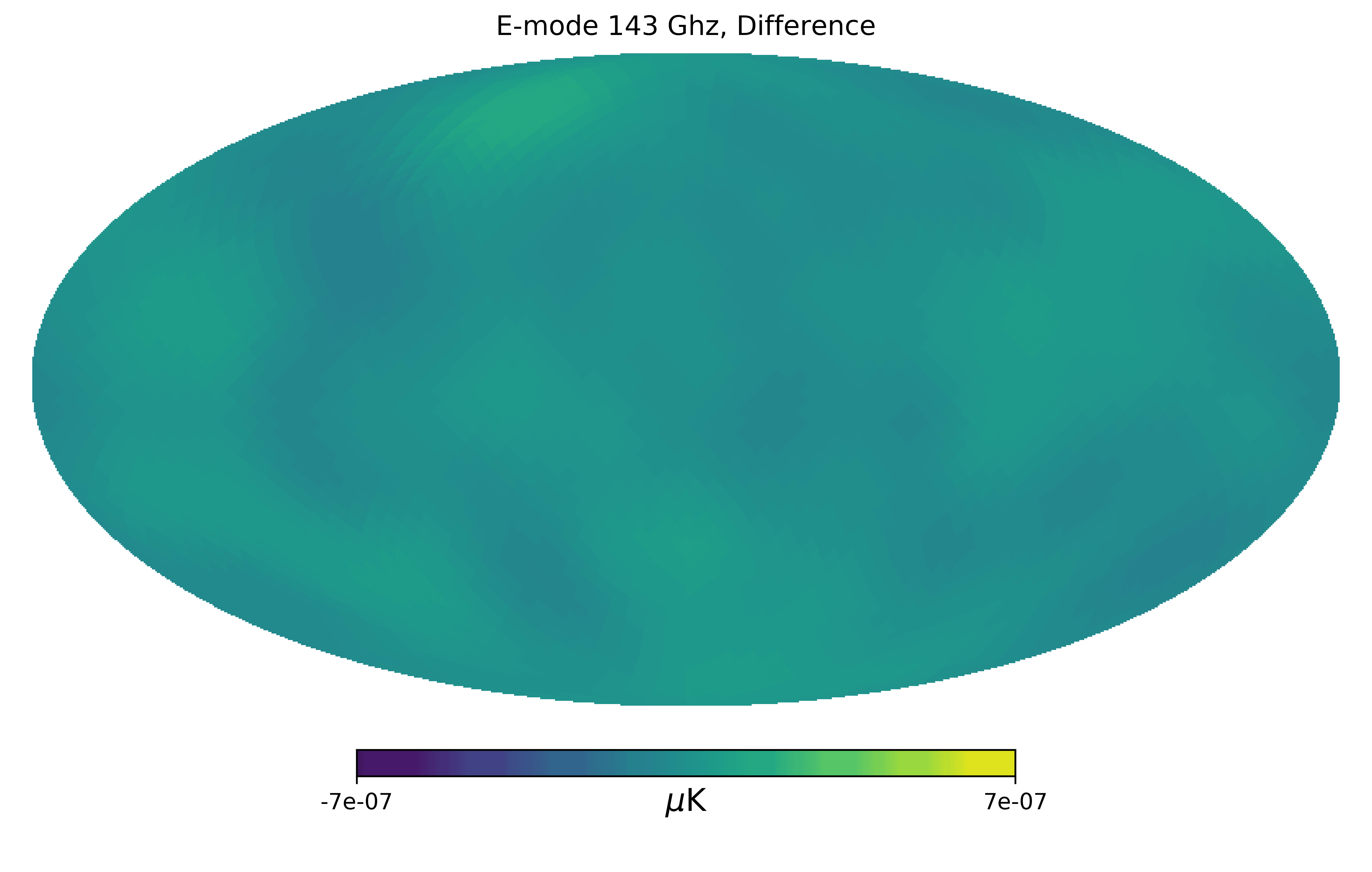
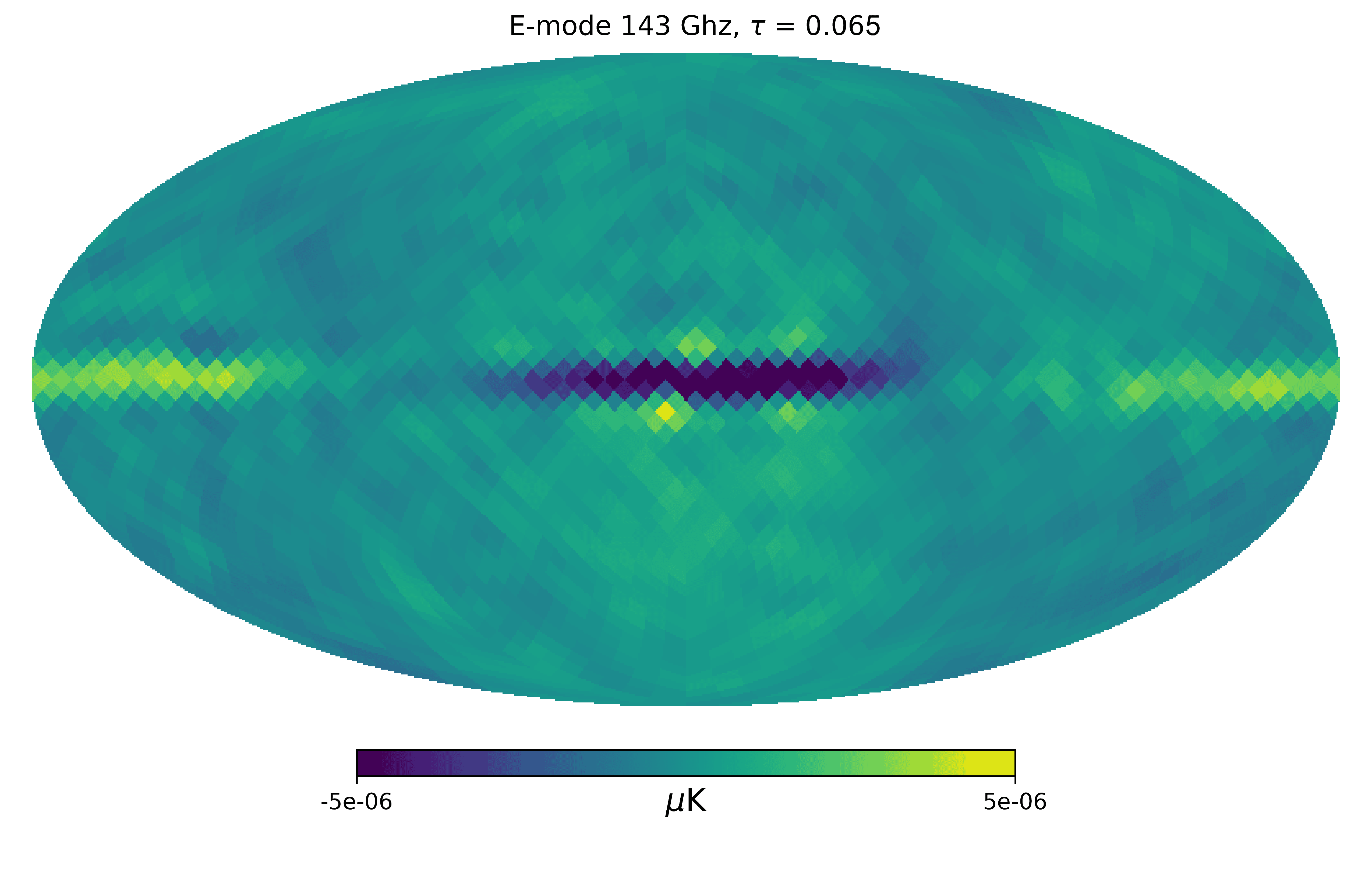
1000 noisy CMB E-mode realisations at $\tau=0.055$
A network to best exploit the data
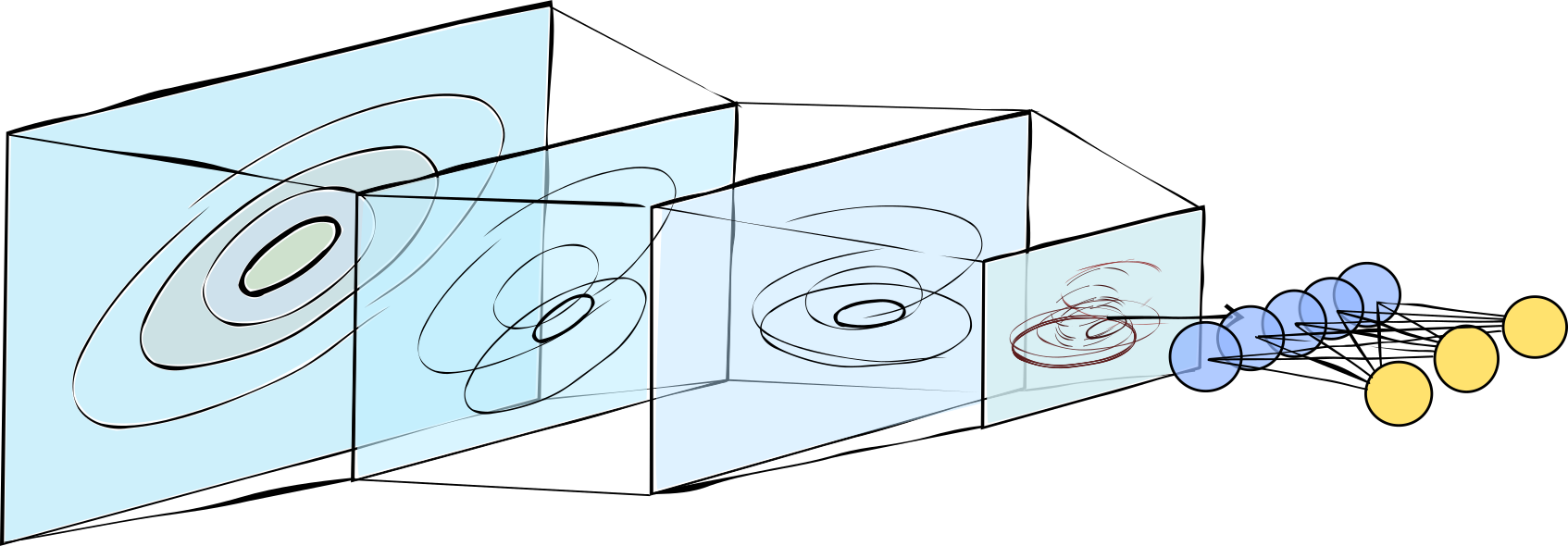
Fast convolutions on the sphere to learn real space kernels in the correct topology
An observed CMB E-mode map at $\tau=0.65$ (not fiducial)
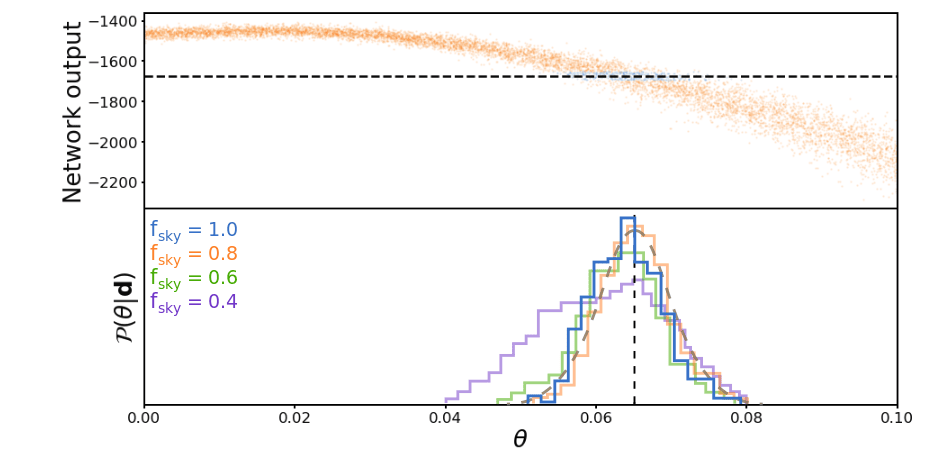
Keep eyes peeled for application to Planck data!
Information maximising neural networks
We can massively compress our data to optimal summaries
Using LFI we don't have to worry as much about the simulations
Its exceptionally cheap!
Discussion topics
We know physics - how much should we insert into our networks?
- massive reduction in training data
- massive increase in interpretability
- orders of magnitude fewer paramaters
Up to what point can we trust regression to parameter values?
Convolutions for translationally invariant data
(images or local signals)
We can build the network to work on summaries with unknown likelihoods
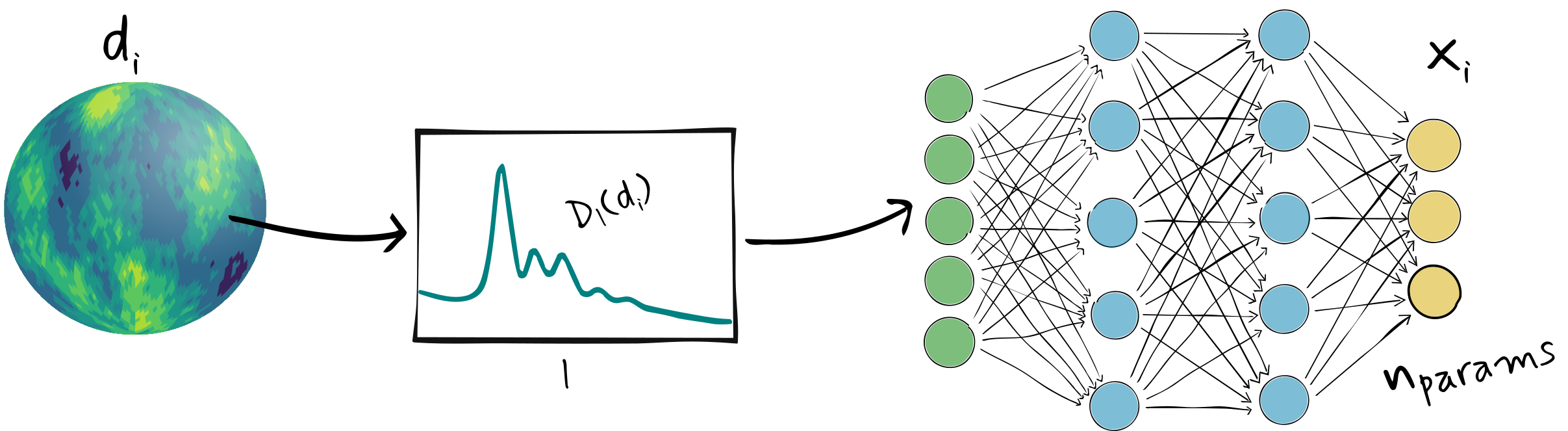
Finding that one extra summary...
We can combine the IMNN with our known and loved summaries to extract just that little bit extra information
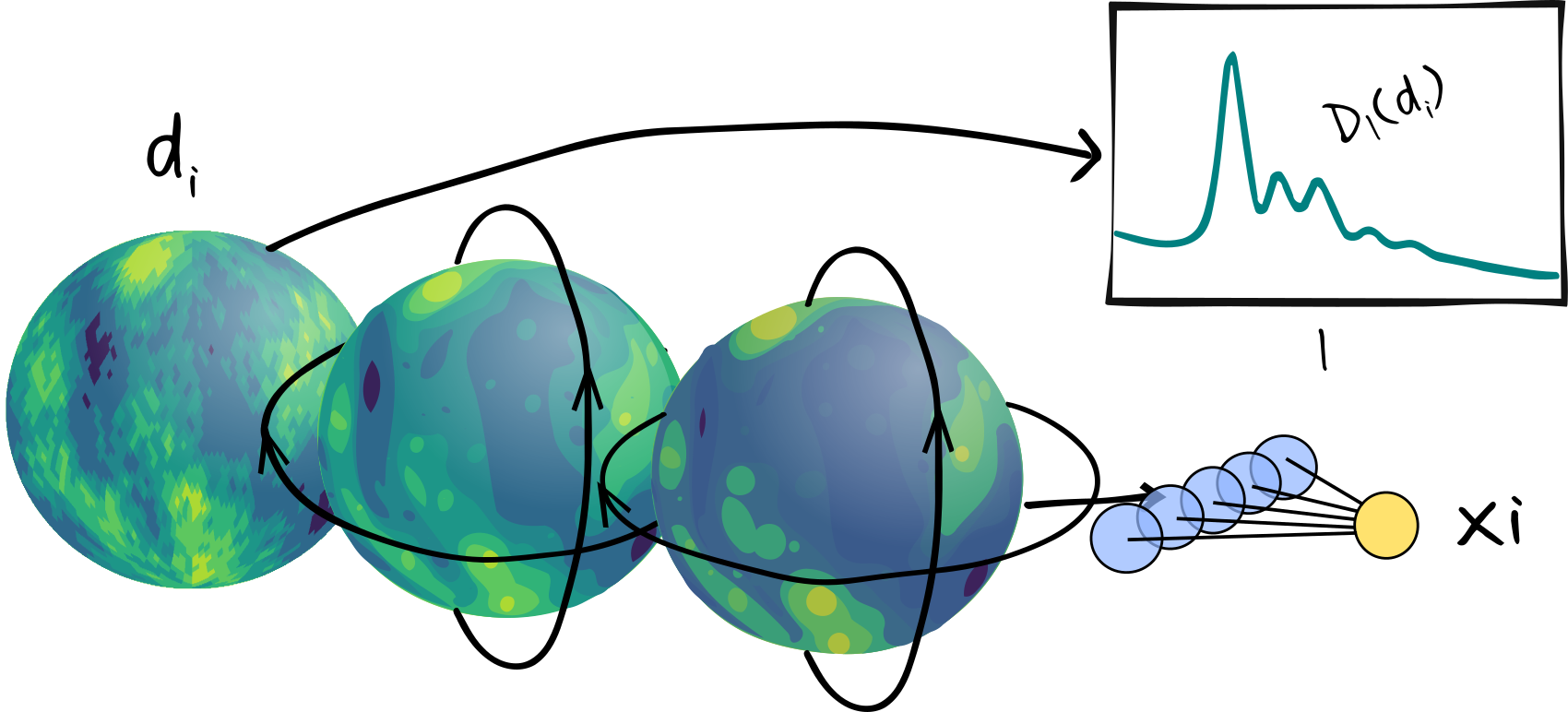
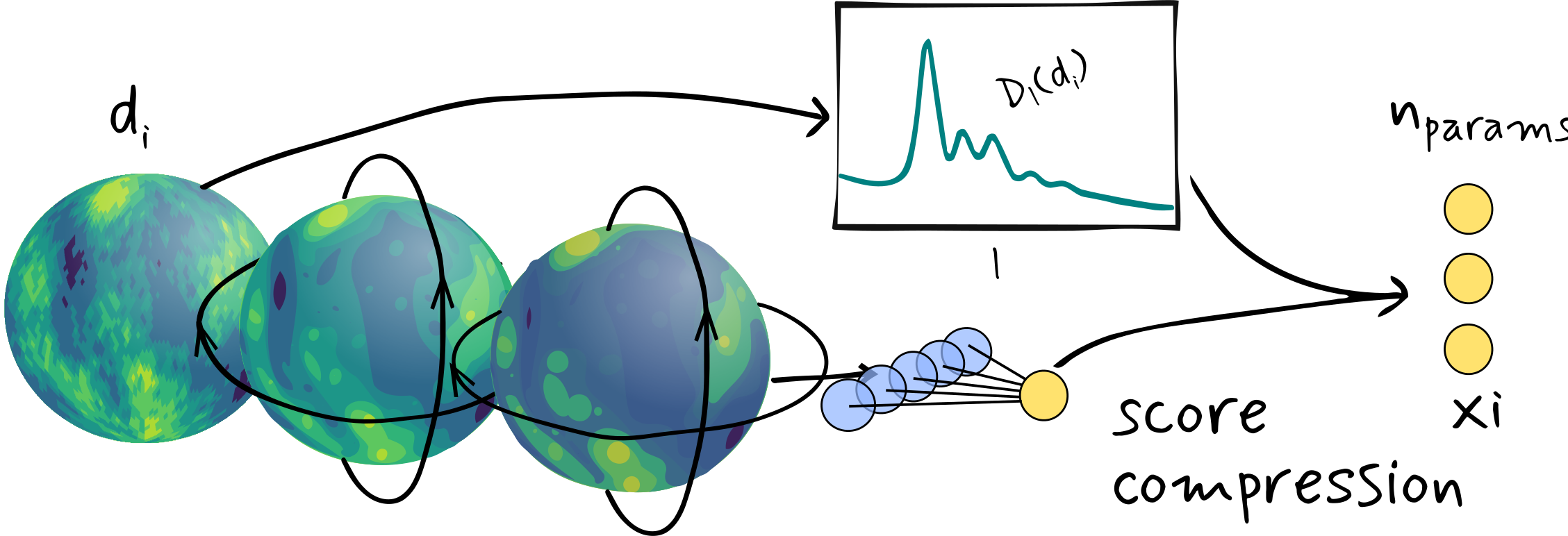
Of course we can still do score compression
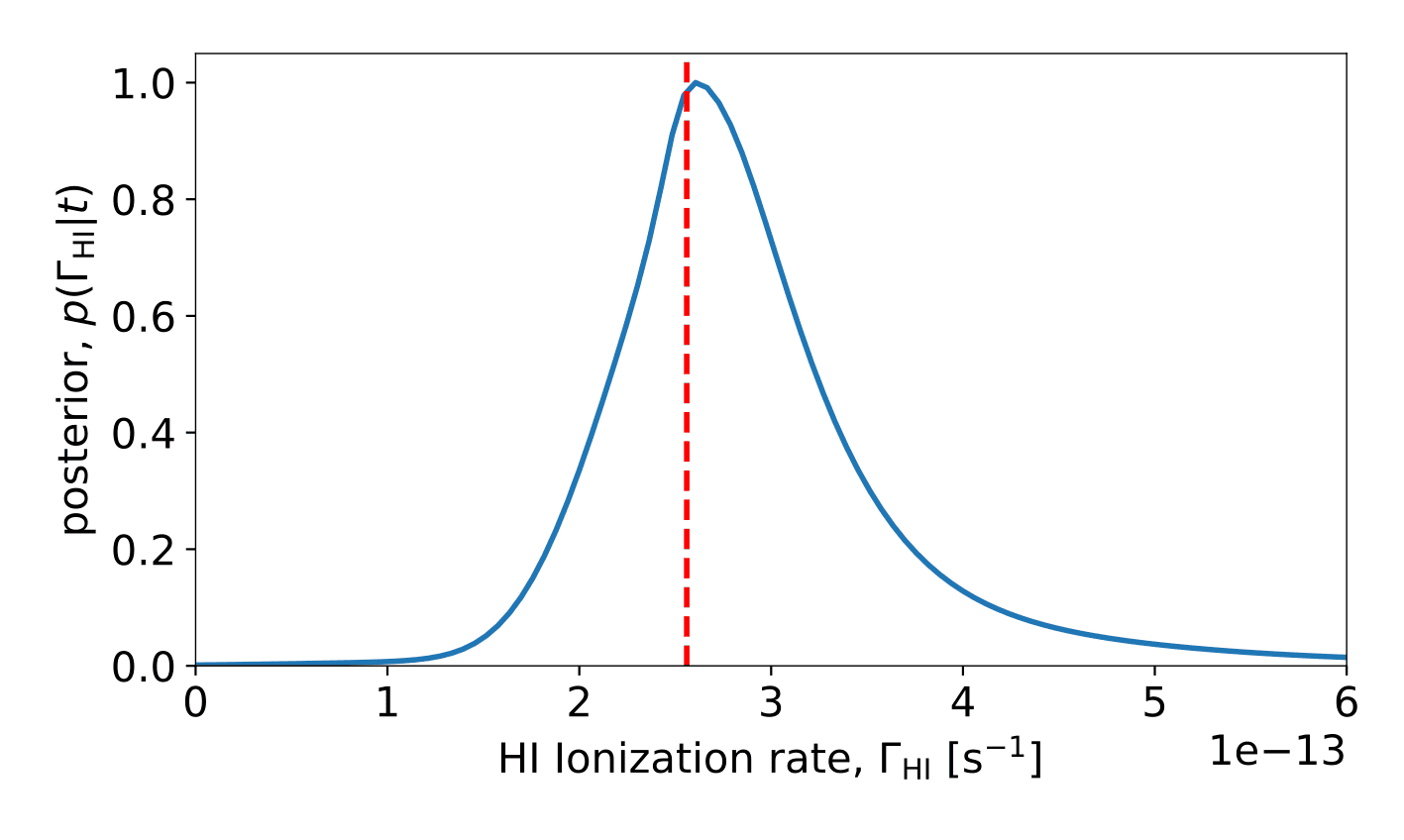
Inferring the ionisation rate from quasar absorption spectra
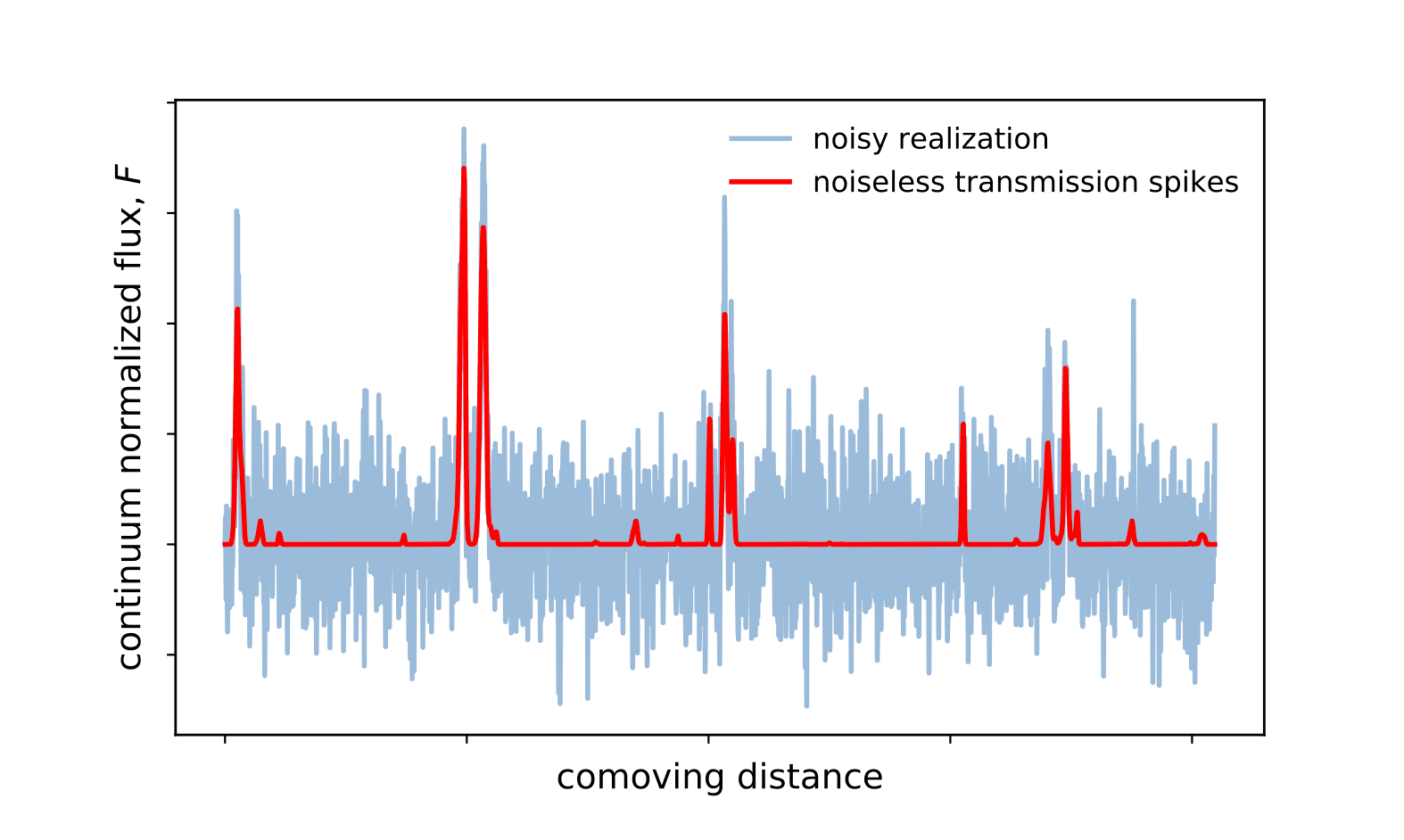
Use fully connected neural network
Couple it with DELFI to get another convincing posterior!
Multi-dimensional cosmological parameter inference from tomographic cosmic sheap maps of a Euclid-like survey
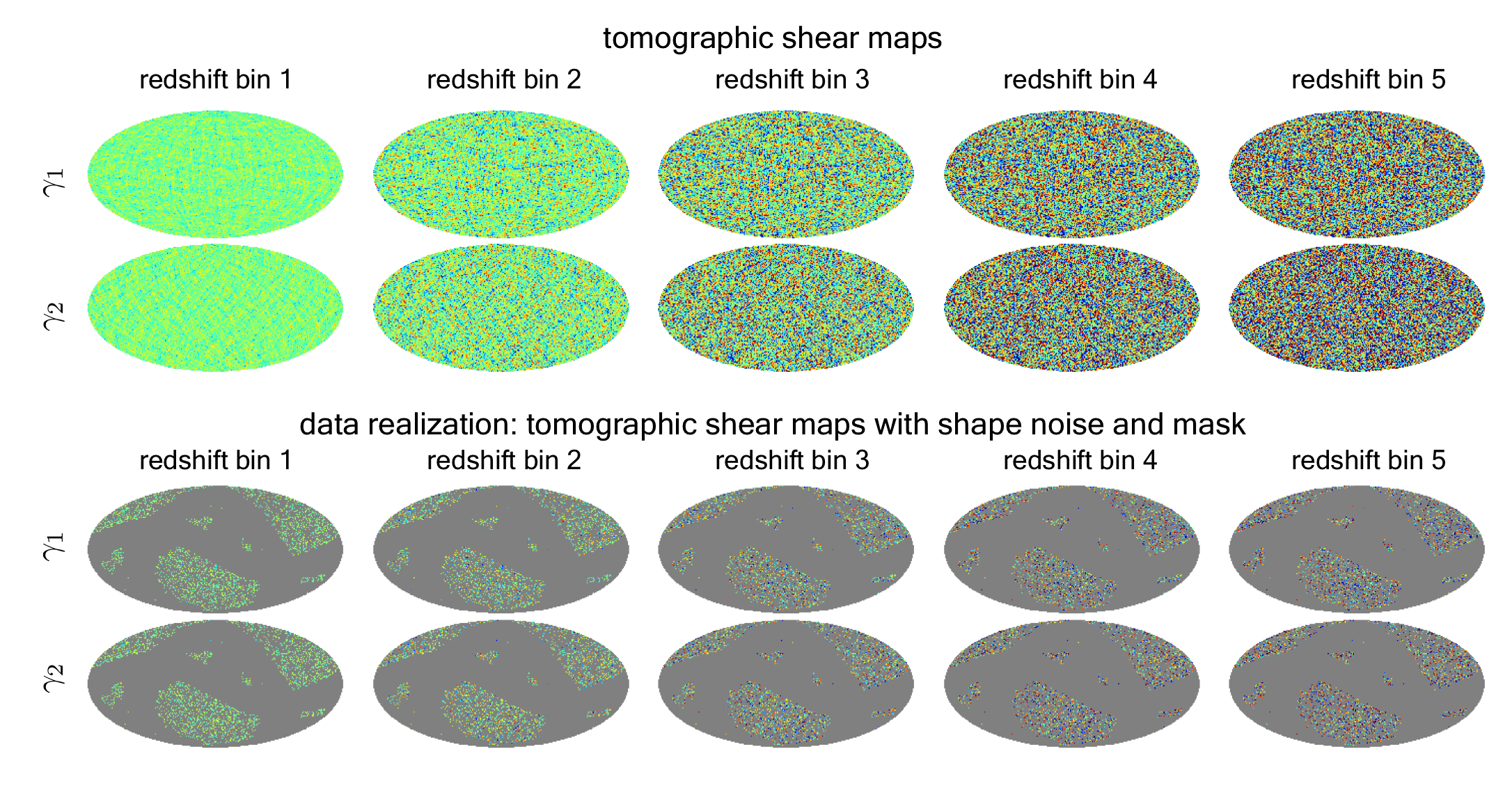
Summarise the maps via the power spectrum and compress that with the IMNN
Use DELFI for inference