Neural networks
How they work and their future in science
Tom Charnock
Institut d'Astrophysique de Paris



What is a neural network?
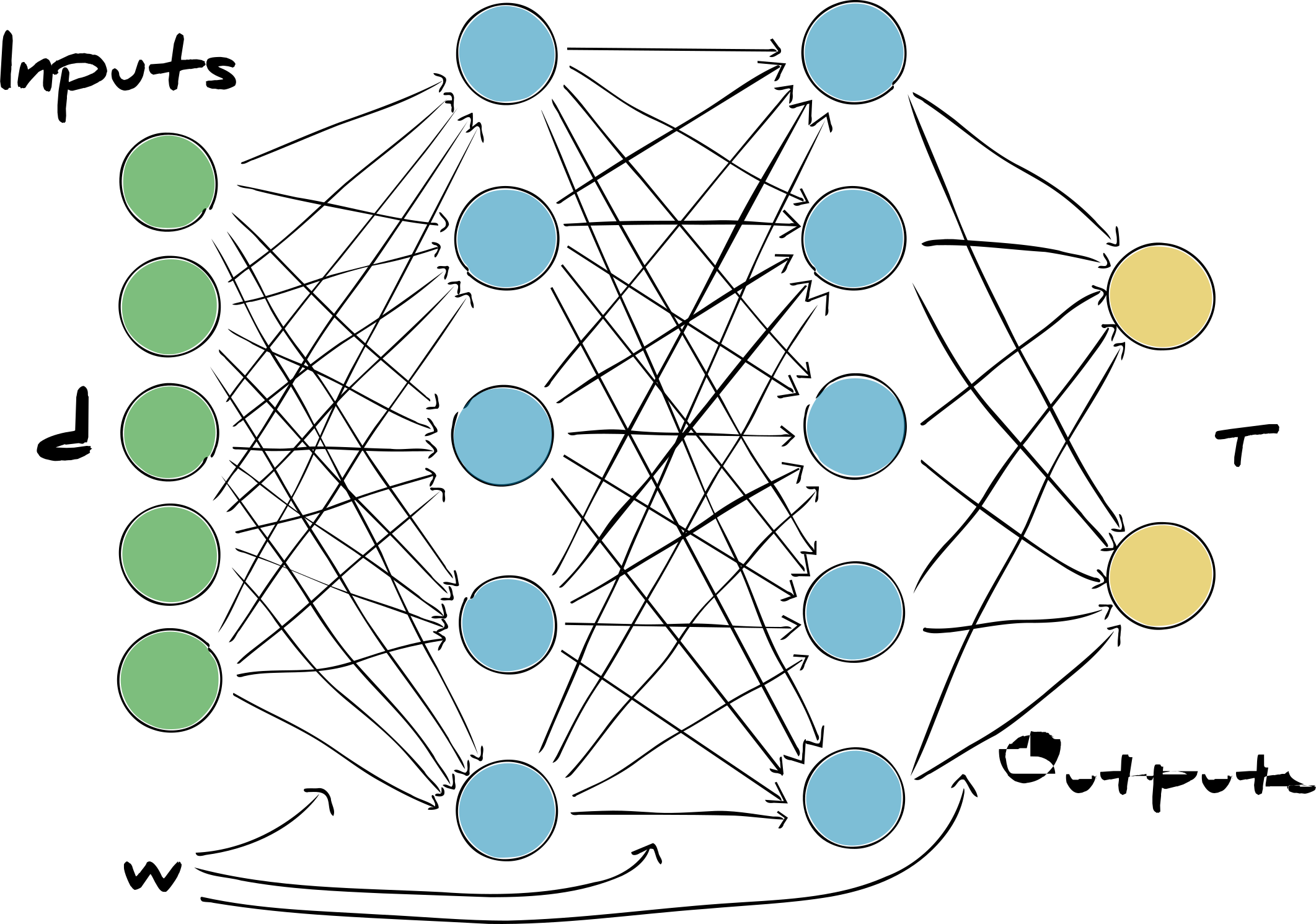
Neural networks are arbitrary fittable non-linear functions
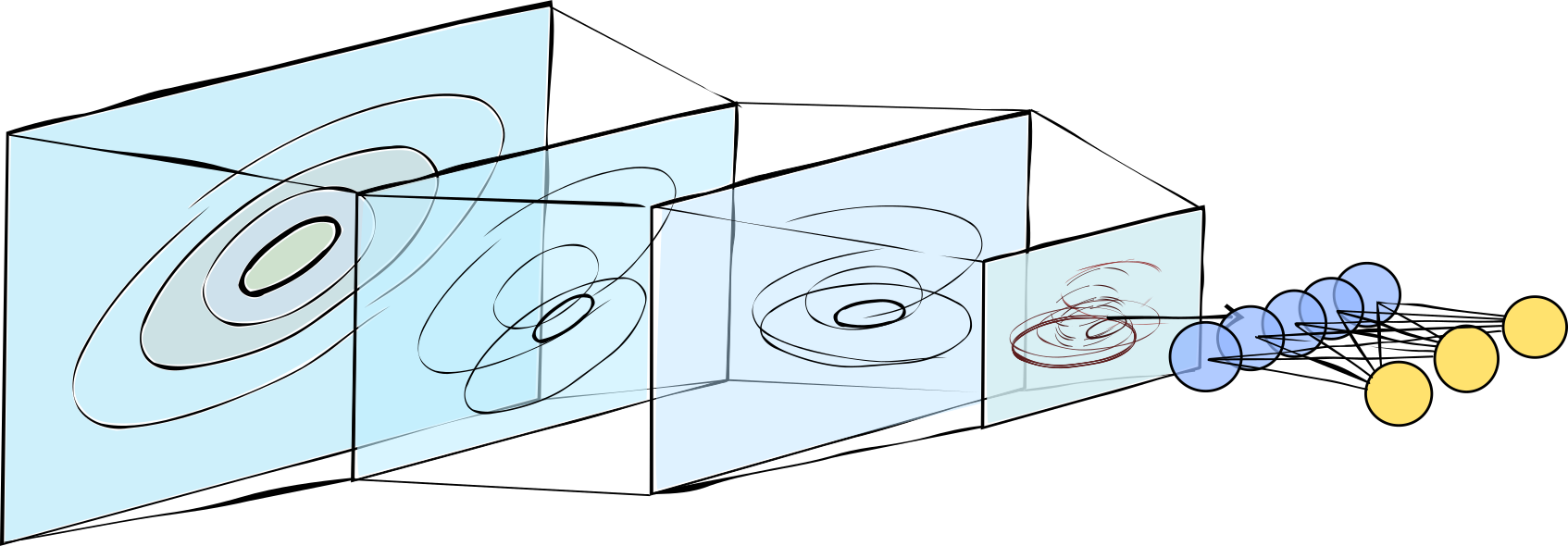
There are many different architectures
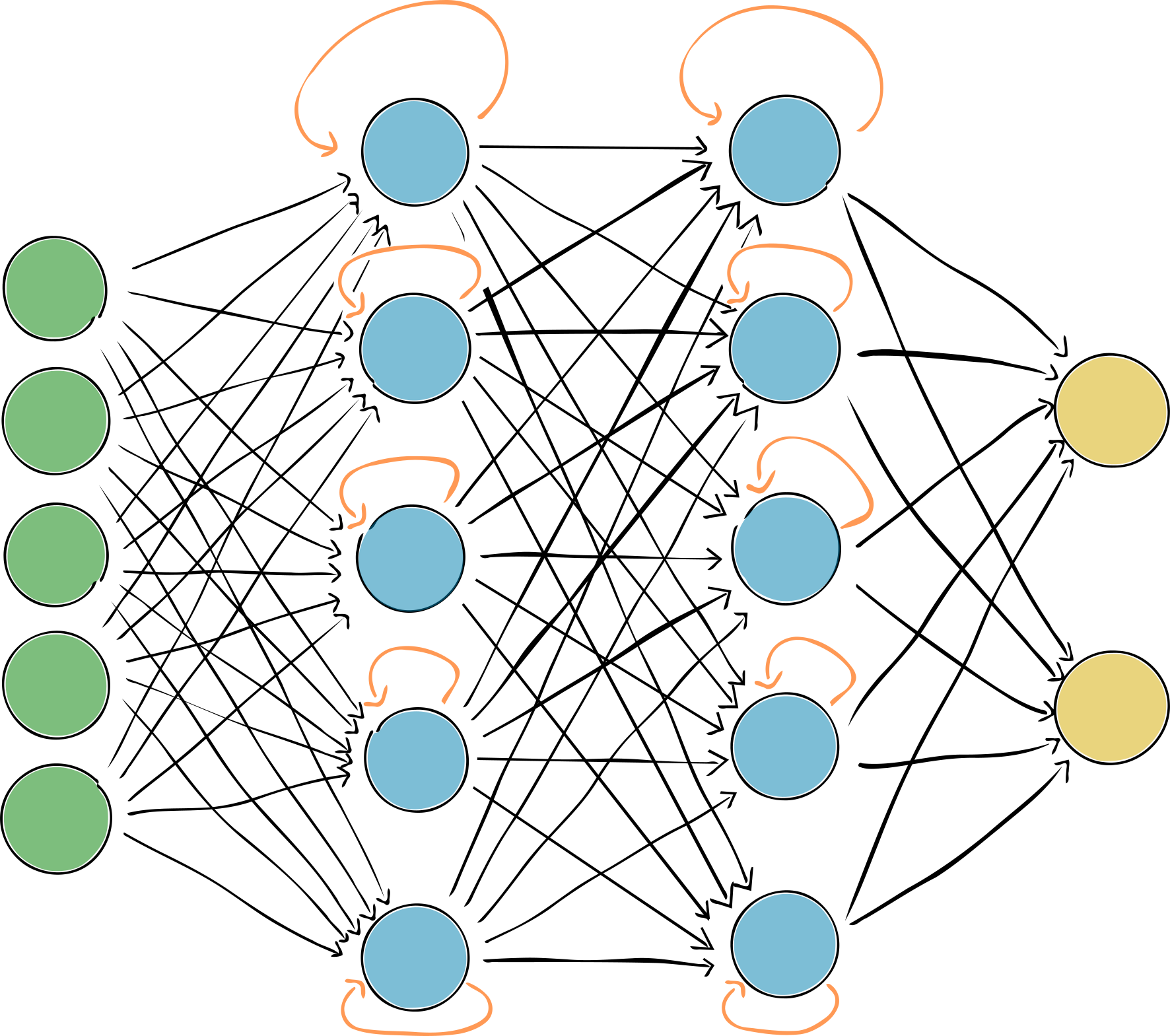
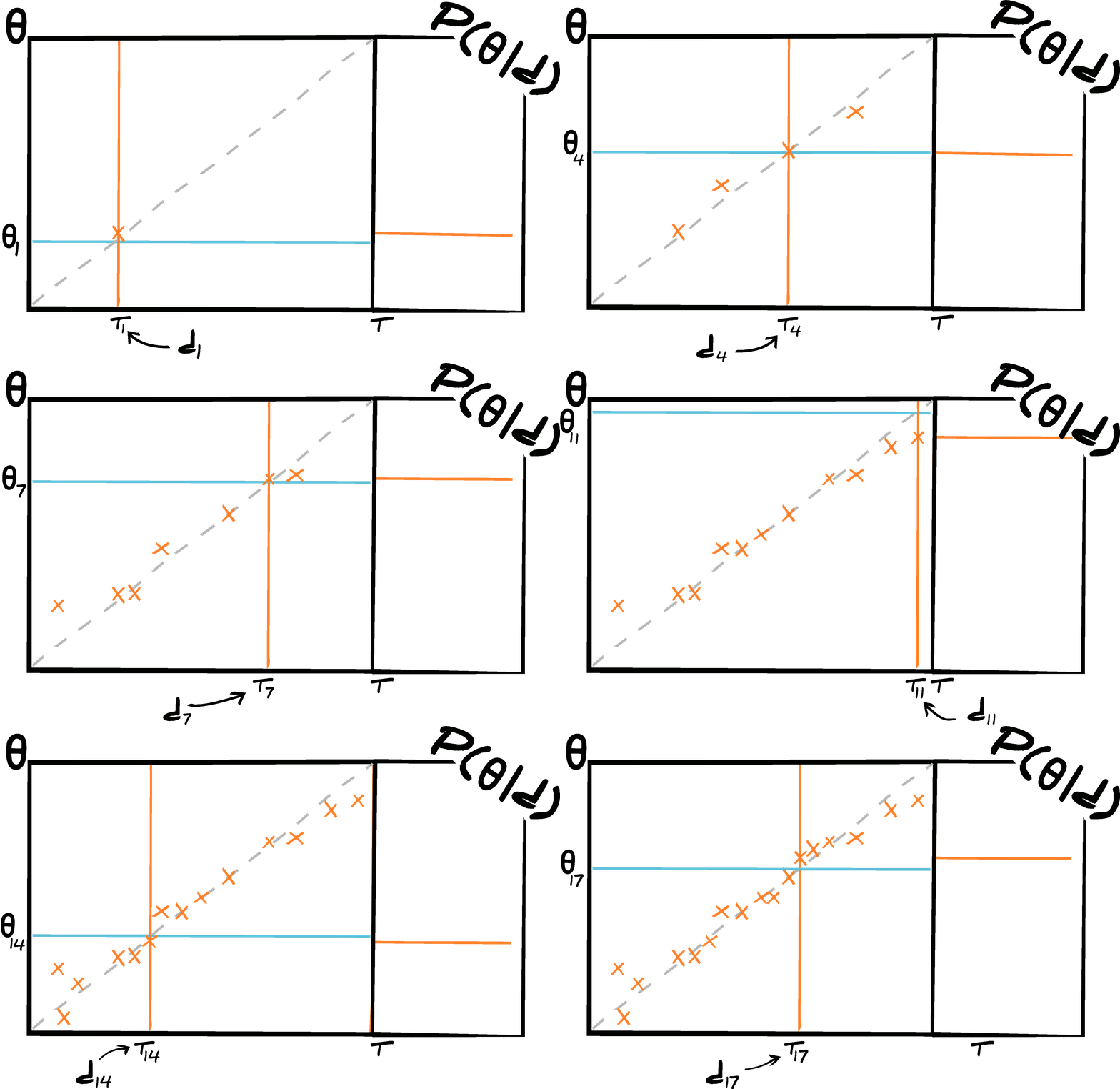
How to fit a neural network
with a neural network, $\mathscr{f} : {\bf d}\to\boldsymbol{\tau}$
Probabilistic interpretation of a neural network
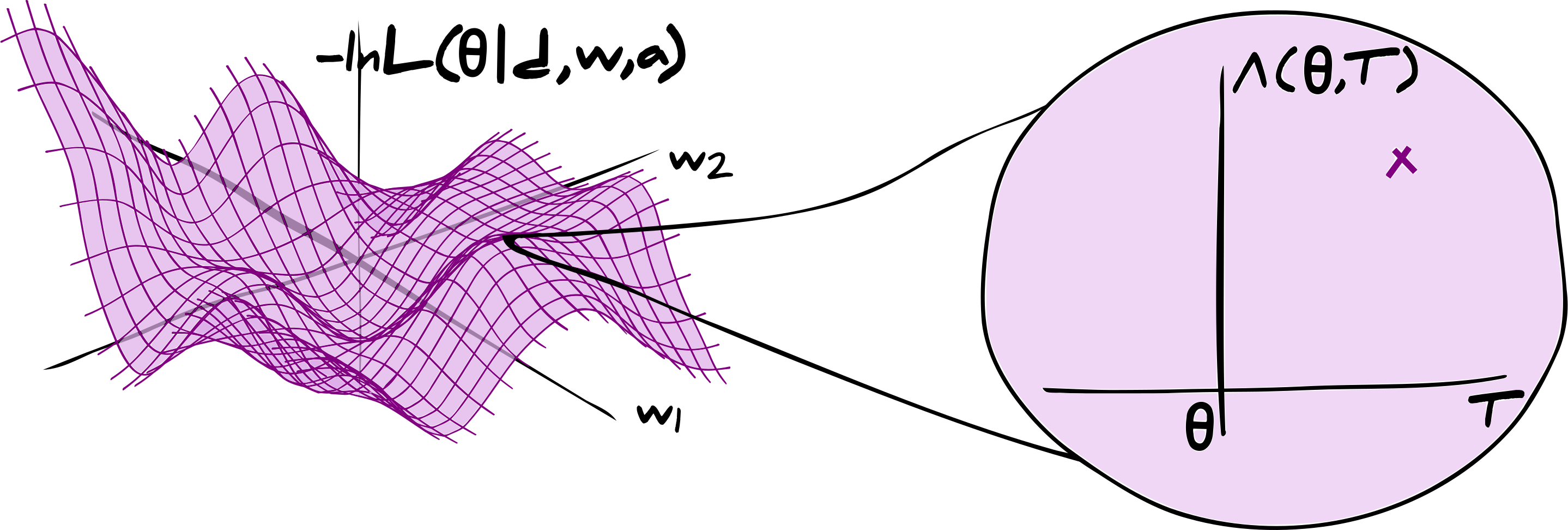 How likely is any network going to provide the expected function output?
This surface is defined by our choice in distance measure which is called the cost or loss function
Obtaining informative outputs
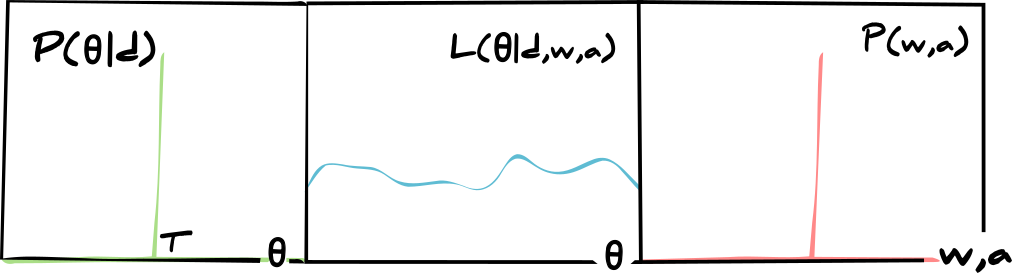
$$\mathcal{P}(\boldsymbol{\theta}|{\bf d})= \int d\boldsymbol{\omega}d\boldsymbol{\alpha}~\mathcal{L}(\boldsymbol{\theta}|{\bf d},\boldsymbol{\omega},\boldsymbol{\alpha})\mathcal{P}(\boldsymbol{\omega},\boldsymbol{\alpha})$$
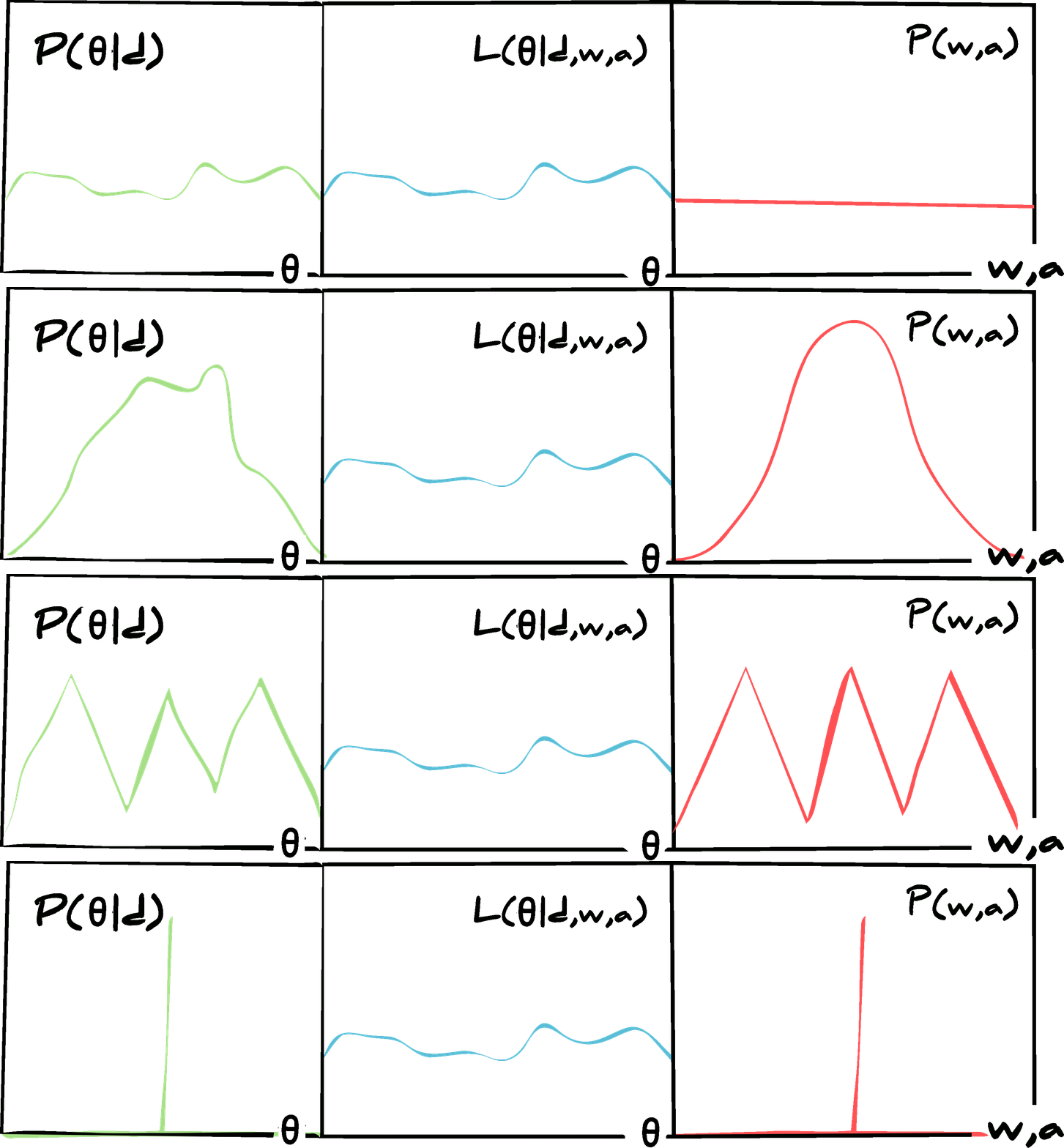
Maximum likelihood estimate of weights
$$\boldsymbol{\omega}^\textrm{MLE}=\underset{\boldsymbol{\omega}}{\textrm{argmax}}\left[\mathcal{L}(\boldsymbol{\{}\boldsymbol{\theta}\boldsymbol{\}}^\textrm{train}|\boldsymbol{\{}{\bf d}\boldsymbol{\}}^\textrm{train}, \boldsymbol{\omega}, \boldsymbol{\alpha}^*)\right]$$
Prediction using neural networks
Why do we use neural networks?
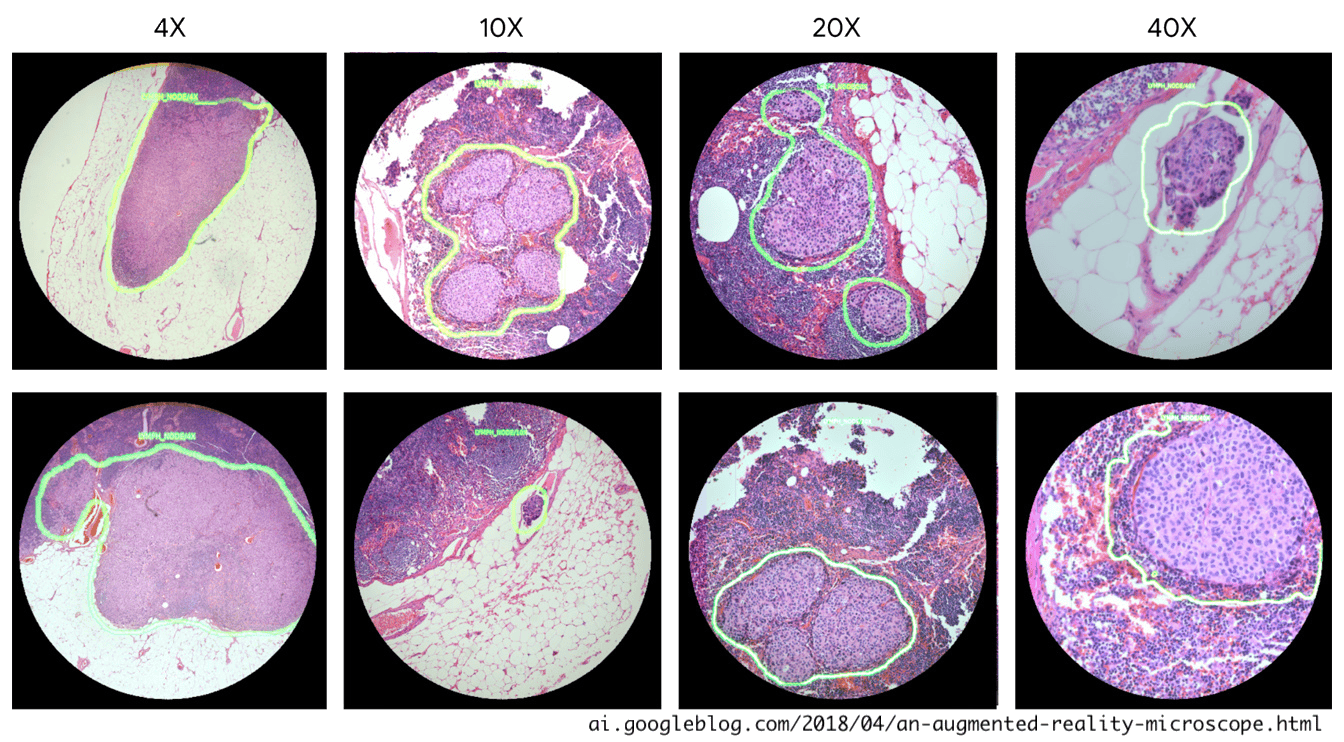
They're quick and (relatively) cheap
Super-resolution and super-approximation of dark matter simulations
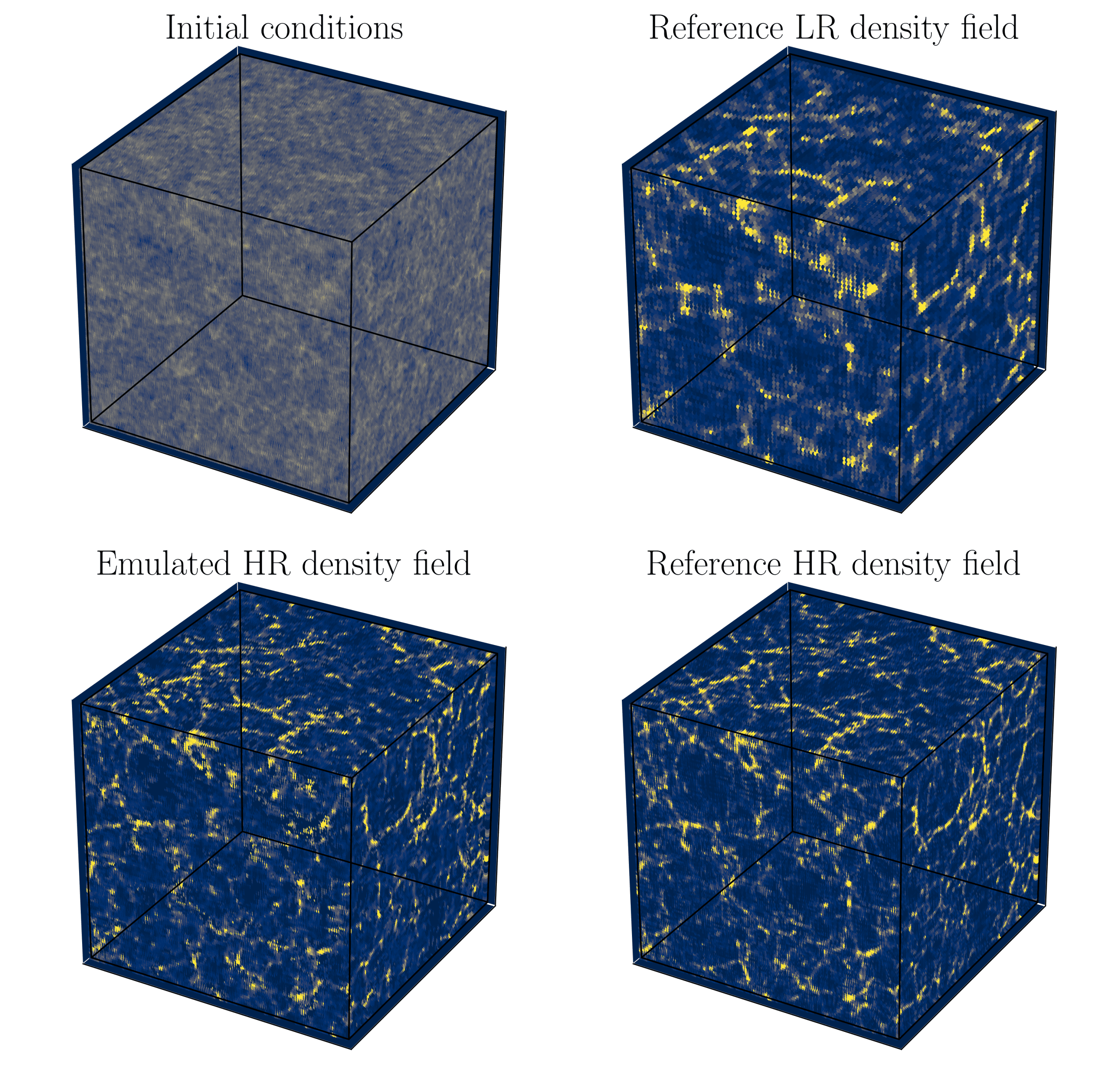
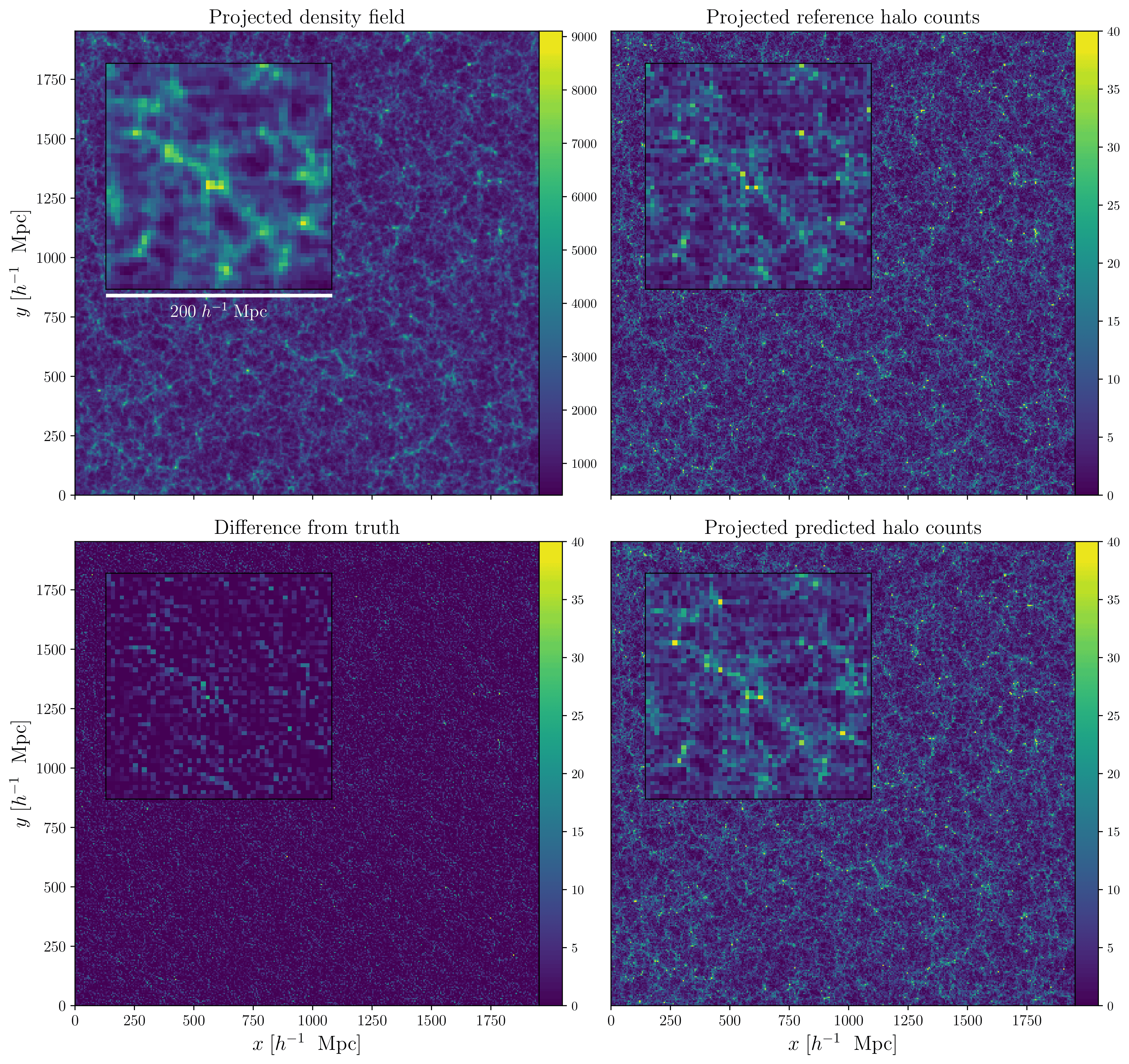

Physical models from data models
Data models are the description that include all effects that generate the data
Initial conditions
Physical model
Instrumental effects
Other stochasticity
Neural networks are great at learning the data model
We can build neural networks to deal with parts of the data model we don't understand
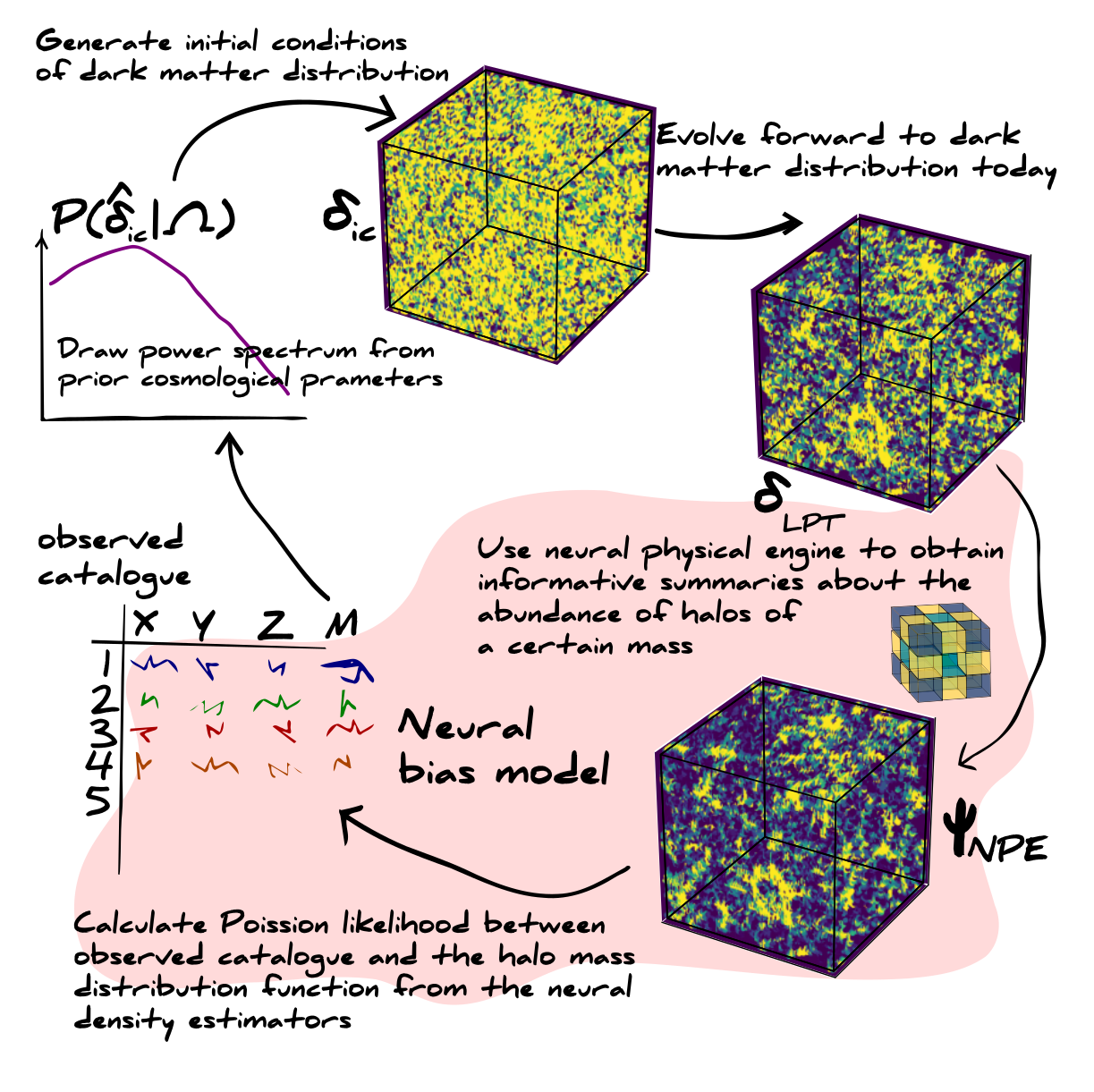
Extracting physical models from the data
Correlations between interesting observables and the processes that create them
Can we build neural networks that are informative about these processes?
Neural physical engines
Building symmetries into neural networks
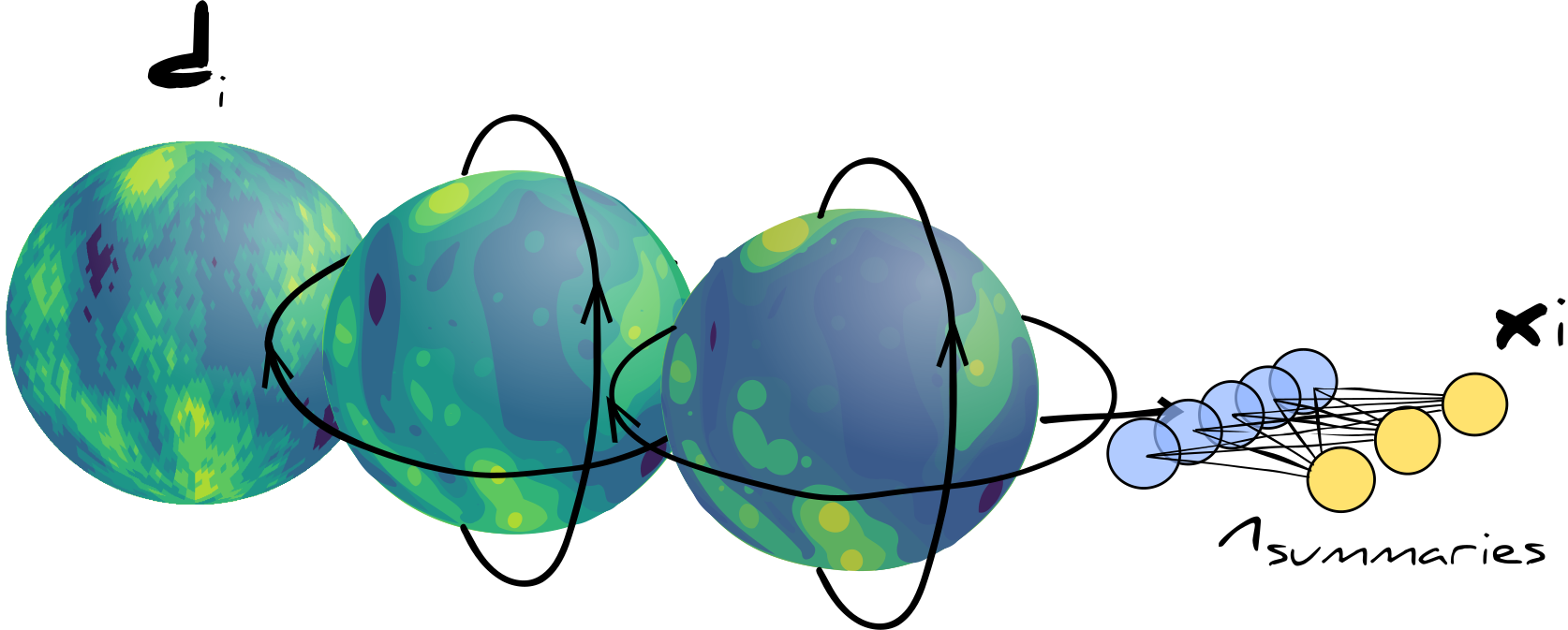
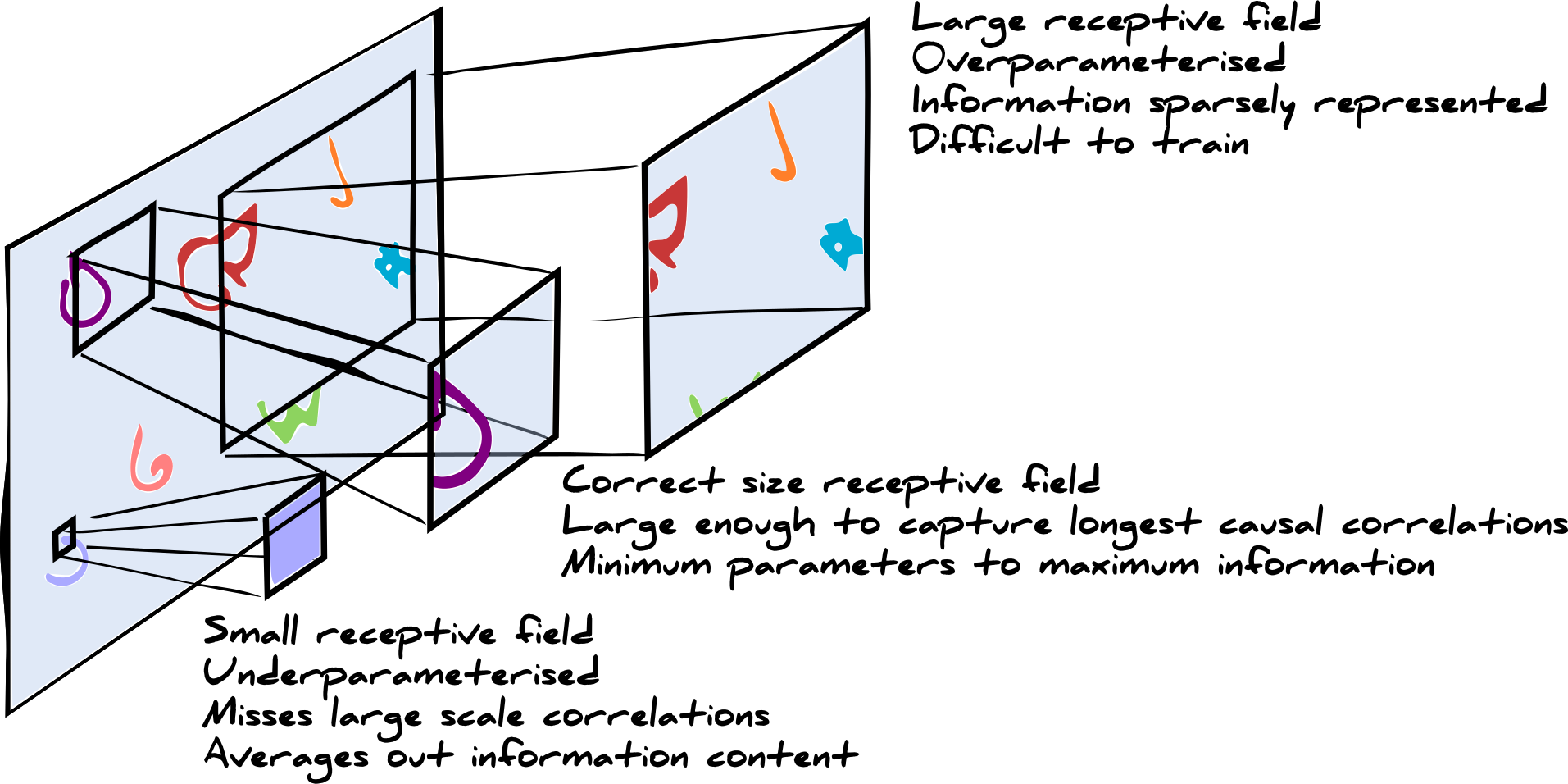
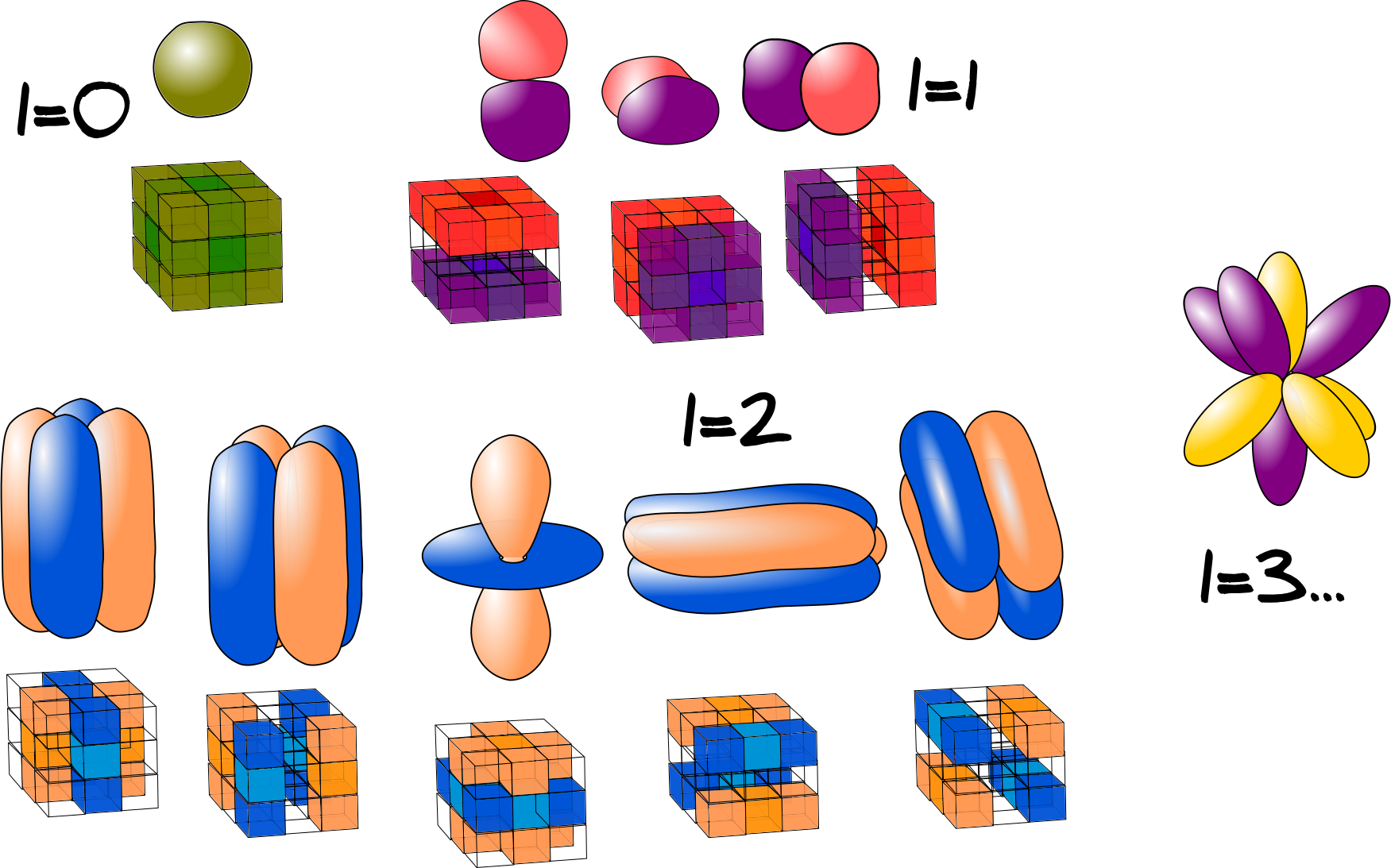
Decompose neural networks into well structured, orthogonal, algorithms
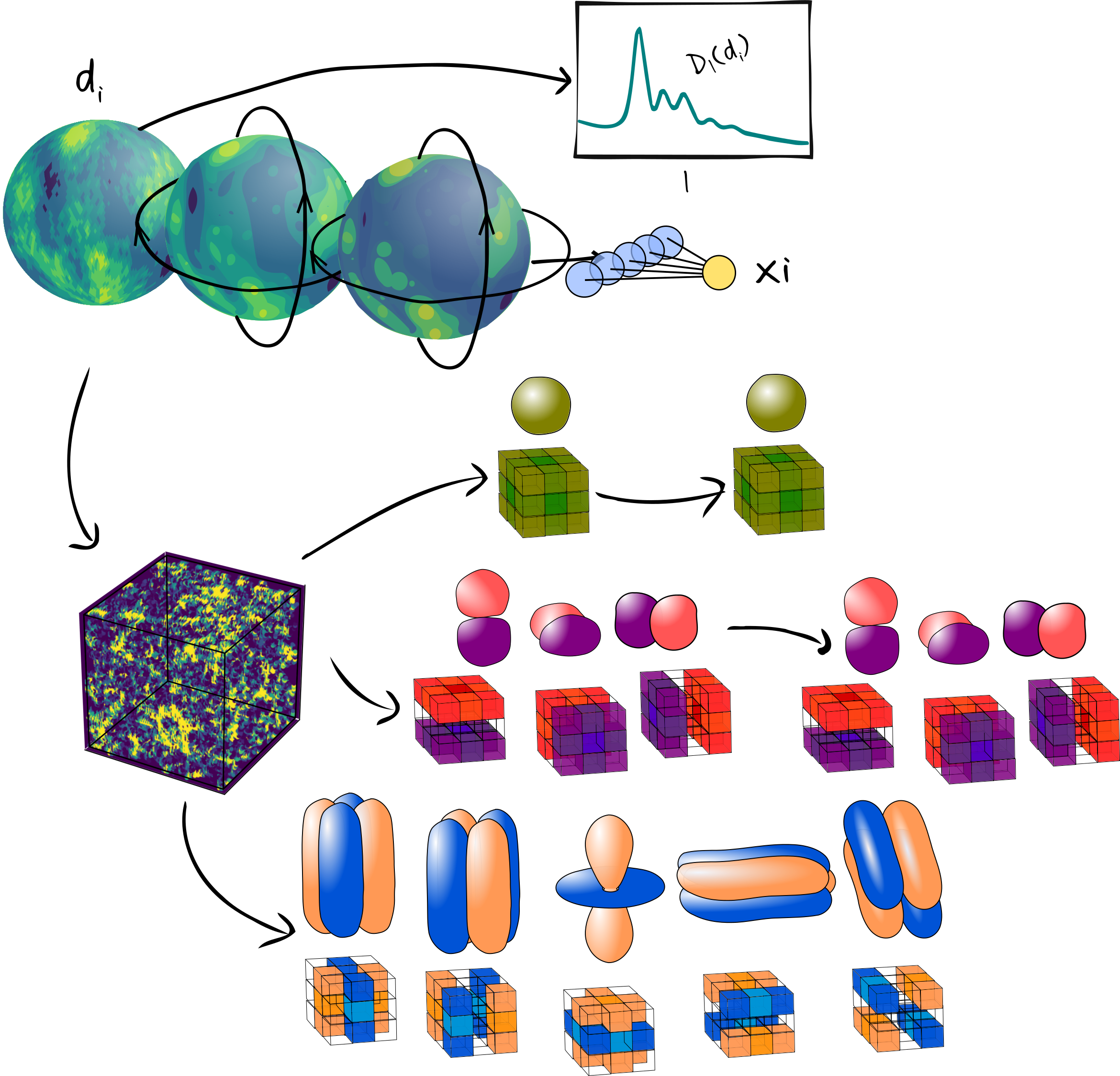
Find what part of the data is informative about a given result
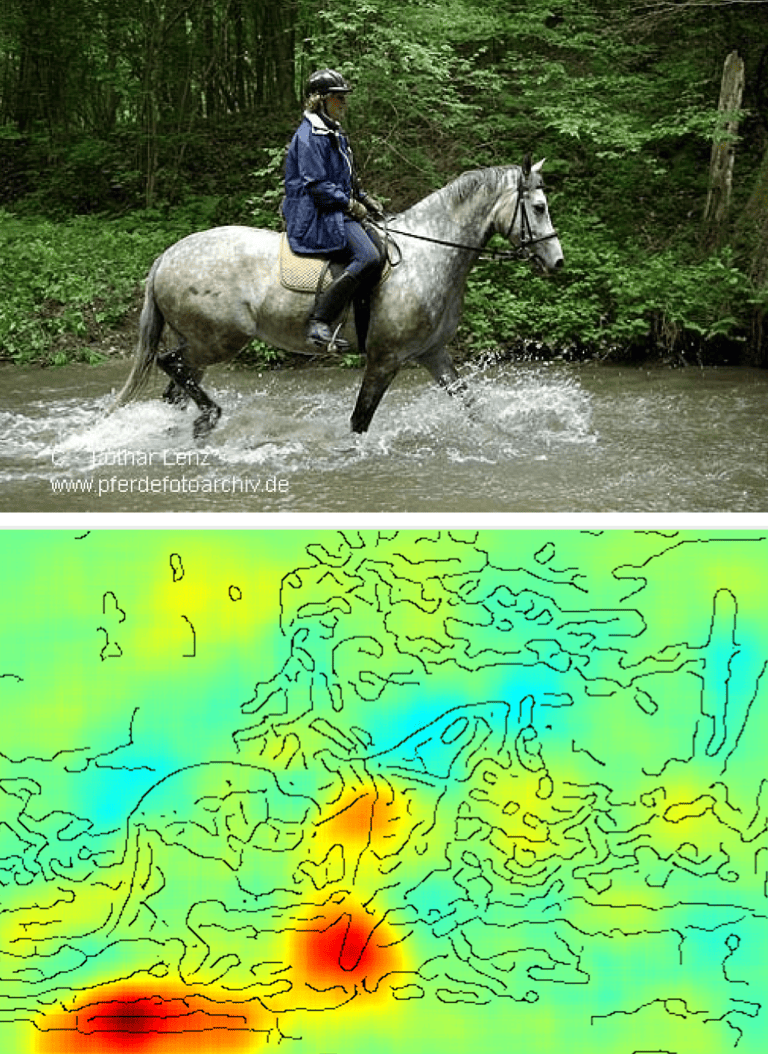
Use visualising attention to perturb the network to find out what is most sensitive
Because of the orthogonal nature of the neural physical engine we can relate physical structures in the data to outcomes from the trained network
Statistical understanding of neural networks
Choosing a neural network with weights at their maximum likelihood estimates degenerates the posterior
Local maximum likelihood estimates
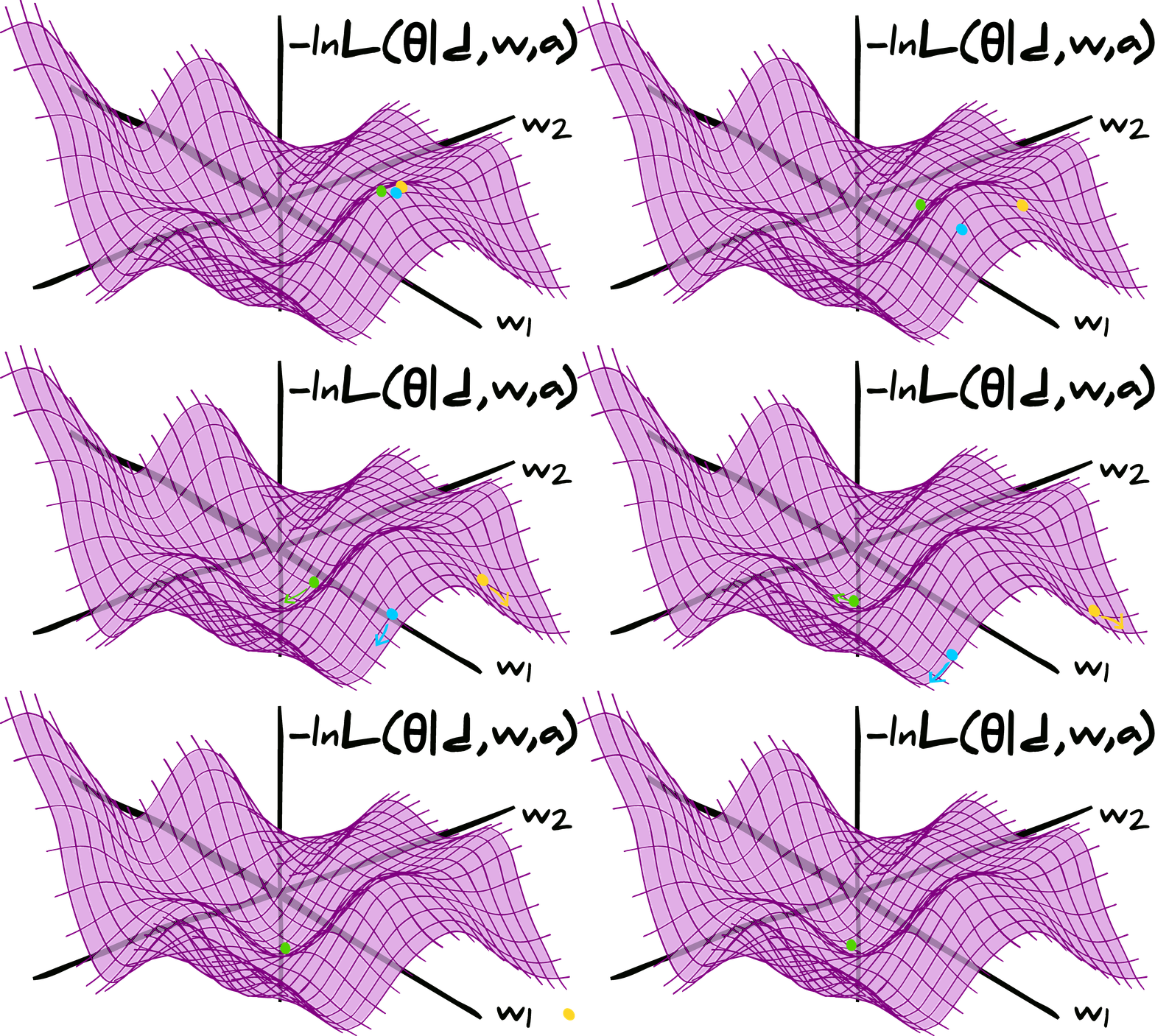 Different results are obtained with each network, none with a sense of trust
No interpretability and no trust = no science
Bayesian neural networks and variational inference
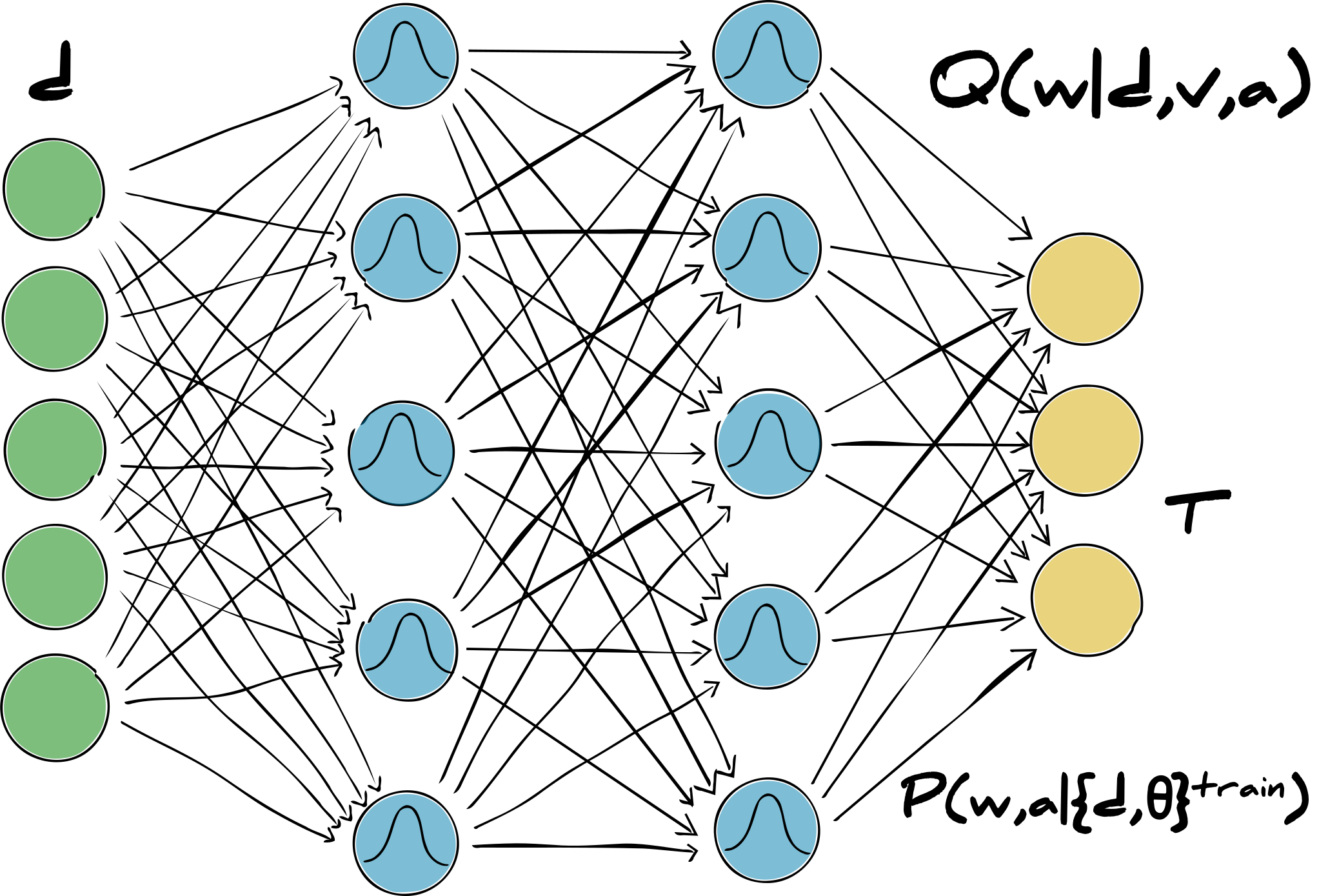
Posterior predictive distribution of outputs
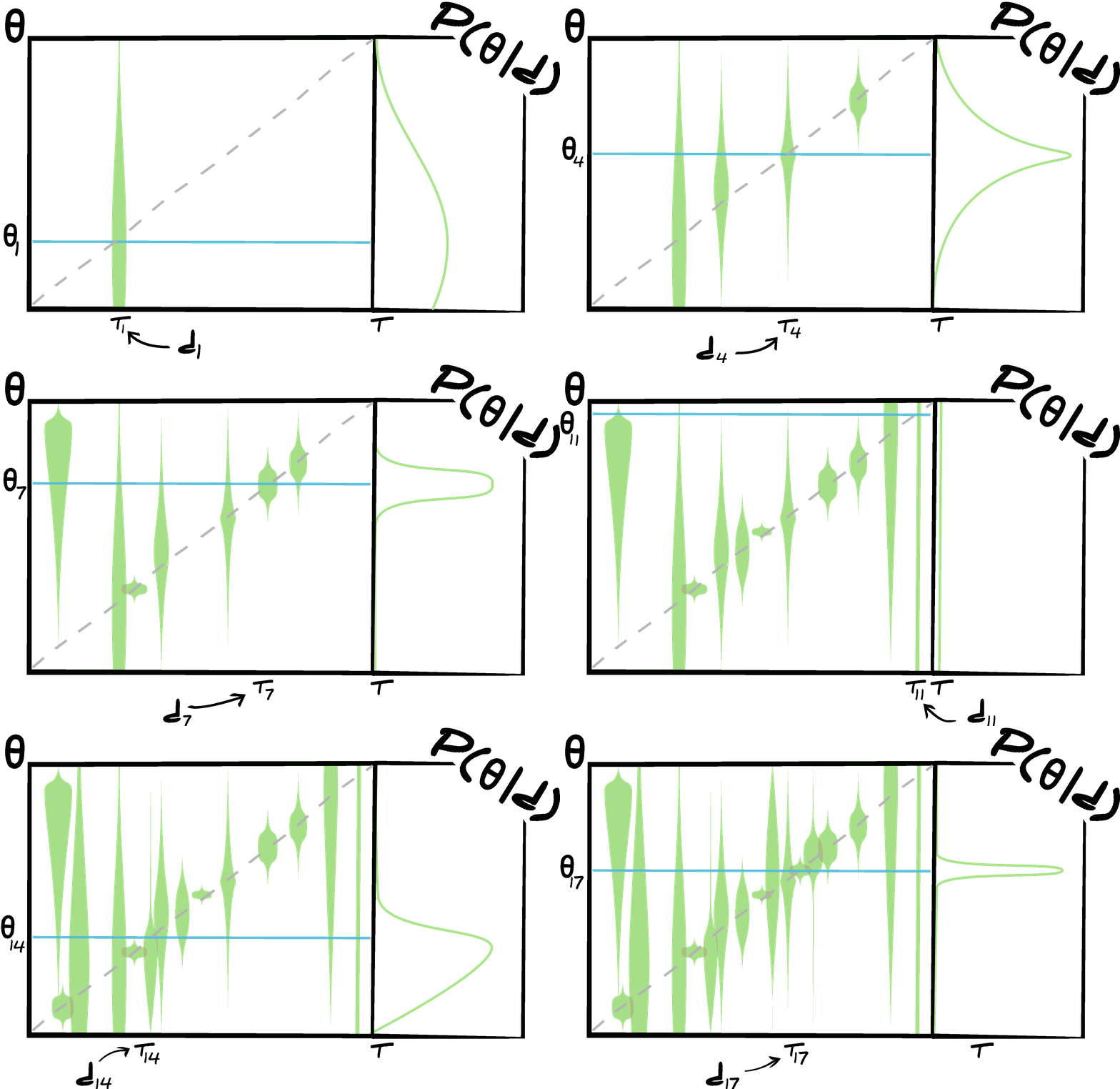
Everything is dependent on the training data!
Classical network : $\tiny \mathcal{P}(\boldsymbol{\omega},\boldsymbol{\alpha}|\boldsymbol{\{}{\bf d},\boldsymbol{\theta}\boldsymbol{\}}^\textrm{train}) \to \delta(\boldsymbol{\omega}-\boldsymbol{\omega}^\textrm{MLE},\boldsymbol{\alpha}-\boldsymbol{\alpha}^*)$
Variational inference : $\tiny \mathcal{P}(\boldsymbol{\omega},\boldsymbol{\alpha}|\boldsymbol{\{}{\bf d},\boldsymbol{\theta}\boldsymbol{\}}^\textrm{train}) = \mathcal{Q}(\boldsymbol{\omega}|\boldsymbol{\nu}^\textrm{MLE}, \boldsymbol{\alpha}^*, \boldsymbol{\{}{\bf d},\boldsymbol{\theta}\boldsymbol{\}}^\textrm{train})$
Bayesian networks : $\tiny \mathcal{P}(\boldsymbol{\omega},\boldsymbol{\alpha}|\boldsymbol{\{}{\bf d},\boldsymbol{\theta}\boldsymbol{\}}^\textrm{train}) =\prod_i^{n_\textrm{train}}\mathcal{L}(\boldsymbol{\theta}^\textrm{train}_i|{\bf d}^\textrm{train}_i,\boldsymbol{\omega},\boldsymbol{\alpha})p(\boldsymbol{\omega},\boldsymbol{\alpha})$
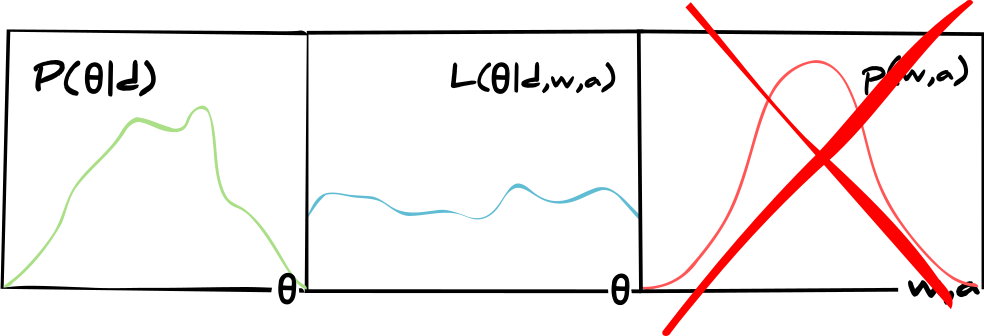
If the training data, network optimisation, or (pretty much) anything else is not perfect, the inference will be biased
Likelihood-free inference
Use the same neural network to summarise observations and simulations
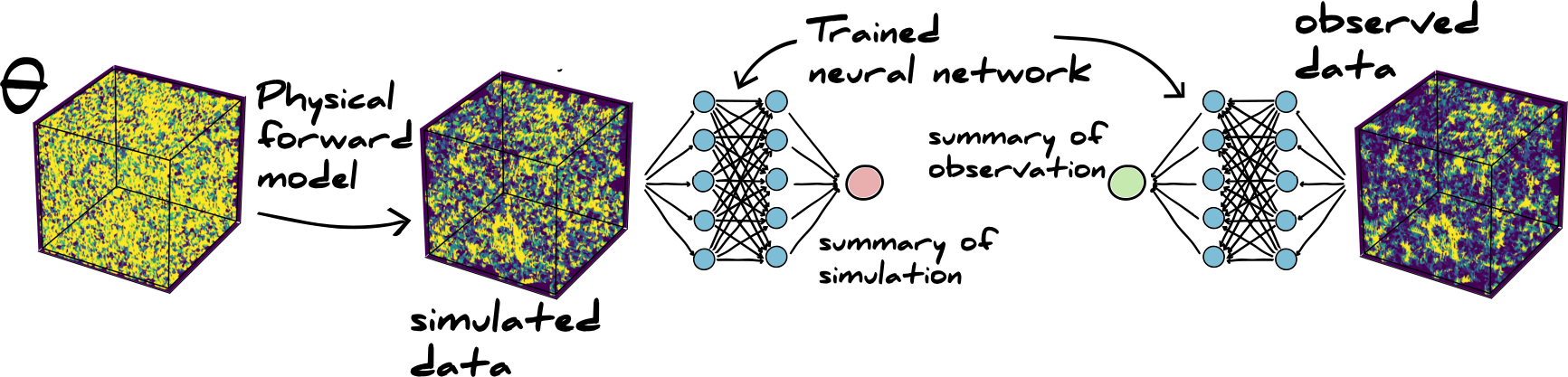
Generate simulations drawn from prior and summarise
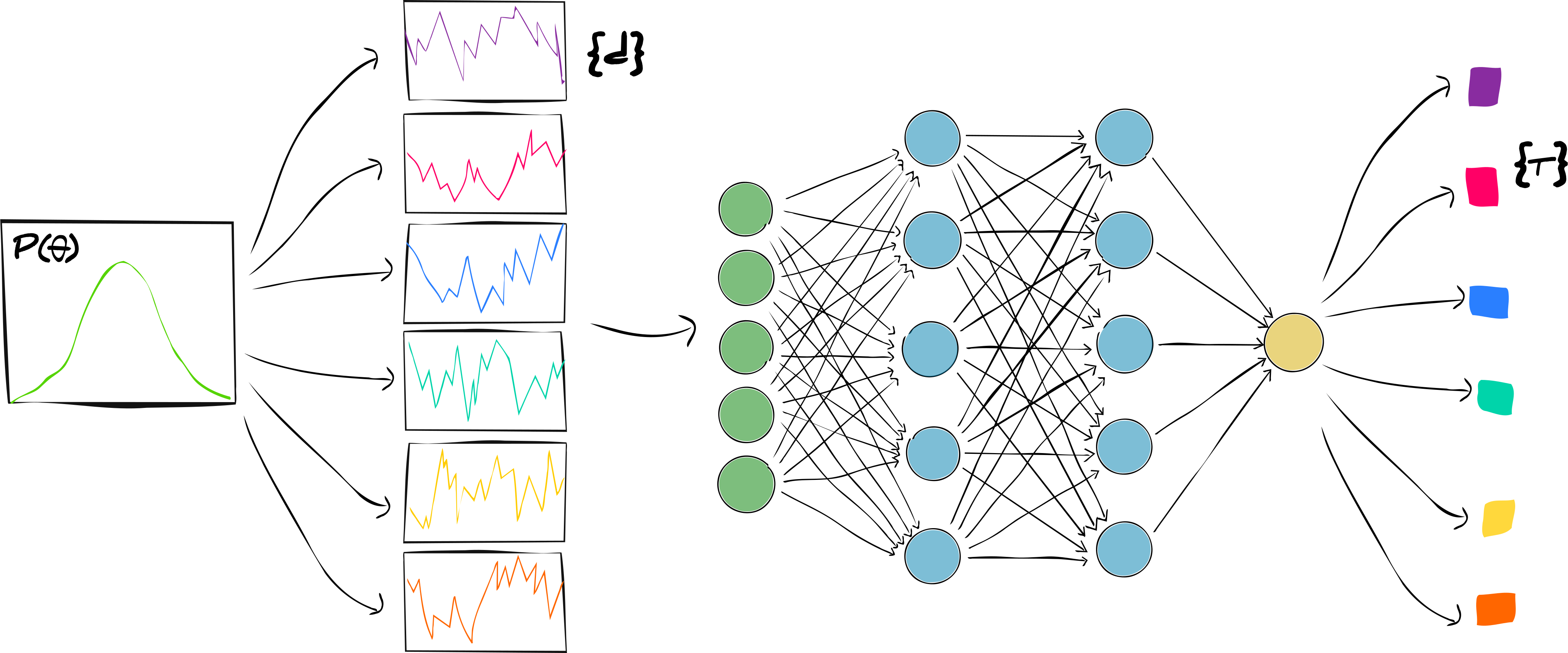
Make a kernel density estimate (or use ABC) on the simulations
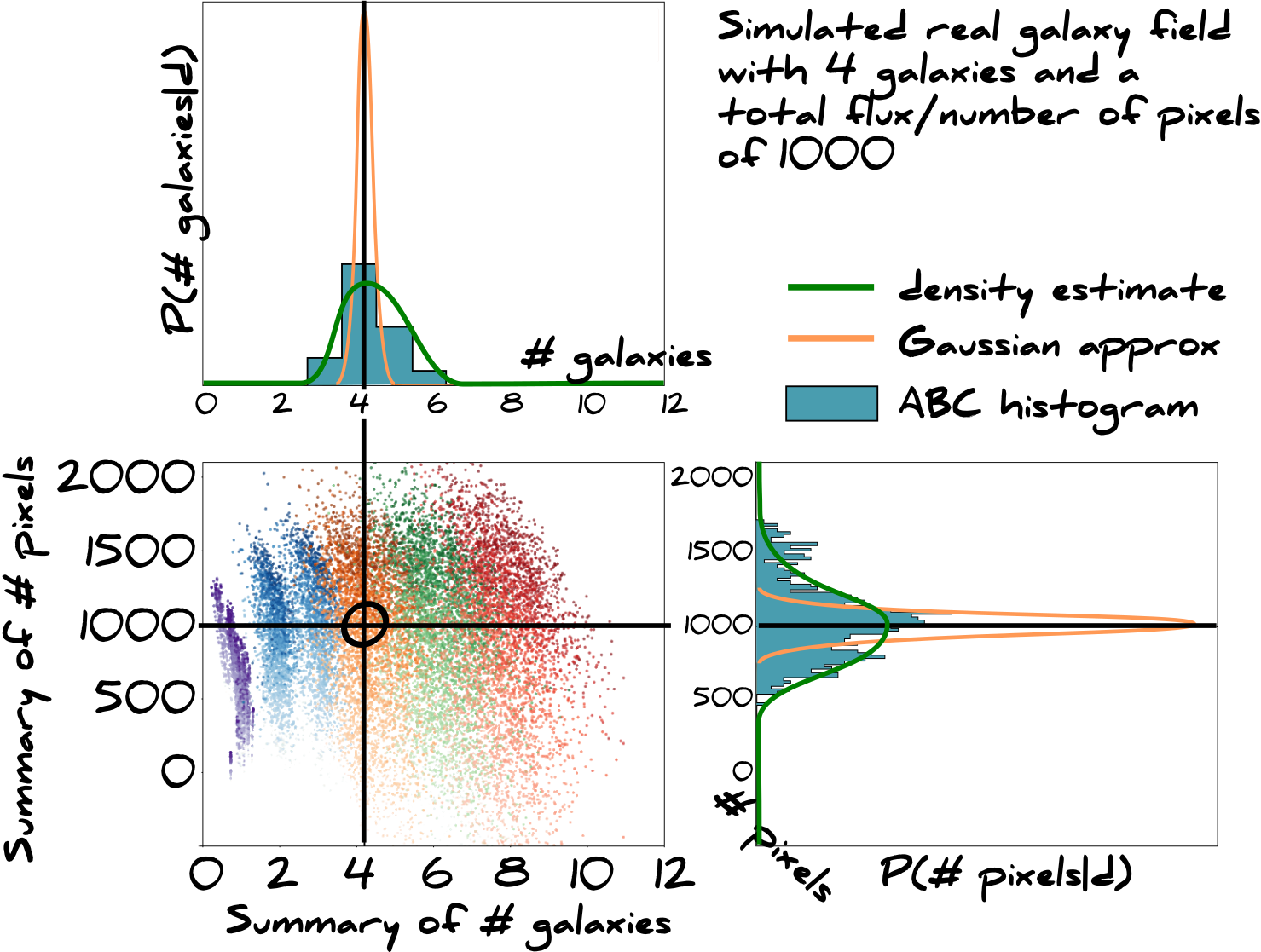
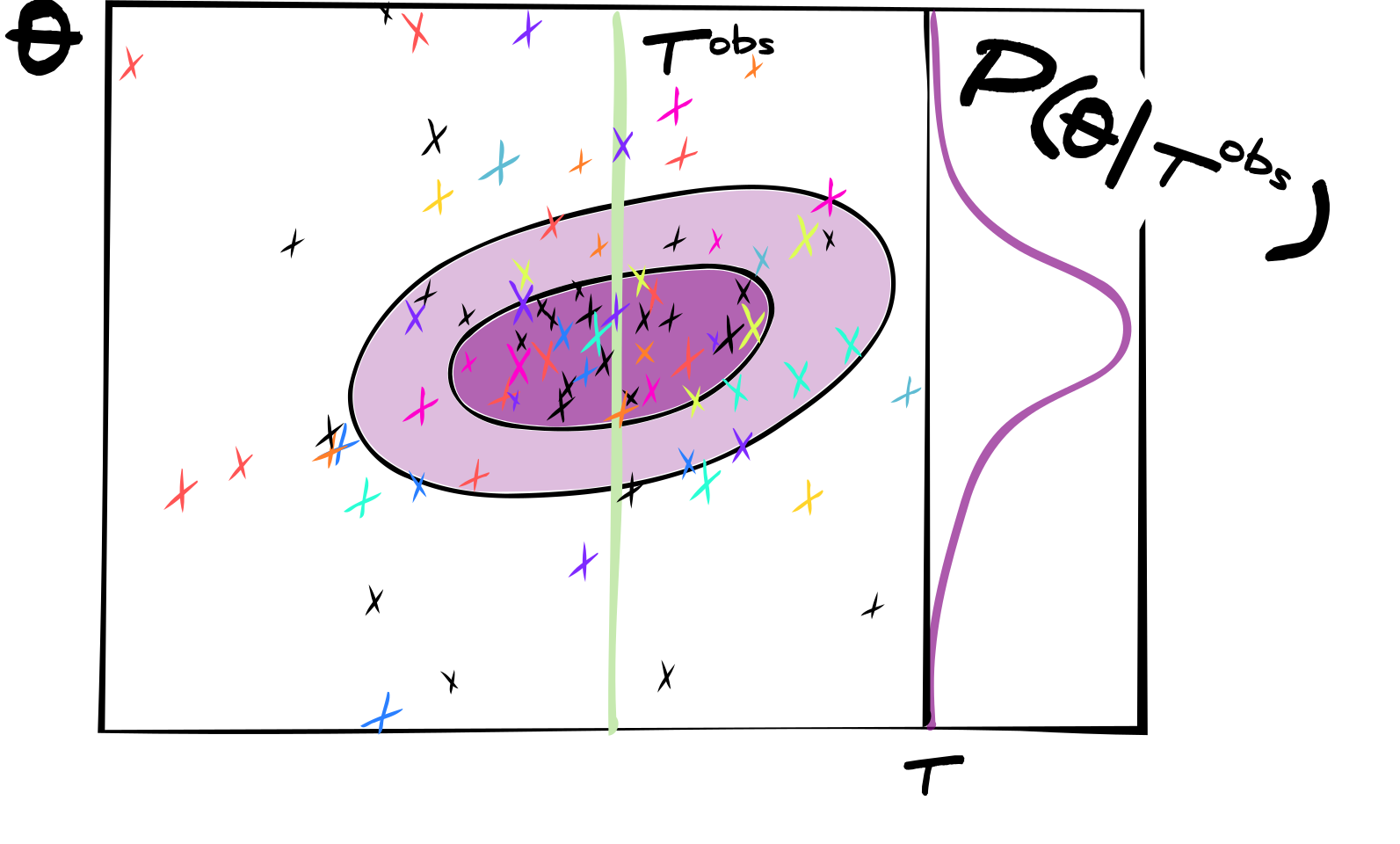 A slice through at the summarised observation is the approximate posterior
Posterior distribution of galaxy counts and fluxes in fields
Summary
Neural networks are extremely powerful for science
They speed up computations
They can also allow us to build model-independent models
When used carefully, and in the right setting they give us exact statistically interpretable results
And in the future they will actually inform us on how to build physical models
Extracting information using neural networks
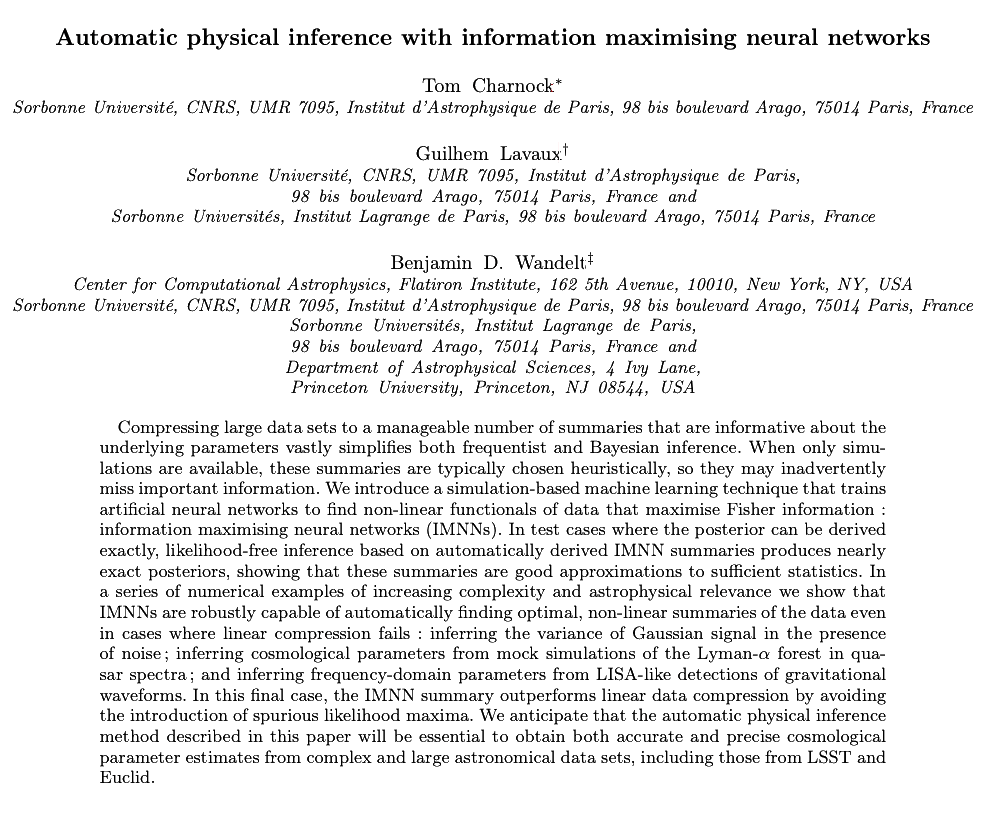
Information maximising neural networks
$$\begin{align} {\bf F}_{\alpha\beta} &= \left.\left\langle\frac{\partial^2\ln\mathcal{L}({\bf d}|\boldsymbol{\theta})}{\partial\theta_\alpha\partial\theta_\beta}\right\rangle\right|_{\boldsymbol{\theta}=\boldsymbol{\theta}^*}\nonumber\\ &\simeq \left.\left\langle\frac{\partial^2\ln\mathcal{L}({\bf x}|\boldsymbol{\theta}, {\bf d})}{\partial\theta_\alpha\partial\theta_\beta}\right\rangle\right|_{\boldsymbol{\theta}=\boldsymbol{\theta}^*}\nonumber \end{align}$$
And also Gaussianises the data $$\mathcal{L}({\bf x}|\boldsymbol{\theta},{\bf d})\approx\mathcal{N}(\boldsymbol{\mu}(\boldsymbol{\theta}), \boldsymbol{\Sigma}(\boldsymbol{\theta}))$$
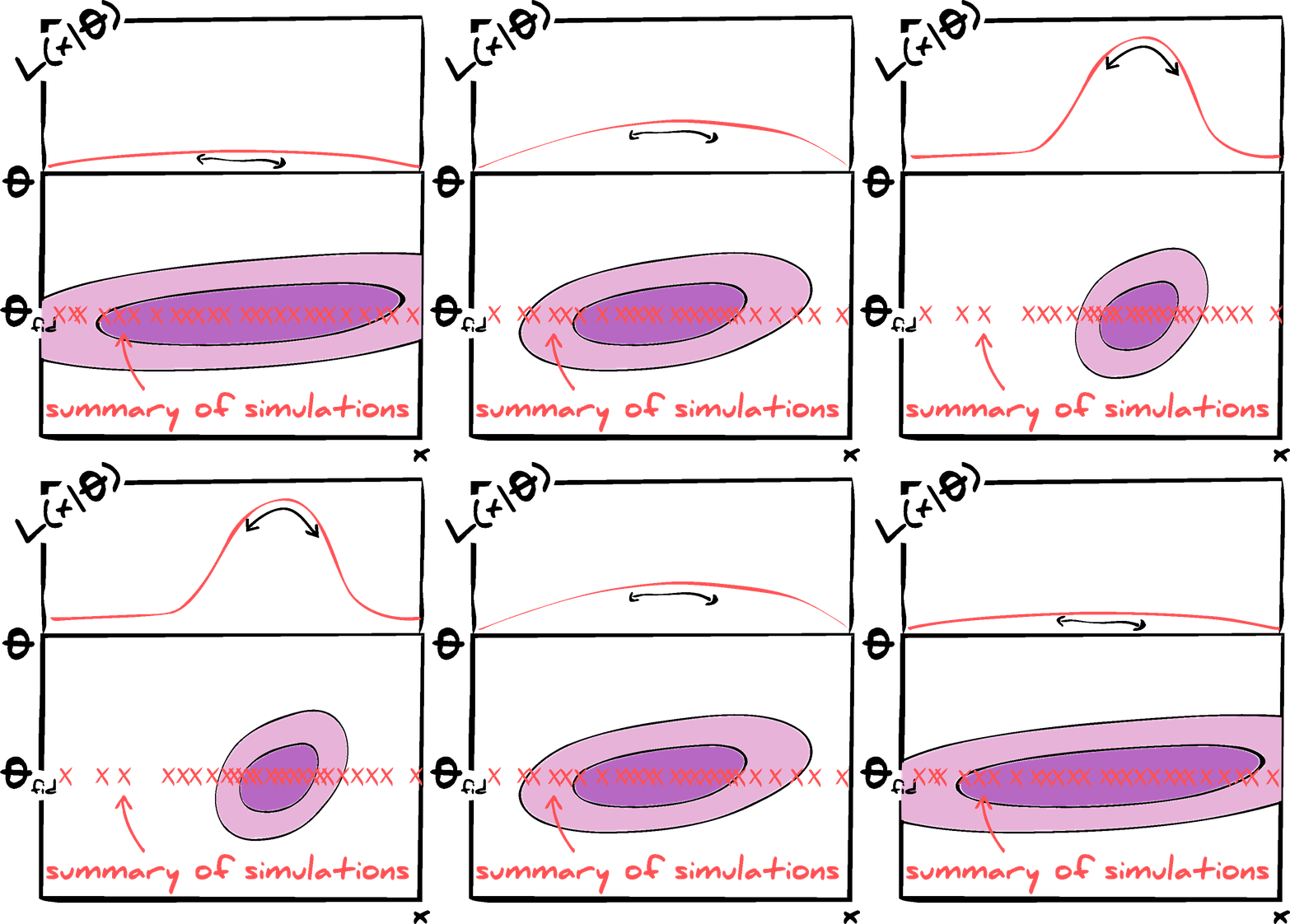
We maximise
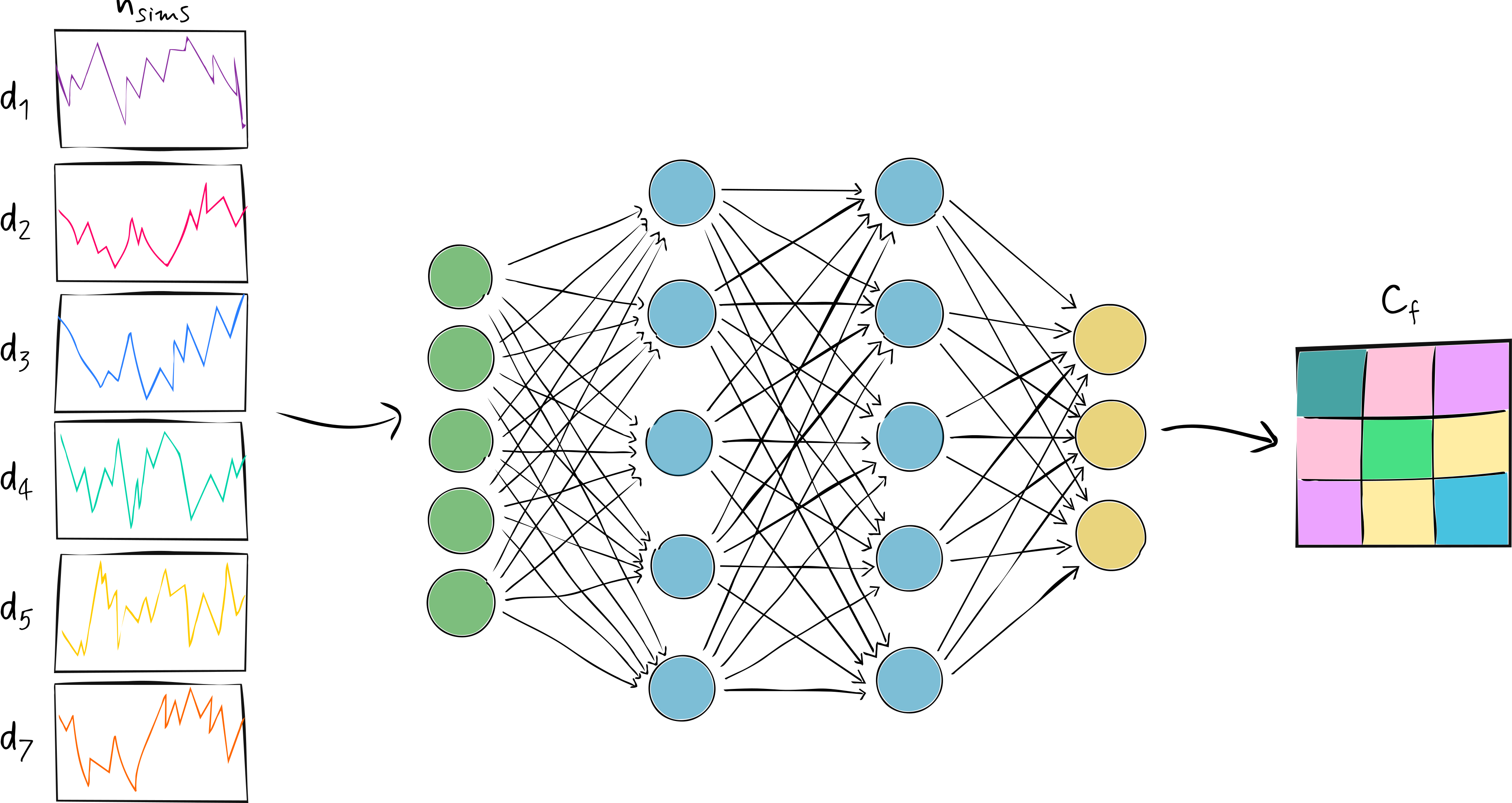
$$\ln|{\bf F}_{\alpha\beta}| = \ln\left|\frac{\partial\boldsymbol{\mu}_\mathscr{f}}{\partial\theta_\alpha}^T{\bf C}^{-1}_\mathscr{f}\frac{\partial\boldsymbol{\mu}_\mathscr{f}}{\partial\theta_\beta}\right|.$$Calculate the covariance
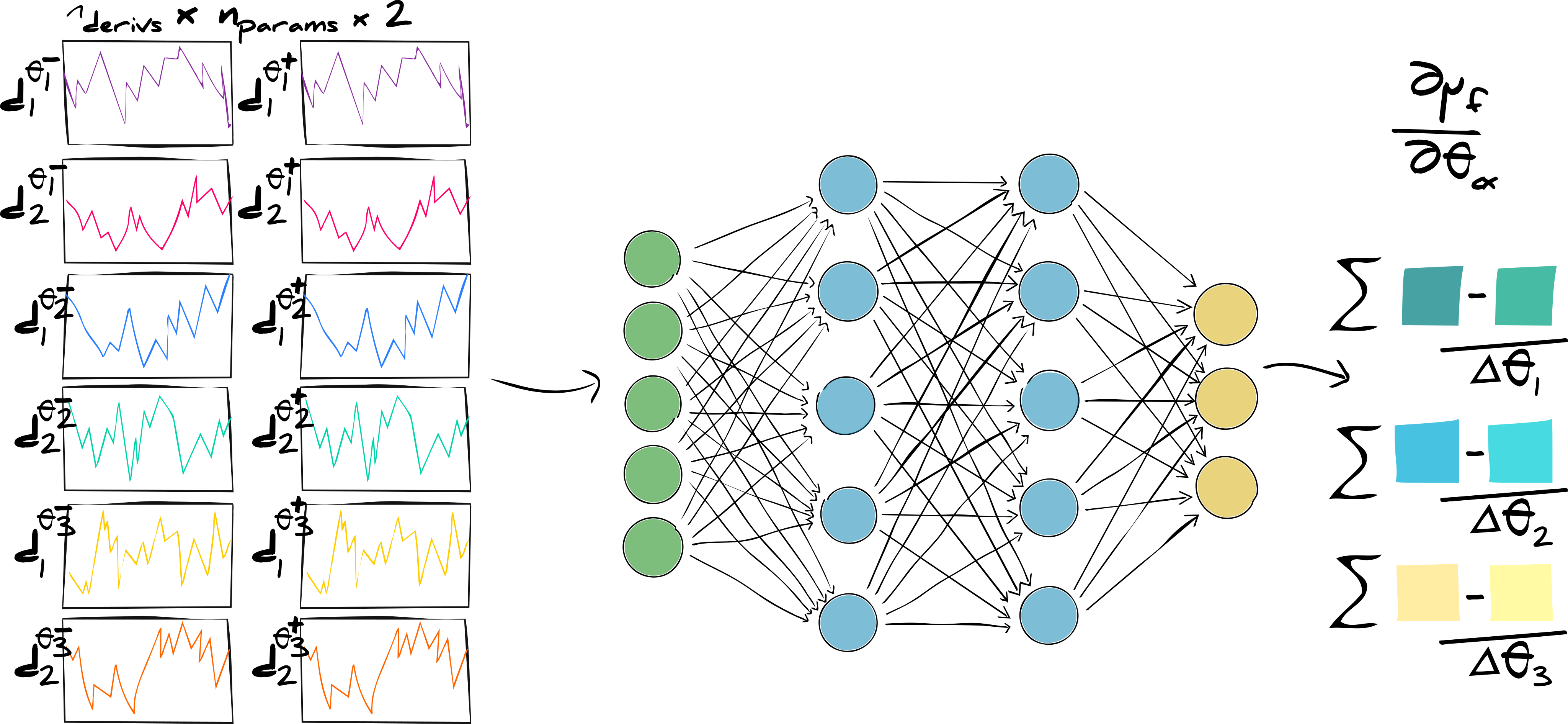
Calculate the derivative of the mean of the summaries with respect to the parameters
Calculate the Fisher information
$${\bf F}_{\alpha\beta}=\frac{\partial\mu_\mathscr{f}}{\partial\theta_\alpha}^T{\bf C}^{-1}_\mathscr{f}\frac{\partial\mu_\mathscr{f}}{\partial\theta_\beta}$$This Gaussian form forces the summaries to be Gaussianised
And use LFI
These are the optimal summaries to extract information from the data