

What is a neural network?
Neural networks are arbitrary fittable non-linear functions
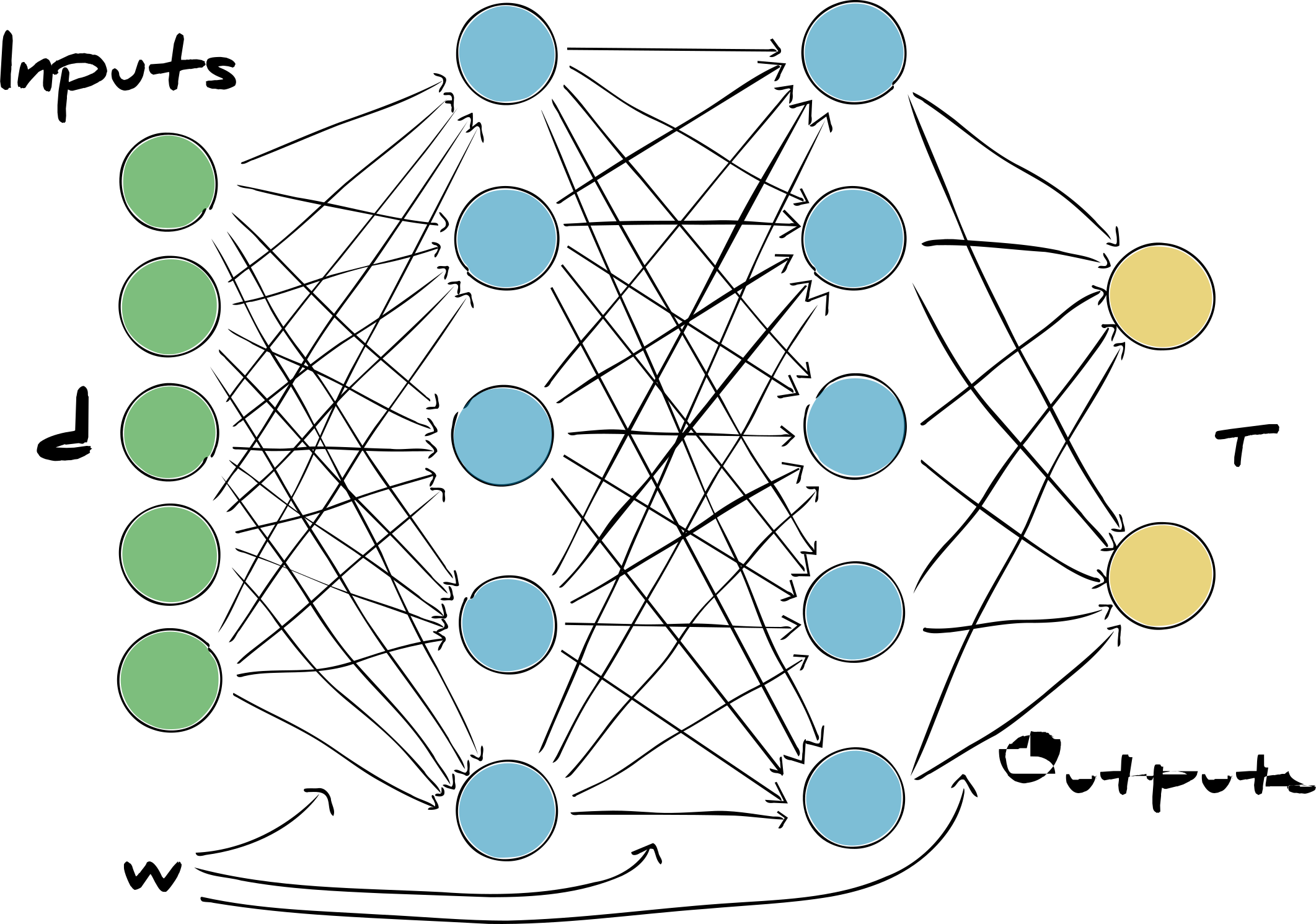
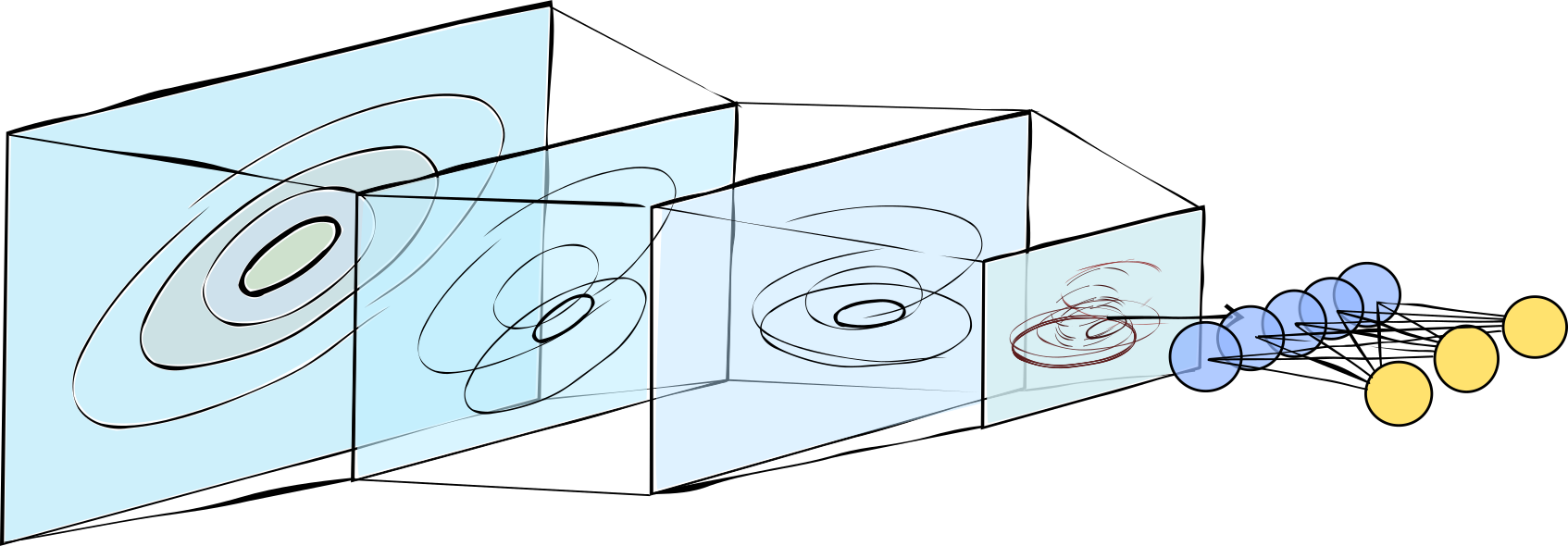
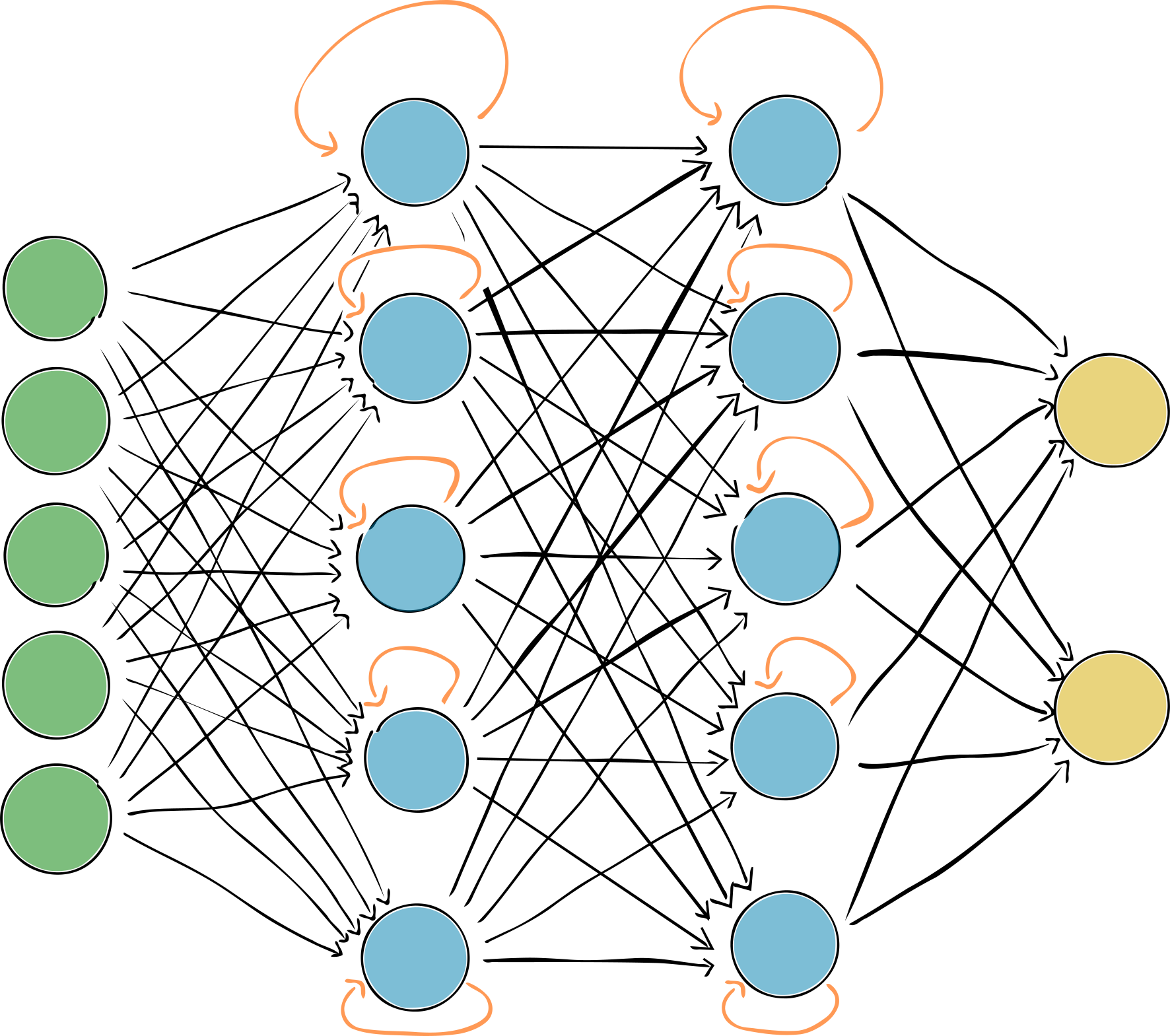
There are many different architectures
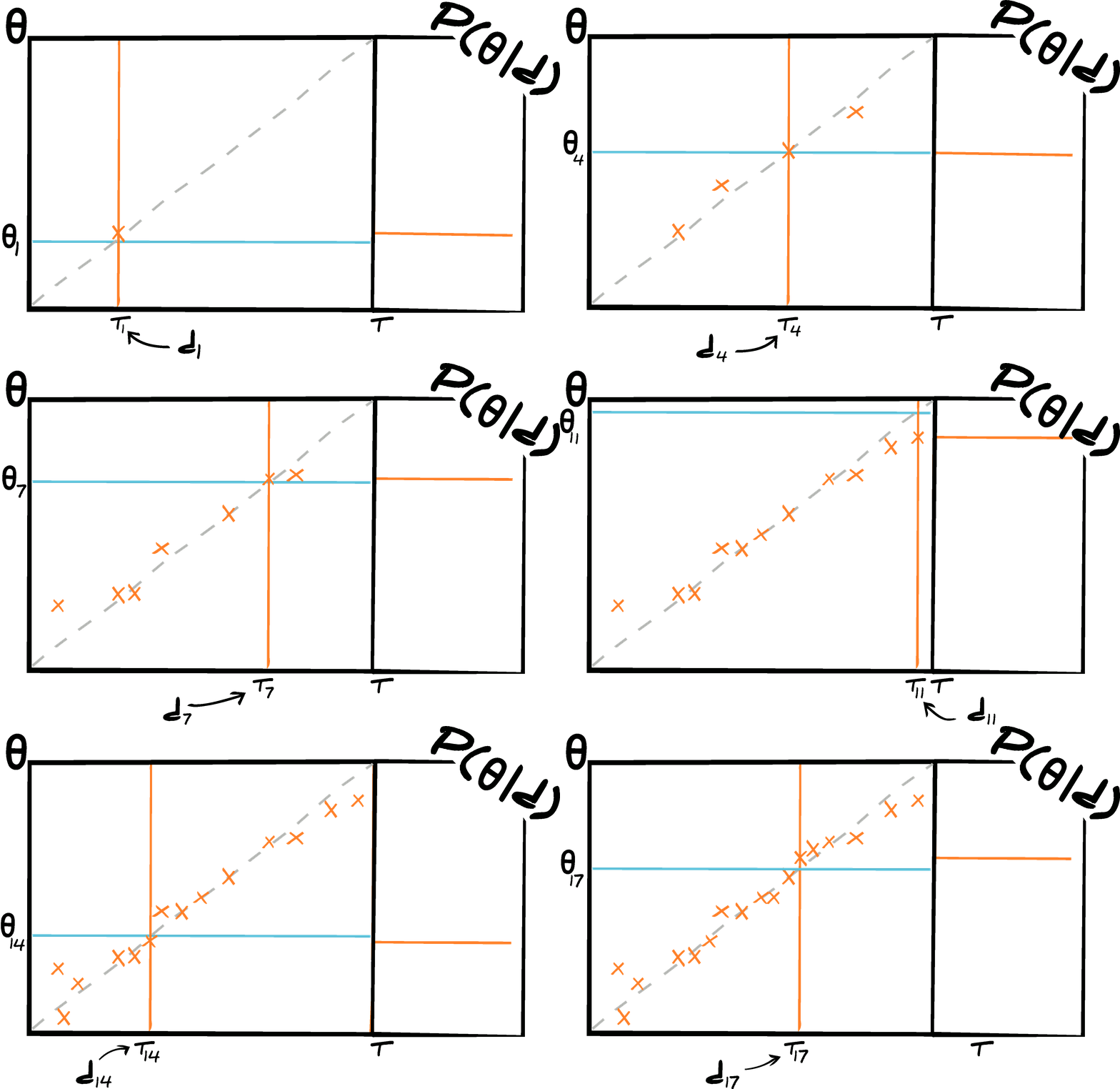
How to fit a neural network
with a neural network, $\mathscr{f} : {\bf d}\to\boldsymbol{\tau}$
Probabilistic interpretation of a neural network
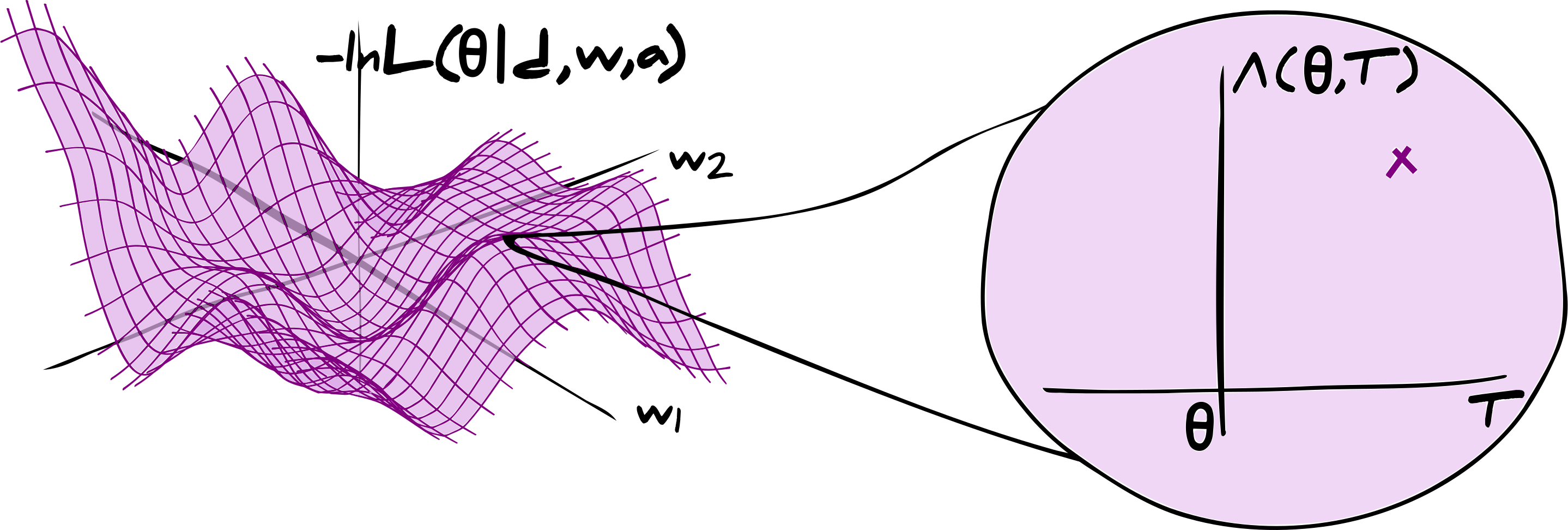 How likely is any network going to provide the expected function output?
This surface is defined by our choice in distance measure which is called the cost or loss function
Obtaining informative outputs
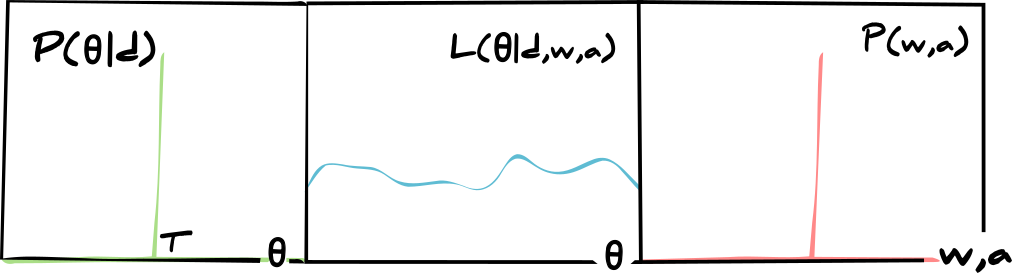
$$\mathcal{P}(\boldsymbol{\theta}|{\bf d})= \int d\boldsymbol{\omega}d\boldsymbol{\alpha}~\mathcal{L}(\boldsymbol{\theta}|{\bf d},\boldsymbol{\omega},\boldsymbol{\alpha})\mathcal{P}(\boldsymbol{\omega},\boldsymbol{\alpha})$$
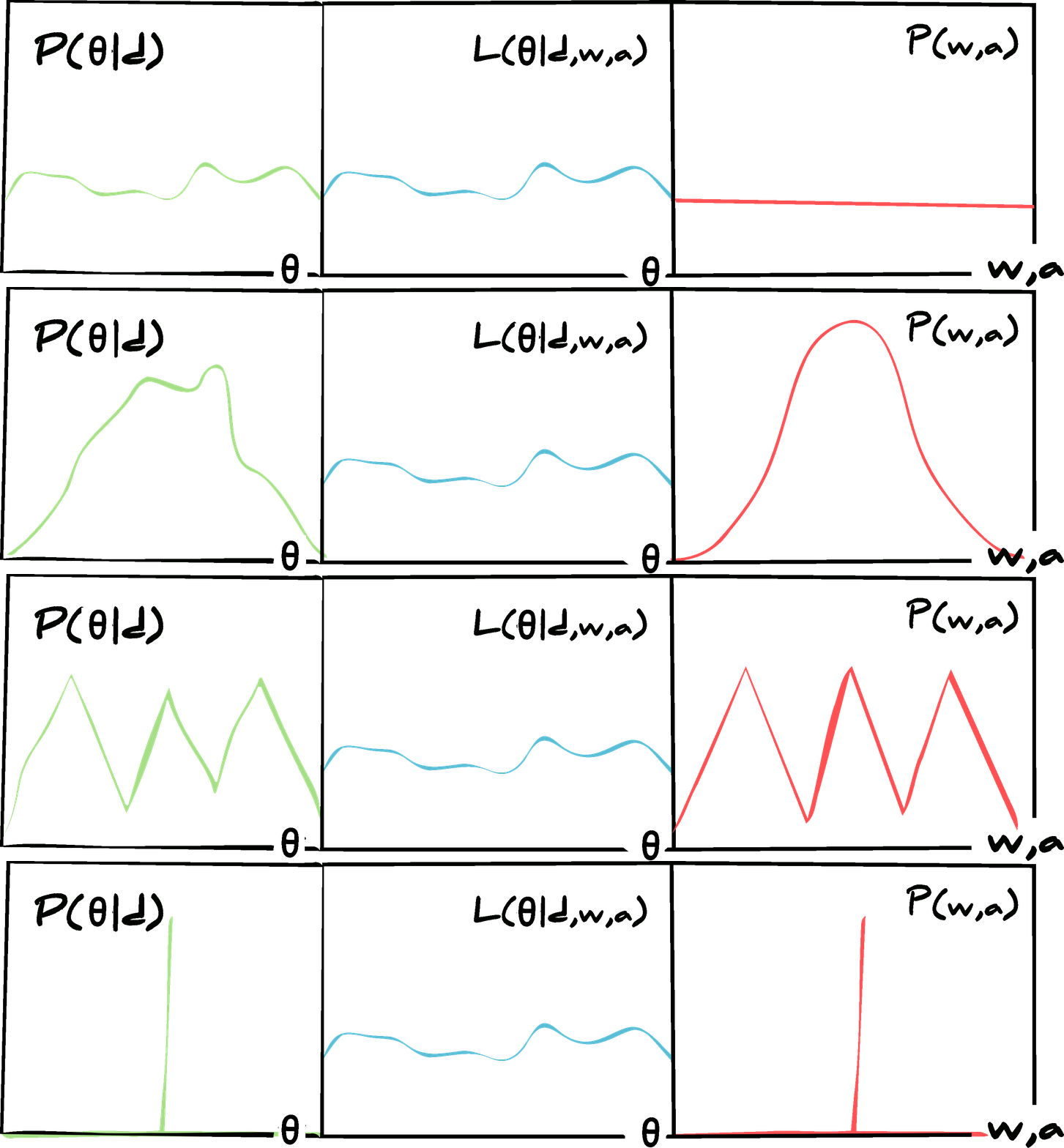
Maximum likelihood estimate of weights
$$\boldsymbol{\omega}^\textrm{MLE}=\underset{\boldsymbol{\omega}}{\textrm{argmax}}\left[\mathcal{L}(\boldsymbol{\{}\boldsymbol{\theta}\boldsymbol{\}}^\textrm{train}|\boldsymbol{\{}{\bf d}\boldsymbol{\}}^\textrm{train}, \boldsymbol{\omega}, \boldsymbol{\alpha}^*)\right]$$
Prediction using neural networks
What are neural networks being used for?
EVERYTHING!
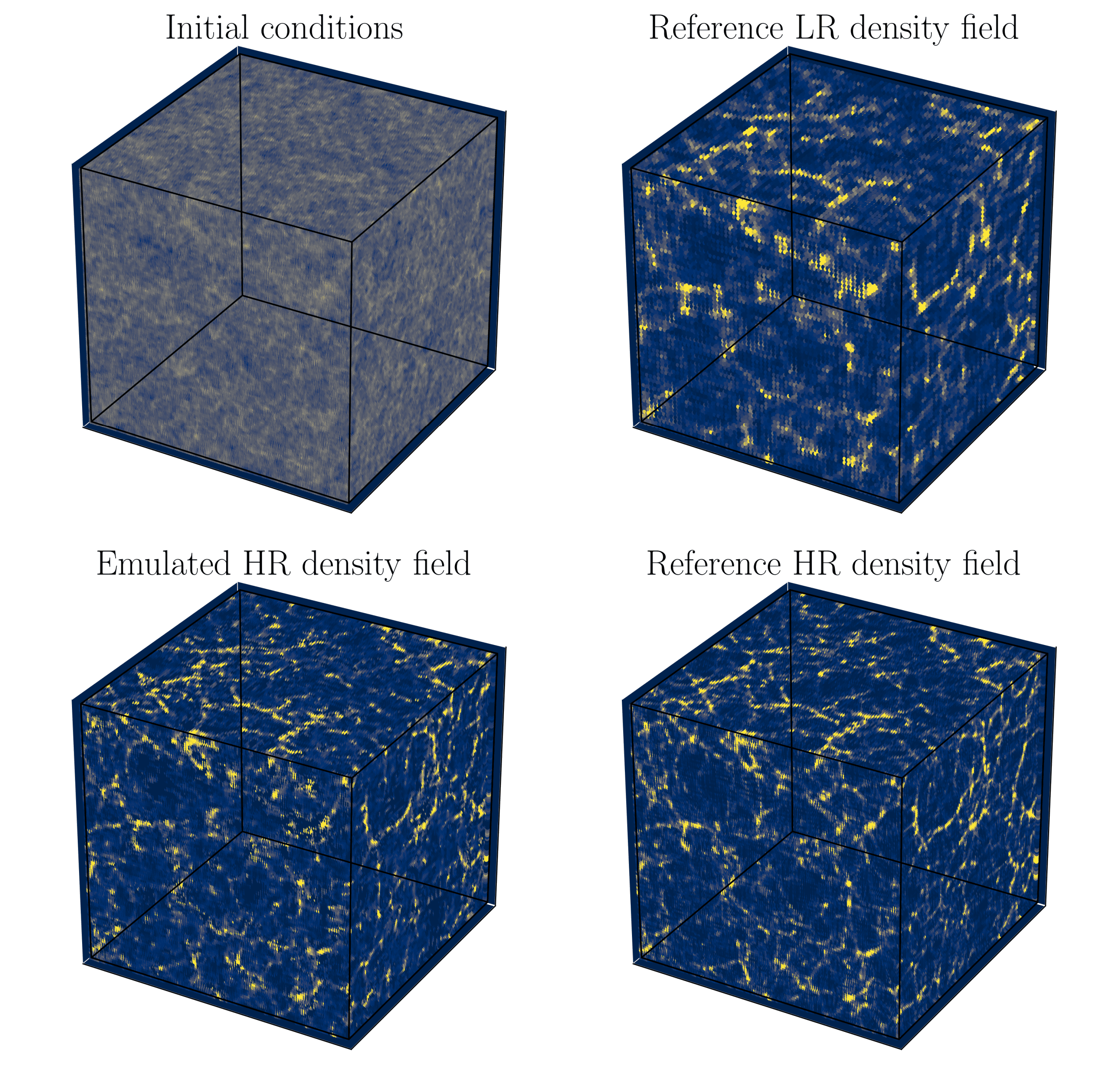
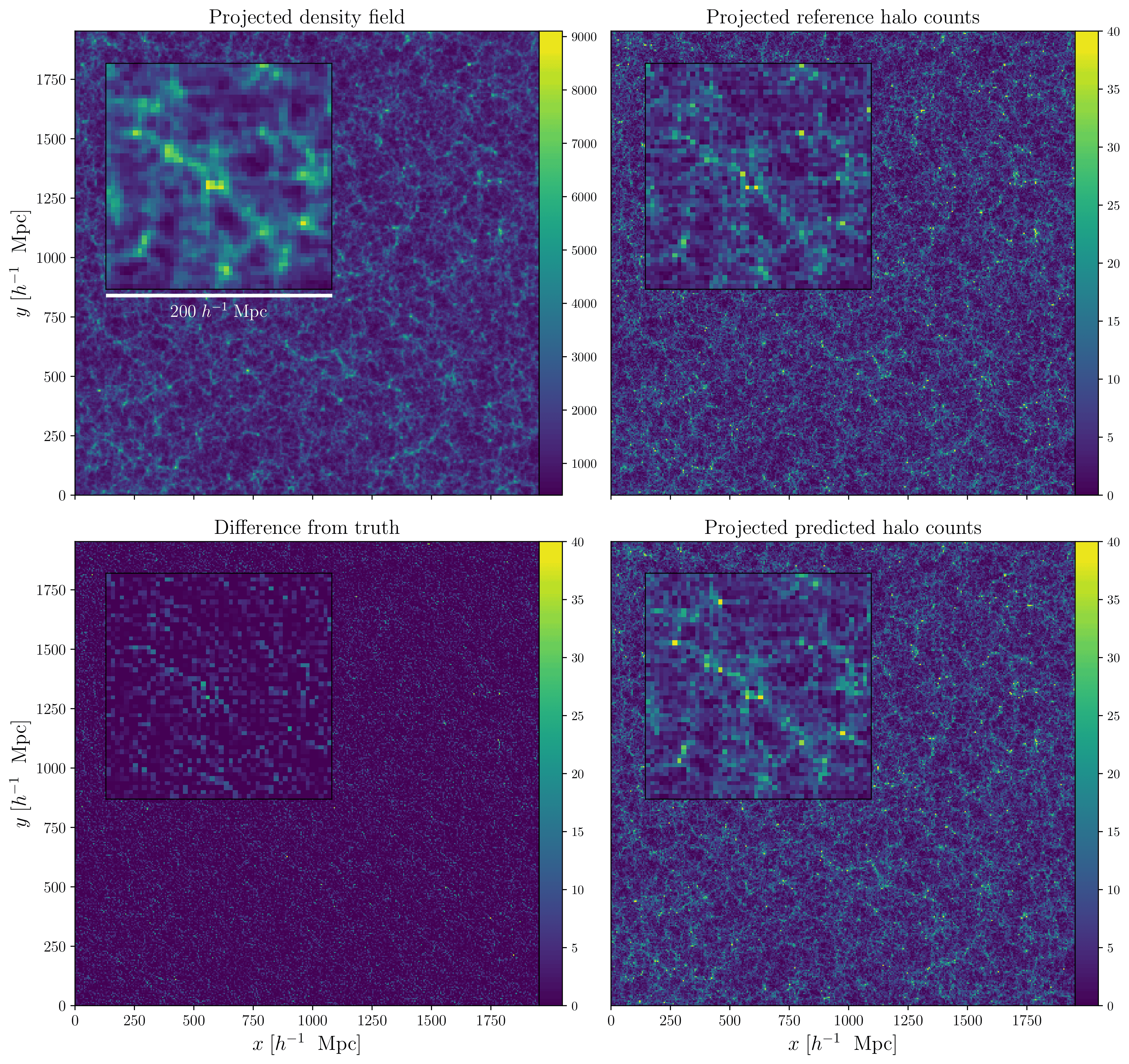
Emulation
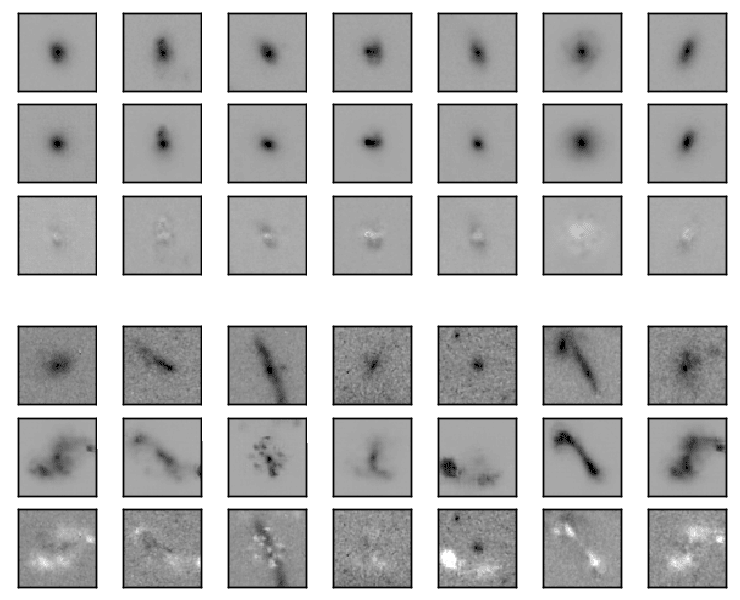
Parameter inference
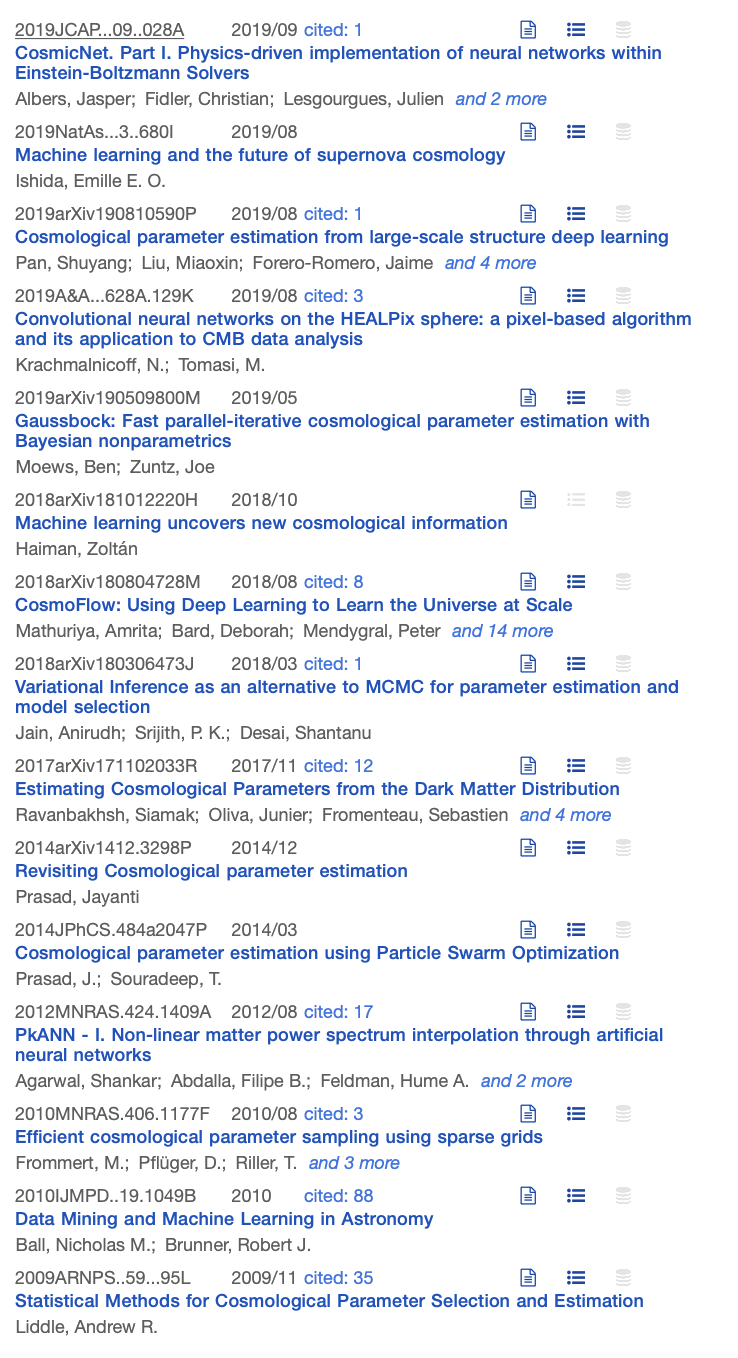
Why should we distrust neural networks?
Choosing a neural network with weights at their maximum likelihood estimates degenerates the posterior
Local maximum likelihood estimates
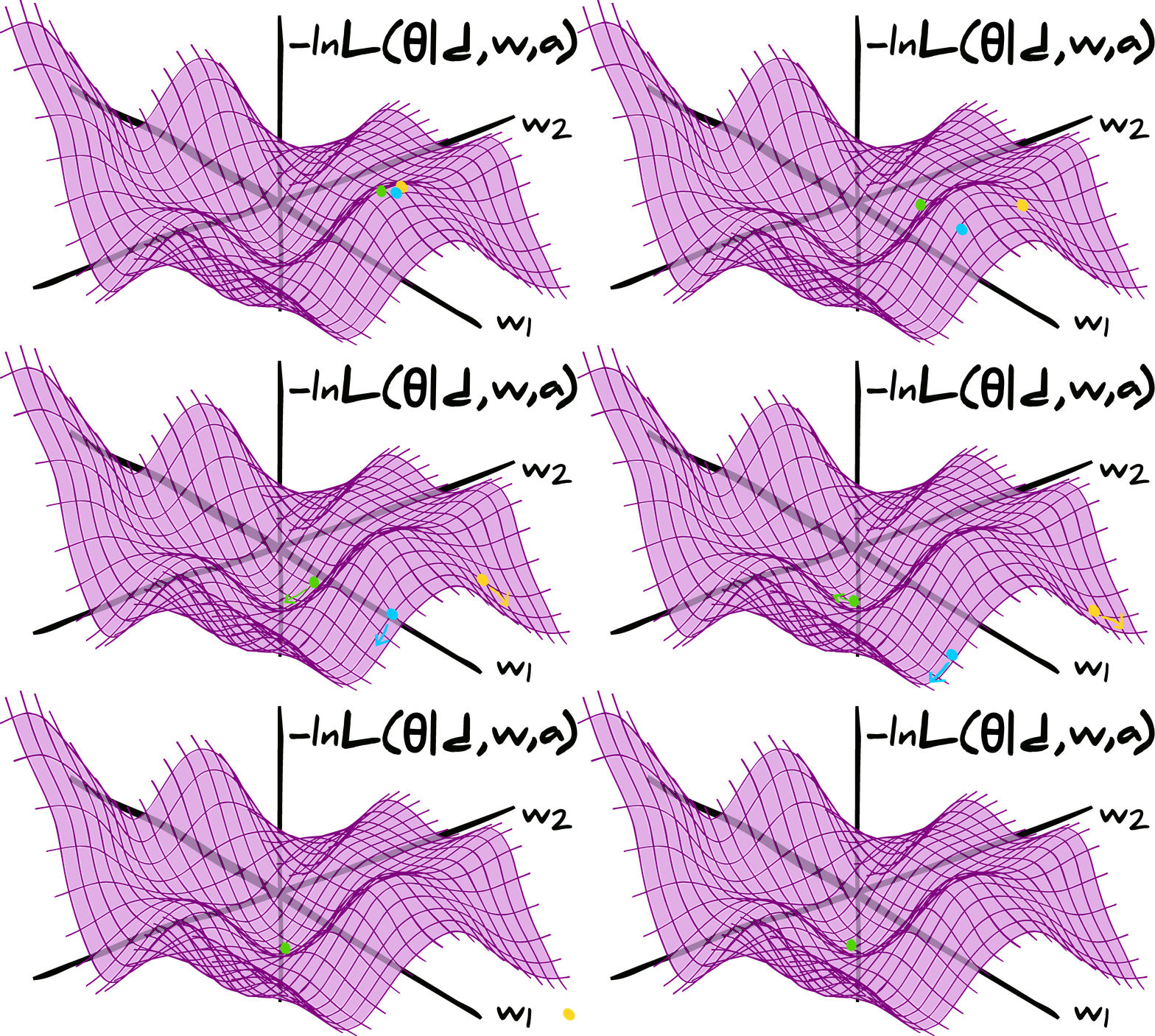 Different results are obtained with each network, none with a sense of trust
Bayesian neural networks and variational inference
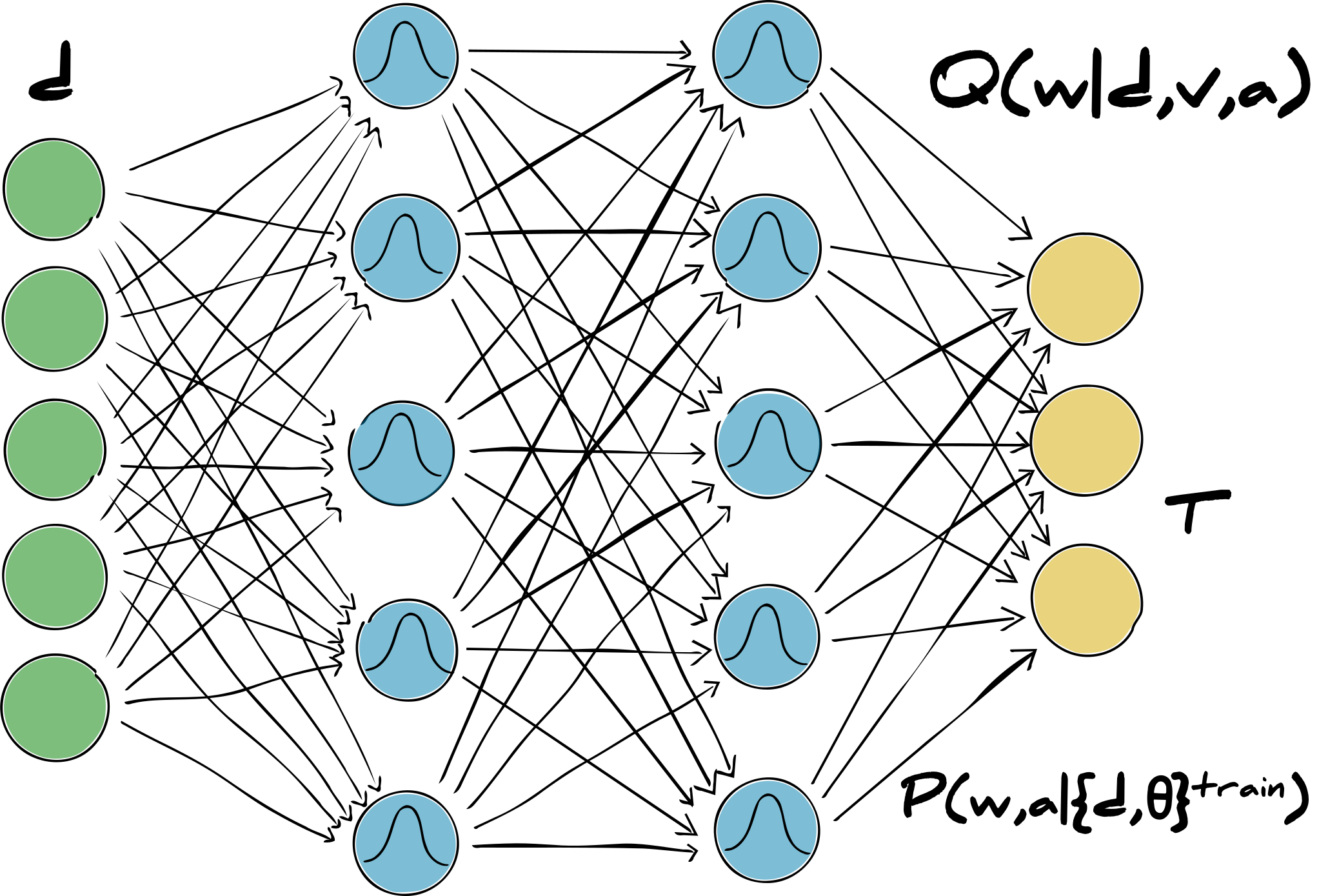
Posterior predictive distribution of outputs
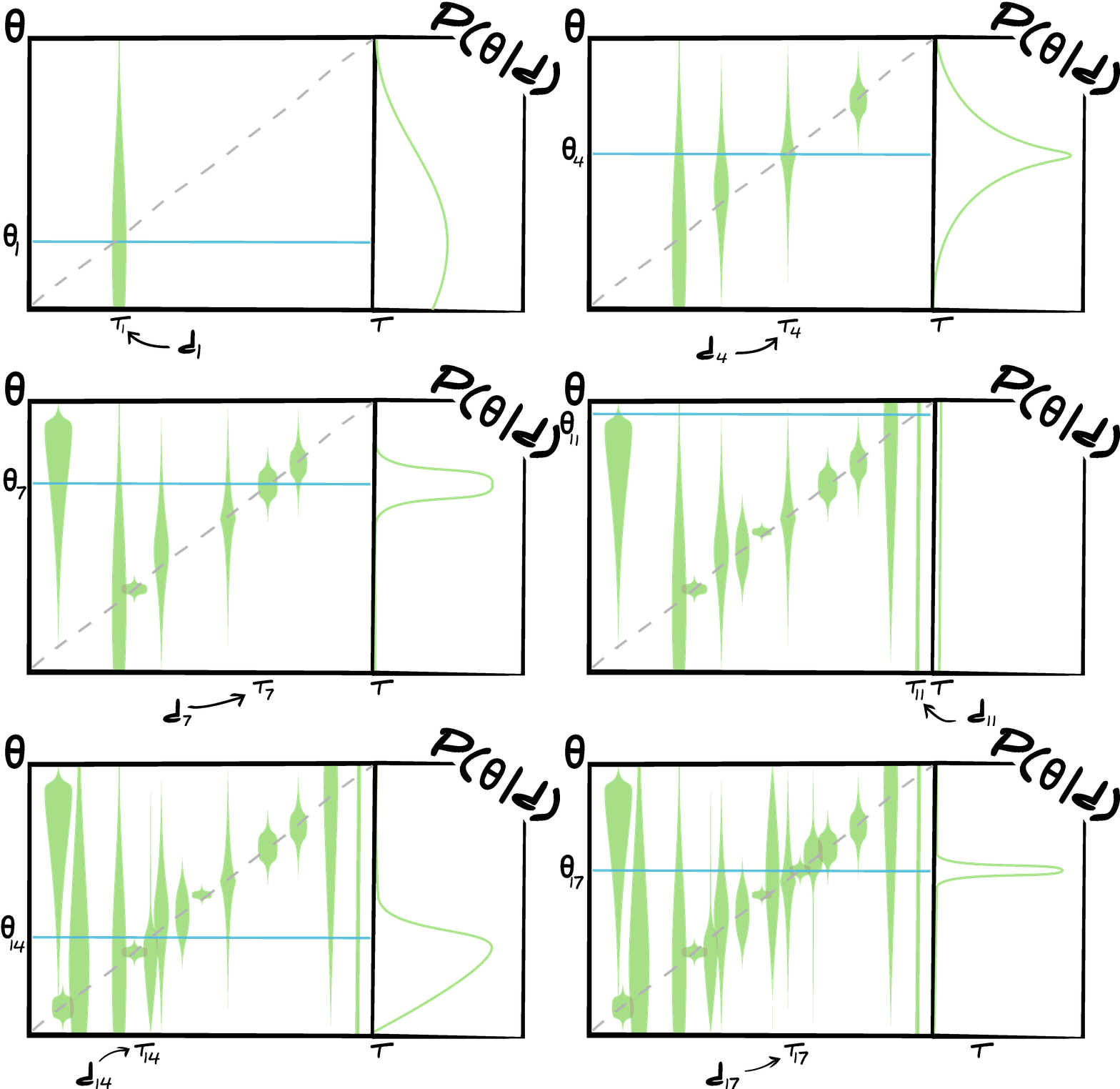
Everything is dependent on the training data!
Classical network : $\tiny \mathcal{P}(\boldsymbol{\omega},\boldsymbol{\alpha}|\boldsymbol{\{}{\bf d},\boldsymbol{\theta}\boldsymbol{\}}^\textrm{train}) \to \delta(\boldsymbol{\omega}-\boldsymbol{\omega}^\textrm{MLE},\boldsymbol{\alpha}-\boldsymbol{\alpha}^*)$
Variational inference : $\tiny \mathcal{P}(\boldsymbol{\omega},\boldsymbol{\alpha}|\boldsymbol{\{}{\bf d},\boldsymbol{\theta}\boldsymbol{\}}^\textrm{train}) = \mathcal{Q}(\boldsymbol{\omega}|\boldsymbol{\nu}^\textrm{MLE}, \boldsymbol{\alpha}^*, \boldsymbol{\{}{\bf d},\boldsymbol{\theta}\boldsymbol{\}}^\textrm{train})$
Bayesian networks : $\tiny \mathcal{P}(\boldsymbol{\omega},\boldsymbol{\alpha}|\boldsymbol{\{}{\bf d},\boldsymbol{\theta}\boldsymbol{\}}^\textrm{train}) =\prod_i^{n_\textrm{train}}\mathcal{L}(\boldsymbol{\theta}^\textrm{train}_i|{\bf d}^\textrm{train}_i,\boldsymbol{\omega},\boldsymbol{\alpha})p(\boldsymbol{\omega},\boldsymbol{\alpha})$
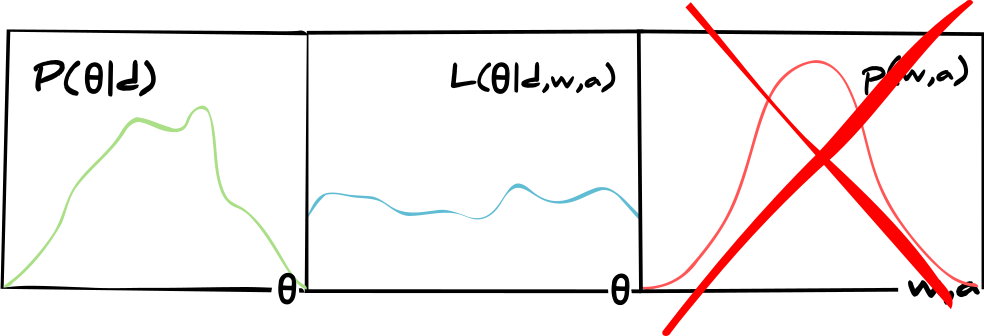
If the training data, network optimisation, or (pretty much) anything else is not perfect, the inference will be biased
Likelihood-free inference
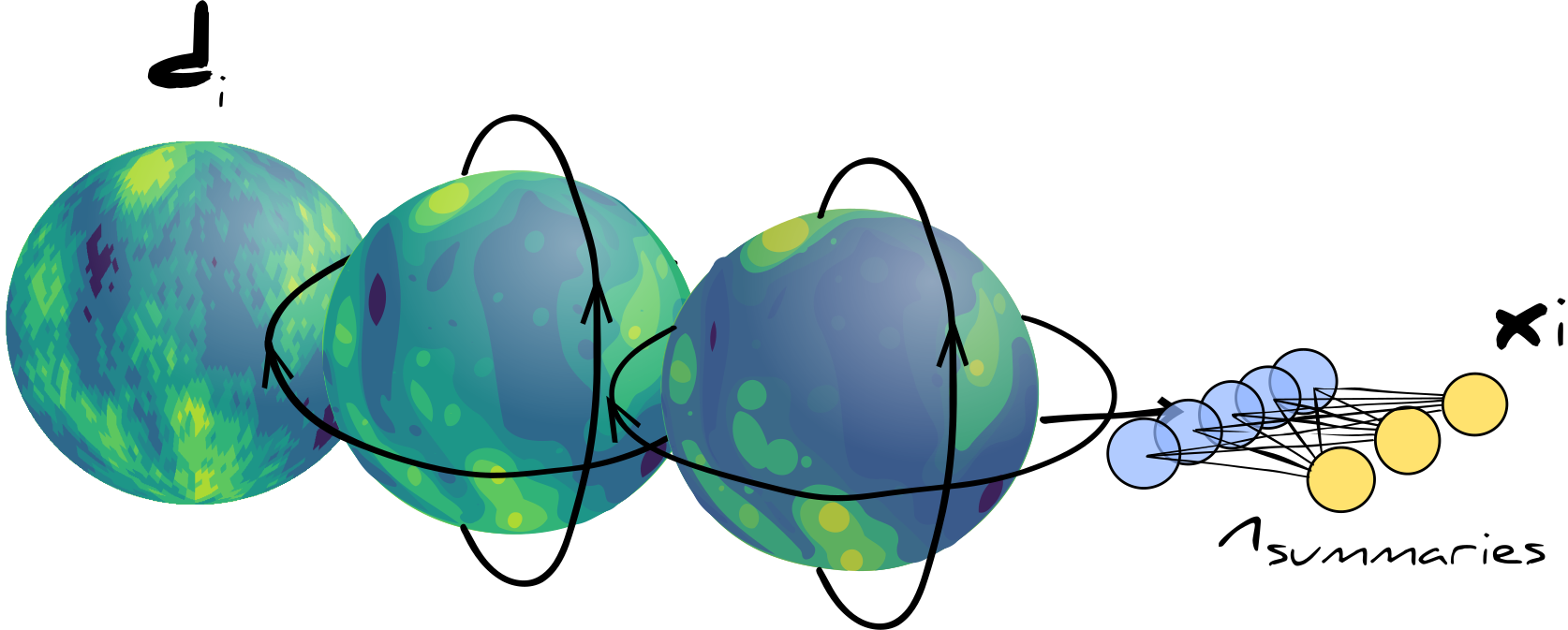
Use the same neural network to summarise observations and simulations
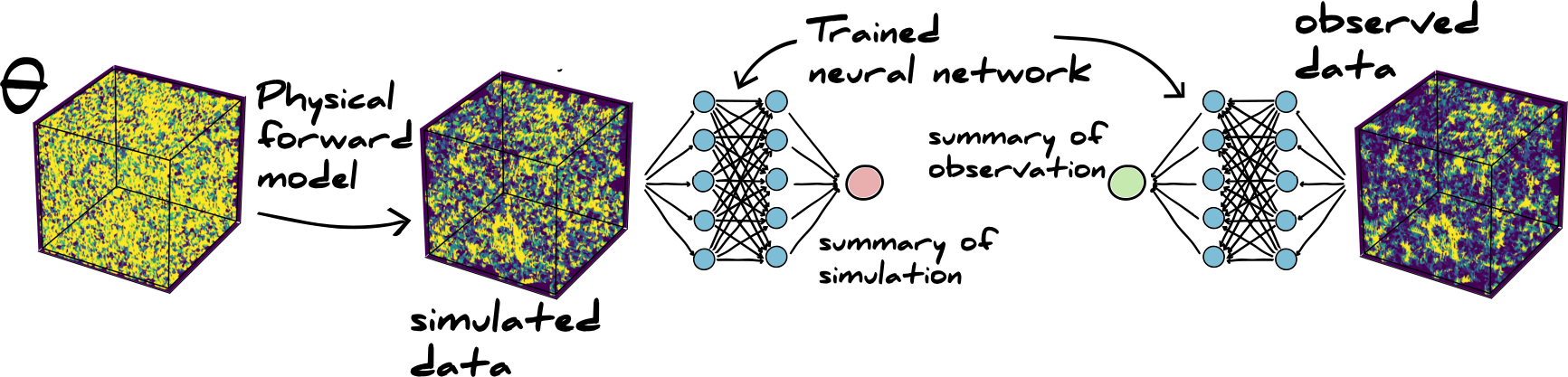
Generate simulations drawn from prior and summarise
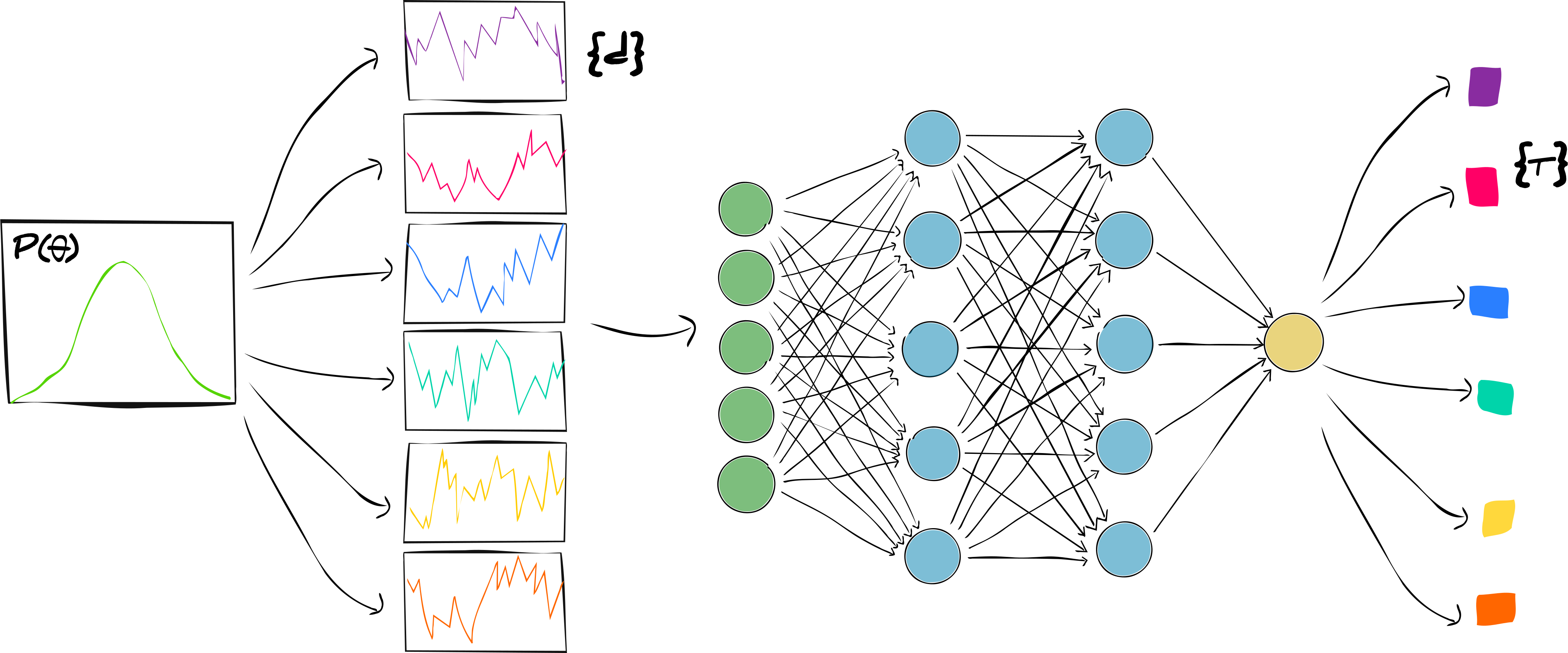
Make a kernel density estimate (or use ABC) on the simulations
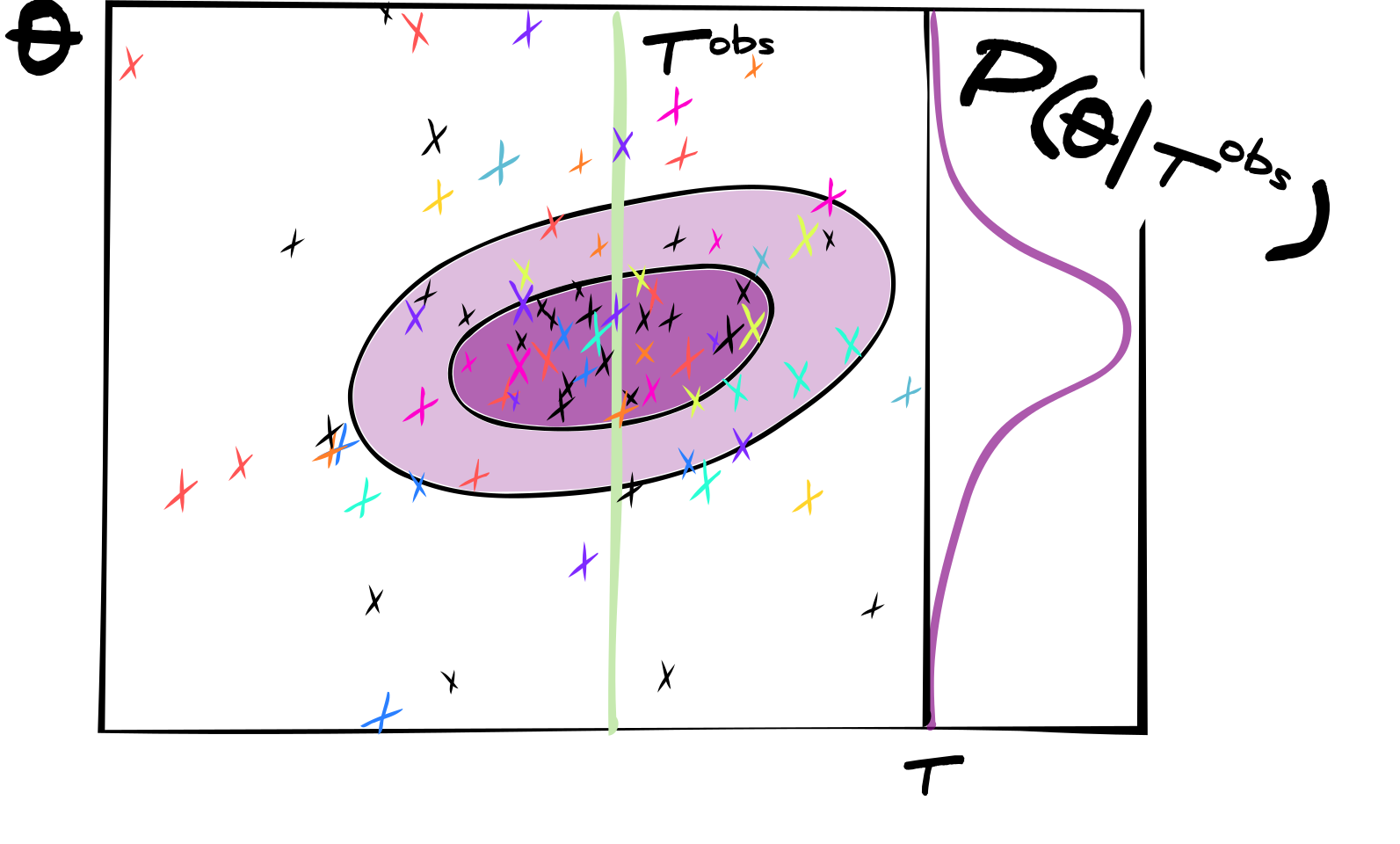 A slice through at the summarised observation is the approximate posterior
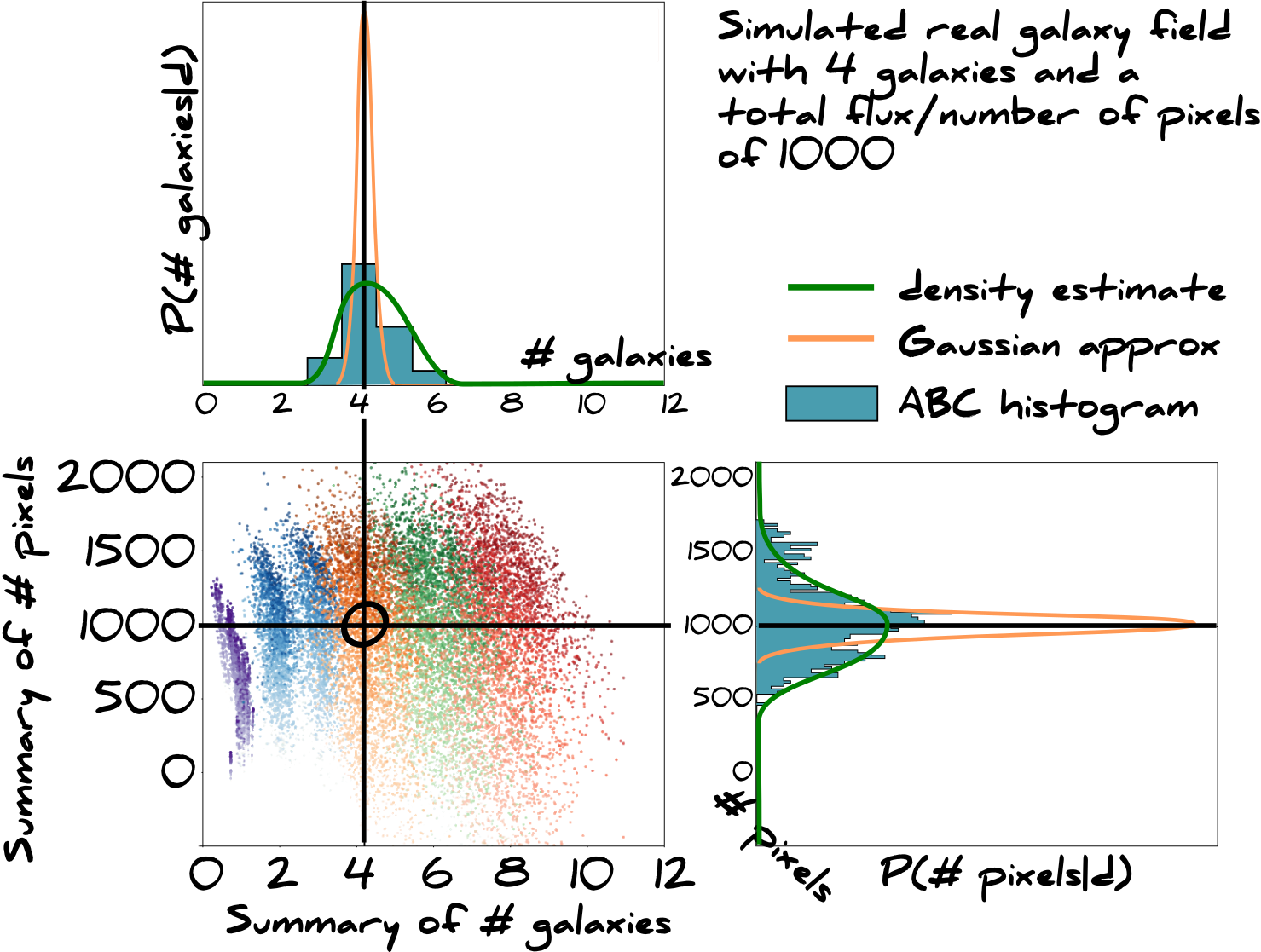
Posterior distribution of galaxy counts and fluxes in fields
Extracting information using neural networks
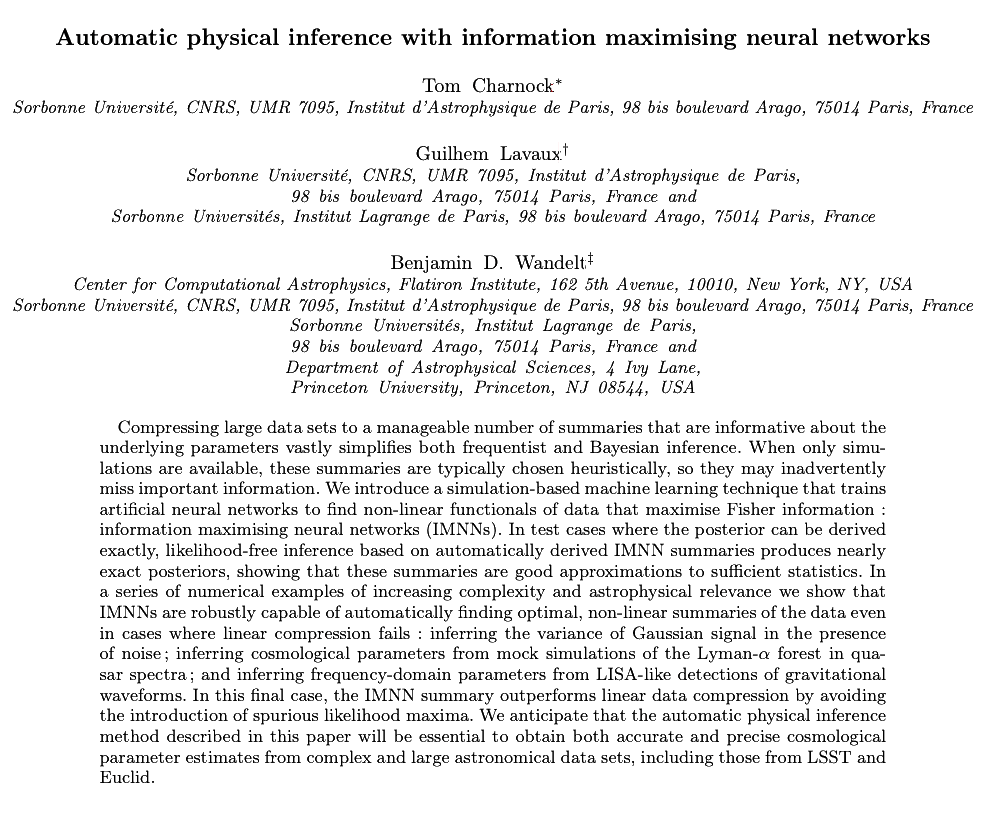
Information maximising neural networks
$$\begin{align} {\bf F}_{\alpha\beta} &\simeq \left.\left\langle\frac{\partial^2\ln\mathcal{L}({\bf x}|\boldsymbol{\theta}, {\bf d})}{\partial\theta_\alpha\partial\theta_\beta}\right\rangle\right|_{\boldsymbol{\theta}=\boldsymbol{\theta}^*}\nonumber \end{align}$$
And also Gaussianises the data $$\mathcal{L}({\bf x}|\boldsymbol{\theta},{\bf d})\approx\mathcal{N}(\boldsymbol{\mu}(\boldsymbol{\theta}), \boldsymbol{\Sigma}(\boldsymbol{\theta}))$$
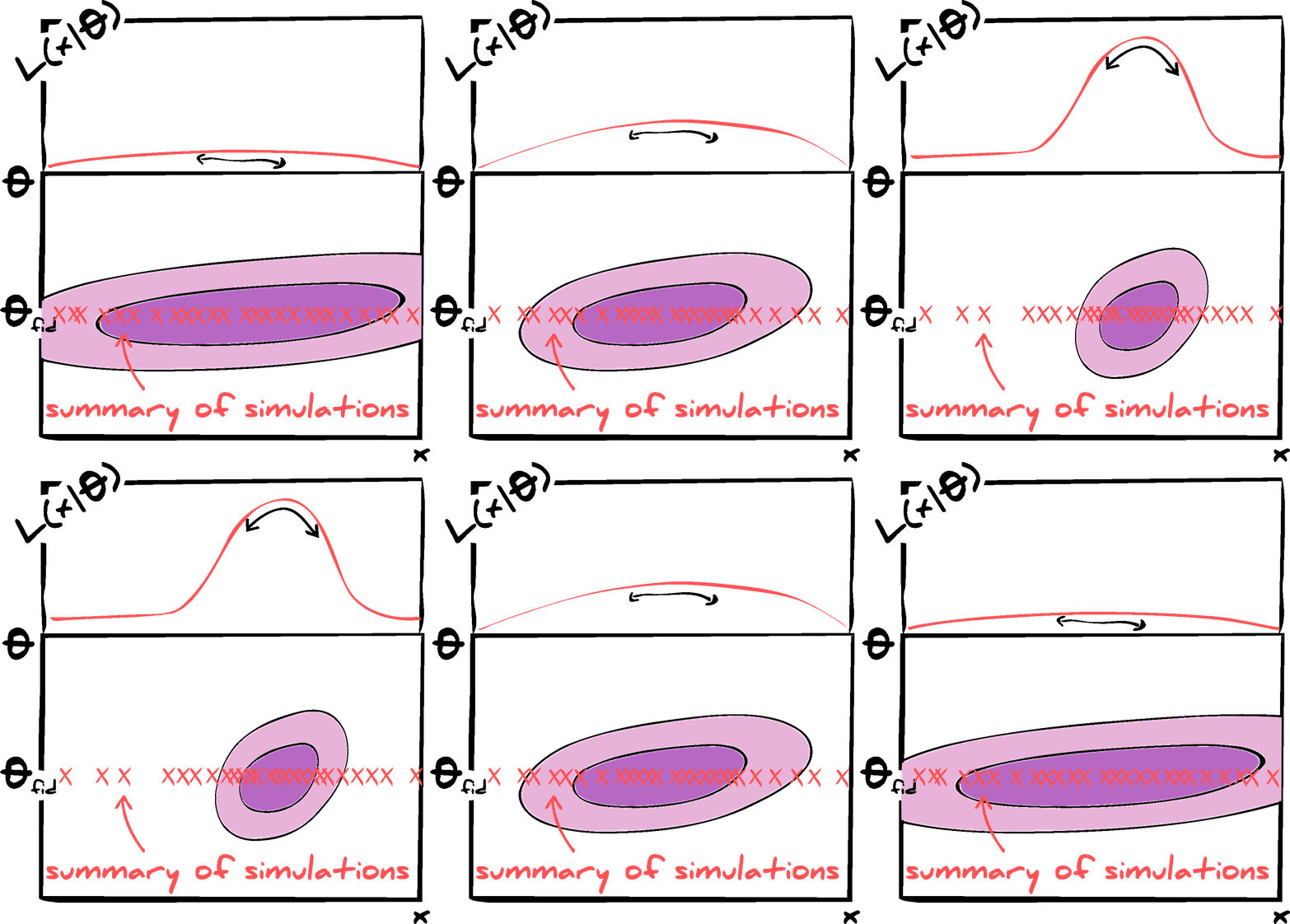
Calculate the covariance
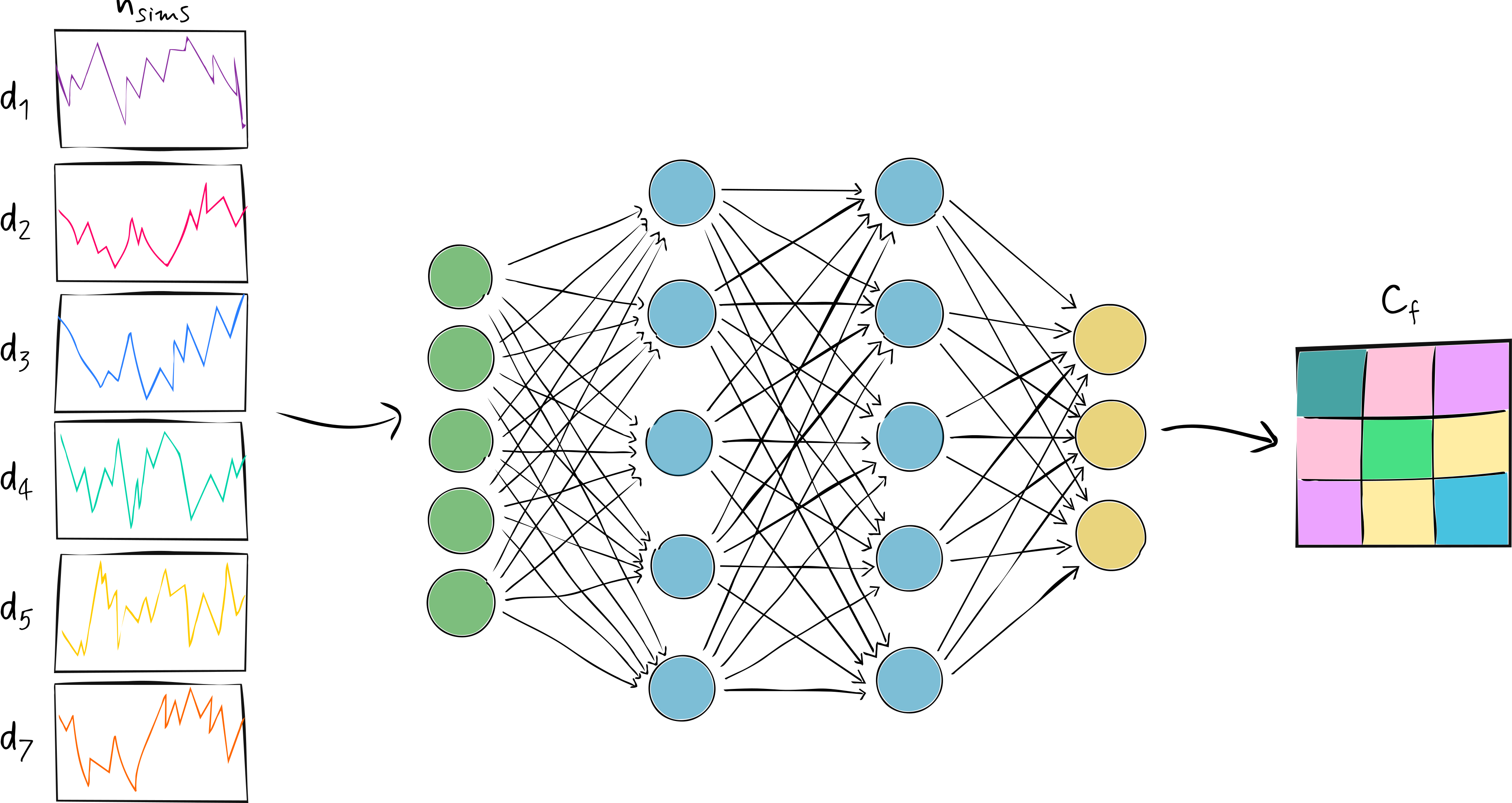
Calculate the derivative of the mean of the summaries with respect to the parameters
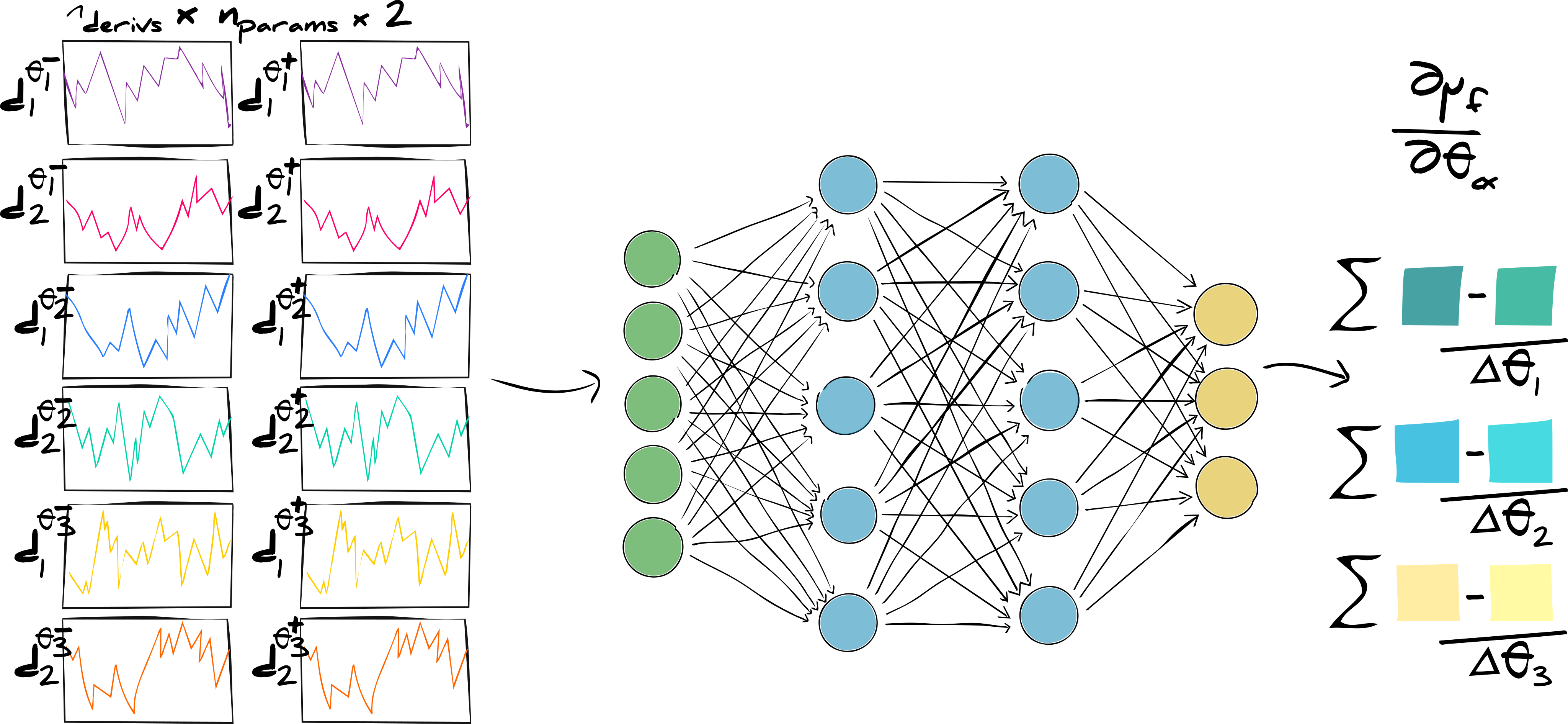
We maximise
$$\ln|{\bf F}_{\alpha\beta}| = \ln\left|\frac{\partial\boldsymbol{\mu}_\mathscr{f}}{\partial\theta_\alpha}^T{\bf C}^{-1}_\mathscr{f}\frac{\partial\boldsymbol{\mu}_\mathscr{f}}{\partial\theta_\beta}\right|.$$To get our trained, information maximising neural network
And use LFI to do parameter inference
We have lots of examples of how powerful this tool is throughout several scientific domains
Although each one would take a whole seminar to describe in detail...
Maybe next time 😉
Matching data models and physical models
Data models are the description that include all effects that generate the data
Initial conditions
Physical model
Instrumental effects
Other stochasticity
Neural networks are great at fitting the data model
We can build neural networks to deal with parts of the data model we don't understand
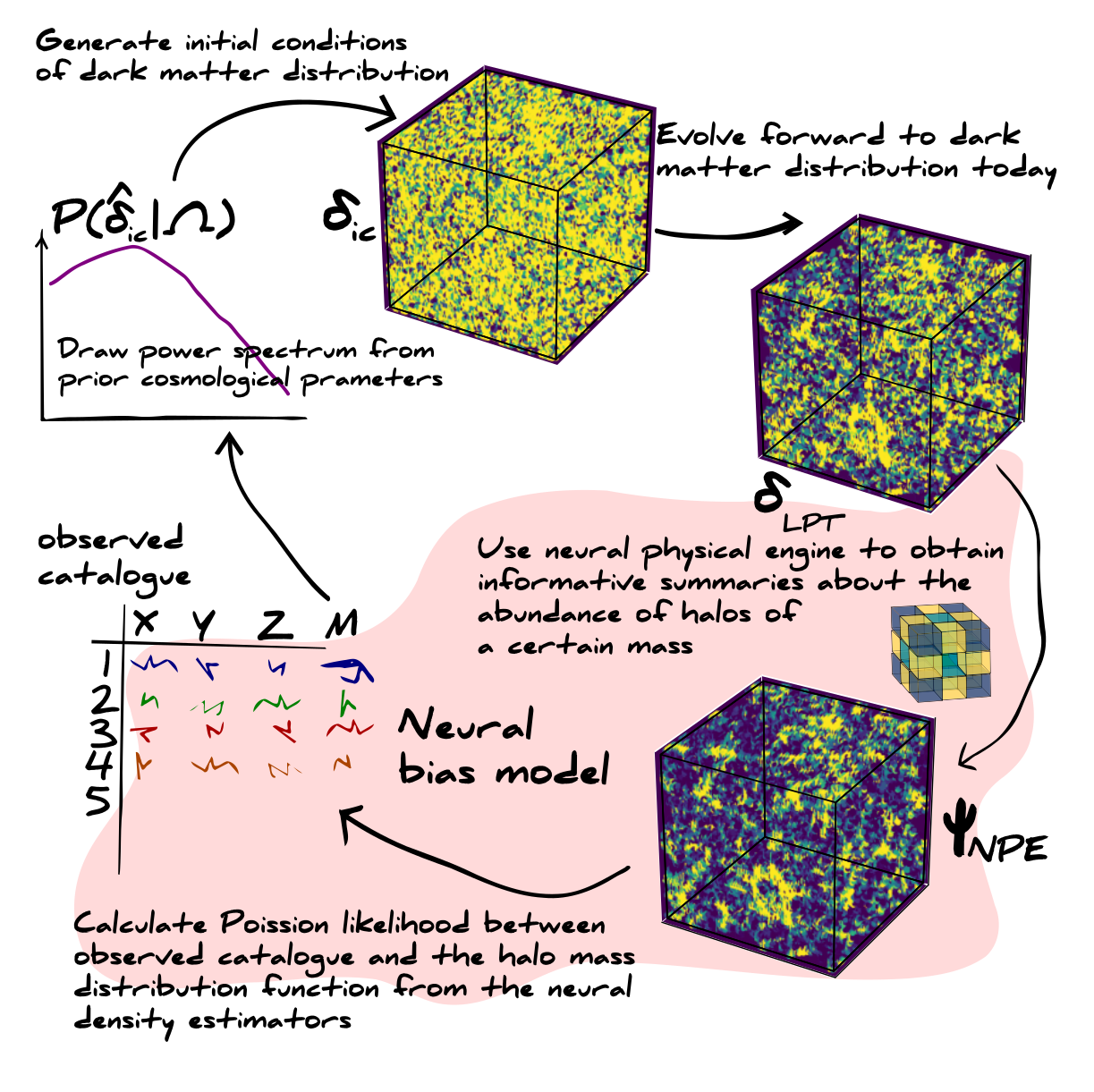
We need to sample this neural network, so we need well motivated priors
Neural physical engines
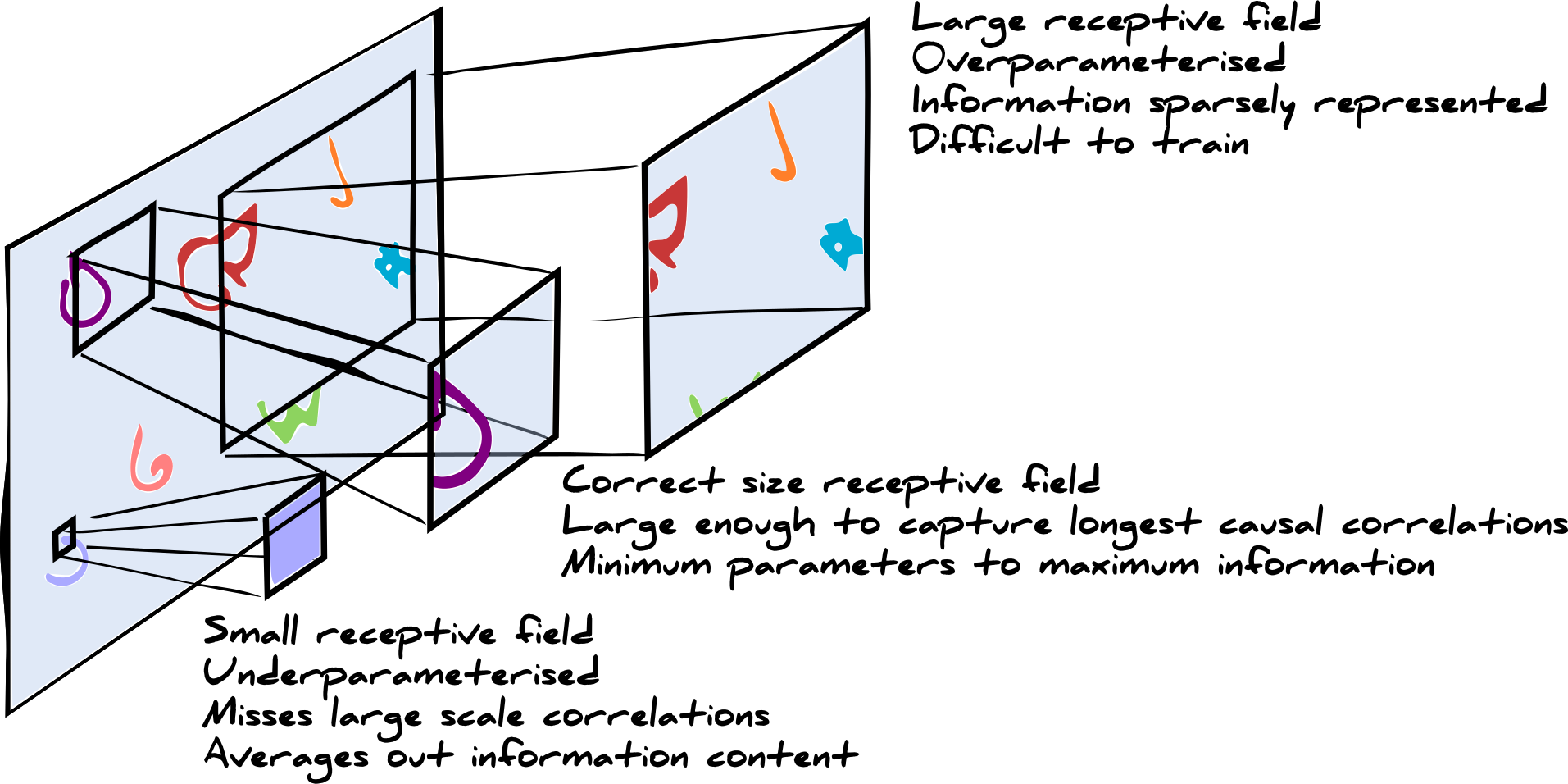
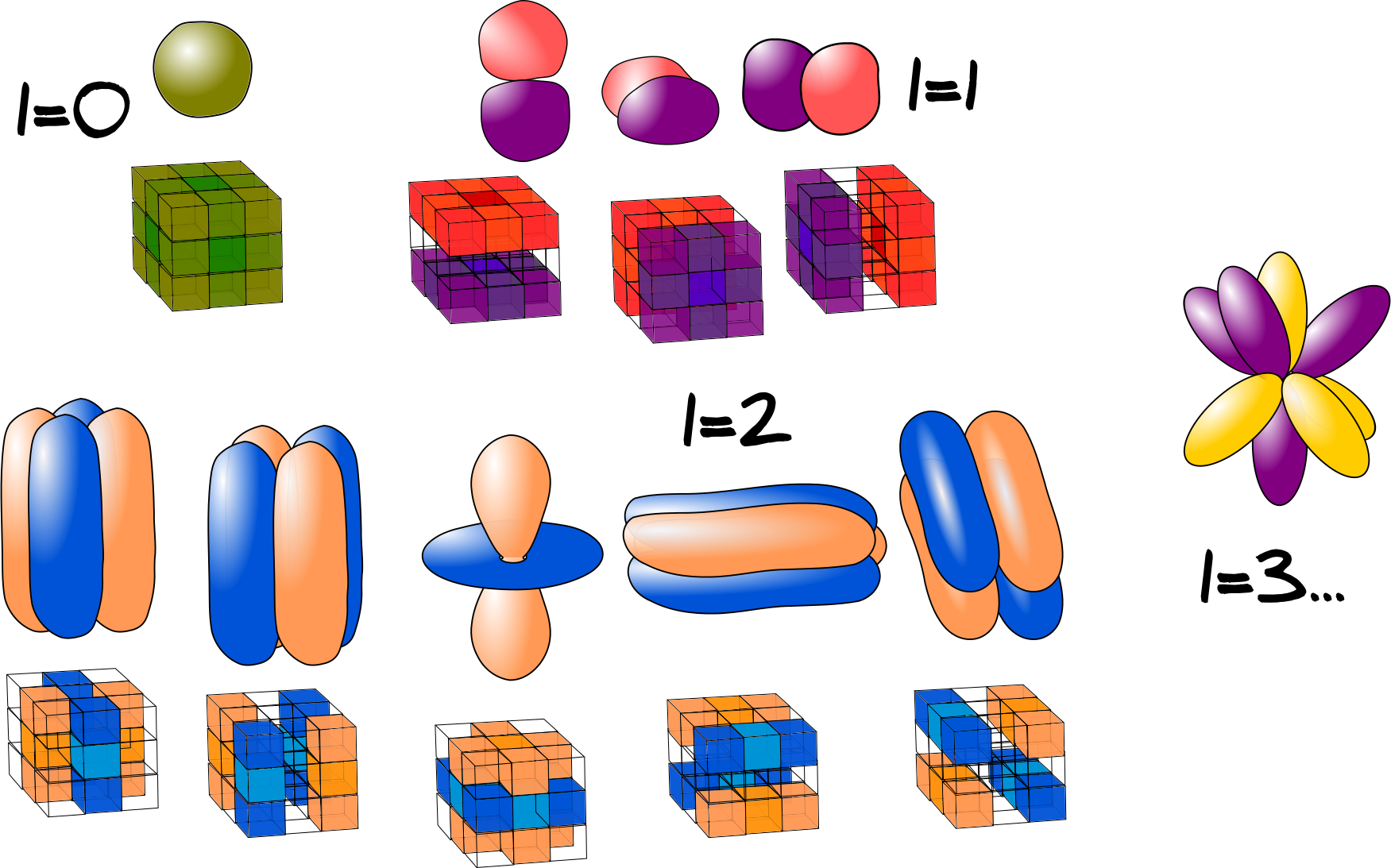
Building symmetries into neural networks
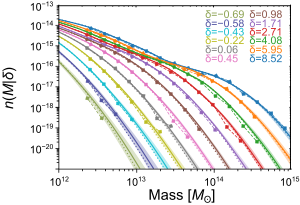
Halo mass distribution function